This post might be created with help from AI tools and carefully reviewed by a human (Anthor Kumar Das). For more on how we use AI on this site, check out our Editorial Policy. This post may contain affiliate links. We may earn a small commission at no extra cost to you. Read our affiliate disclosure.
11 Effective Methods on How to Get Rid of Wood Bees

Wood bees are actually carpenter bees that eat wood. These bees can be a problem when they choose your wooden materials as their nesting site. So, you might be asking how to get rid of wood bees.
These bees bore into wood to create their nests, which can lead to structural damage over time. You are here because you’re dealing with the exact same problem, right?
Don’t worry, you are in the right place. In this guide, I will help you with effective methods I tried to get rid of wood bees.
Recommended Methods to Get rid of Wood Bees without Killing them.
- First, apply a heavy vibrating sound near the entrance of the nest, or use vinegar or essential oil spray to remove them.
- Paint your woods and treat the exposed woods to prevent wood bees from returning again.
- Don’t use pesticides or diatomaceous earth until and unless other available methods fail.
I will cover the 3 most important sections in this article. This will give you a complete wood carpenter bee solution.
- First, you will learn a little about wood bees through my personal encounter with them.
- Then I will tell you 11 effective ways to get rid of wood bees.
- Lastly, I will share how to repair damage caused by wood bees and how to prevent them from returning again.
Understanding Wood Bees
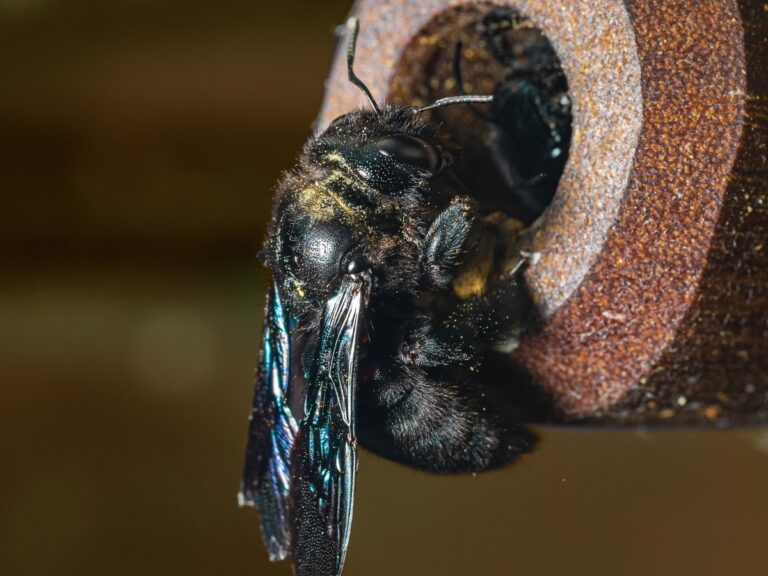
Before tackling the problem, it’s important to understand a bit about wood bees. Wood bees, or wood-eating carpenter bees those are large, with shiny black abdomens, and are often mistaken for bumblebees.
Unlike bumblebees and honeybees, wood bees are solitary and do not live in colonies. Female wood bees bore into wood to create tunnels where they lay their eggs, while males hover nearby to protect the territory.
Despite having a barbed stinger, female wood bees are less likely to sting someone. However, she can sting you multiple times if you try to squeeze her with fingertips.

How to Distinguish Wood Bees from Other Bees
Carpenter bees or wood-boring bees are commonly confused with bumblebees. However, carpenter bees are black or black-and-yellow-bodied with a clear abdomen. On the other hand, a bumblebee has a fuzzy abdomen with black and yellow stripes on the body.
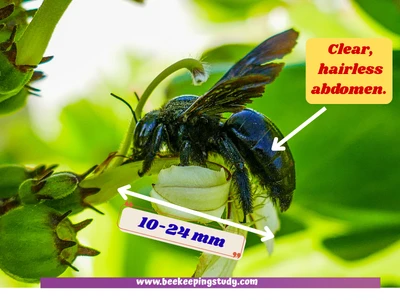
As our main topic is about wood-boring carpenter bees, here is an easy identification checklist for wood bees.
- Size: 10-24 mm long.
- Upper Body (Thorax) Color: Fuzzy black, yellow, or green.
- Lower Body (Rare) Color: Fuzzyless, clear, shiny, black. This makes it more unique than other bees.
The most common wood-eating carpenter bees in the US and Europe are the Eastern Carpenter Bee (Xylocopa virginica). However, without proper investigation, you can’t blame carpenter bees for the damage to your wood.
Here is How to Identify Holes Created by Wood Bees
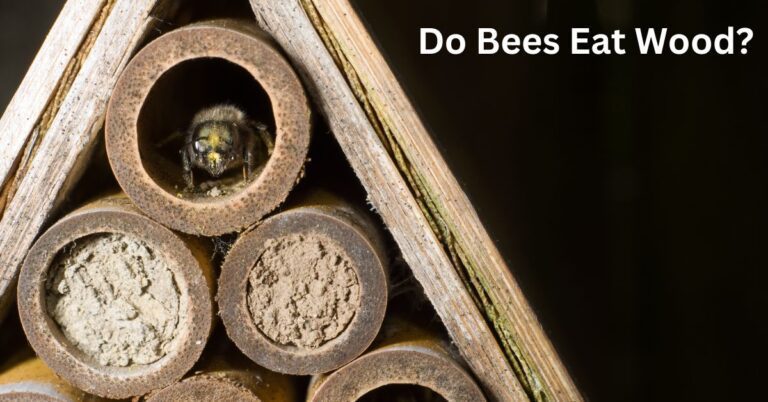
Some people often claim carpenter bees eat wood. But the truth is, carpenter bees chew through wood to create their nest, not to eat sawdust.
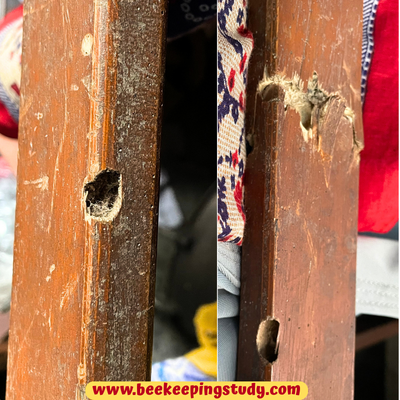
I have got wood eating carpenter bees in my household materials several times. When I am updating this article, I just removed wood bees from my house using a vinegar and water mixture. Before removal, I took some pictures of the nests created by wood bees on my door.
So, I am attaching some of the images to give you an example of what a hole created by wood bees looks like.
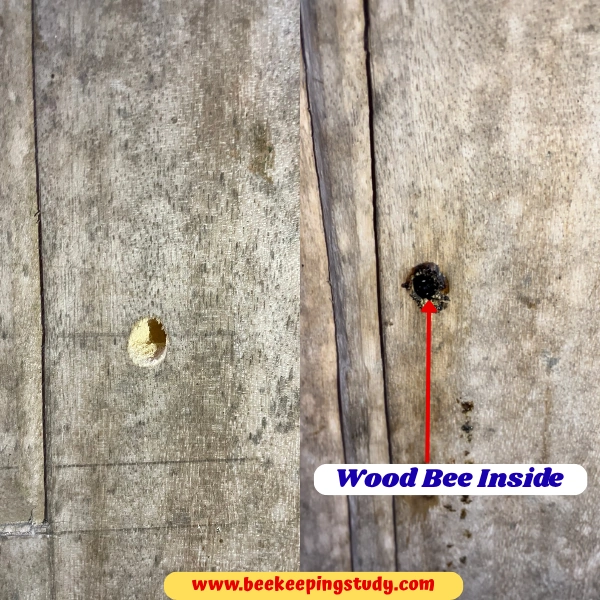
However, you can’t always blame wood bees for damage in wooden materials without proof. Here is how you can tell if a carpenter bee created the hole in your wood or not.
- The hole created by a carpenter bee is almost a perfect round shape.
- The hole size is roughly the size of your fingertip (10-12 mm long).
- Place your ear near the tunnel in the woods. If you hear a buzzing or scratching noise, this means the bee is inside.
- If you stay there for sometime you might be able to see the bee coming out of the hole or entering the hole from outside during daytime.
- Look for fine, coarse sawdust piles directly under or below holes.
These are the easiest and most accurate signs that the damage in wood is done by wood bees.
Why Wood Bees Are a Problem
Wood bees are not a problem until they are damaging your essential household wooden elements. Carpenter bees can cause structural damage to wooden elements of your home, such as eaves, decks, railings, roof edges, wooden beams, fences, and more.
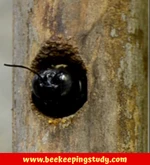
The repeated boring of tunnels weakens the wood, and over time, this can lead to significant damage. A carpenter bee tunnel can be up to 14 inches long inside the wood.
It can be much more destructive if multiple carpenter bees start boring the same wooden materials. The exact kind of wood bee problem I had last time.
Additionally, Carpenter Bees can invite woodpeckers to your house. Woodpeckers often peck at these tunnels to feed on bee larvae, causing further damage to the house and household wooden materials.
Note: Wood bees are excellent pollinators. We need them more than they actually need us. Thus if the wood bee nest is not harming you don’t ever treat them as a problem.
Should You Kill Wood Bees?
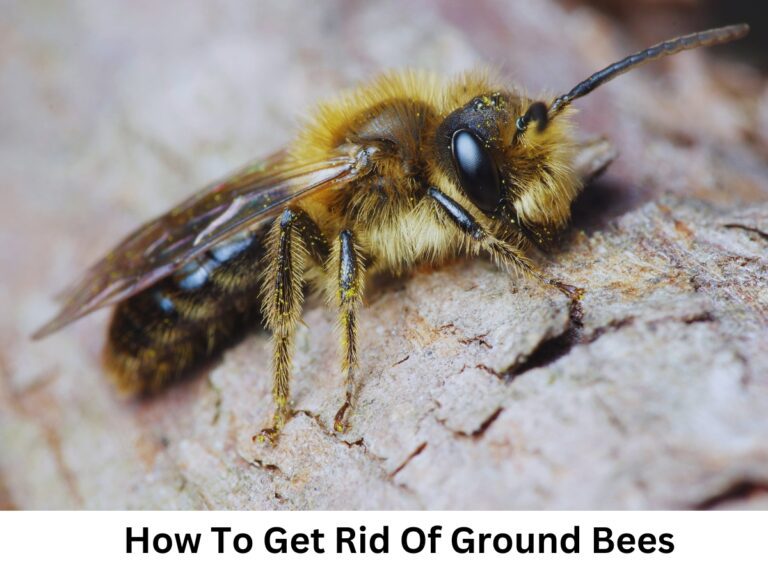
Wood bees play an important role in the ecosystem despite their potential damage. Ground bees, like wood bees, are effective pollinators, helping to fertilize plants and promote healthy growth.
In fact, most of the seasonal plants completely depend on pollination by carpenter bees and other ground bees. Having ground bees around boosts blossom and fruit production.
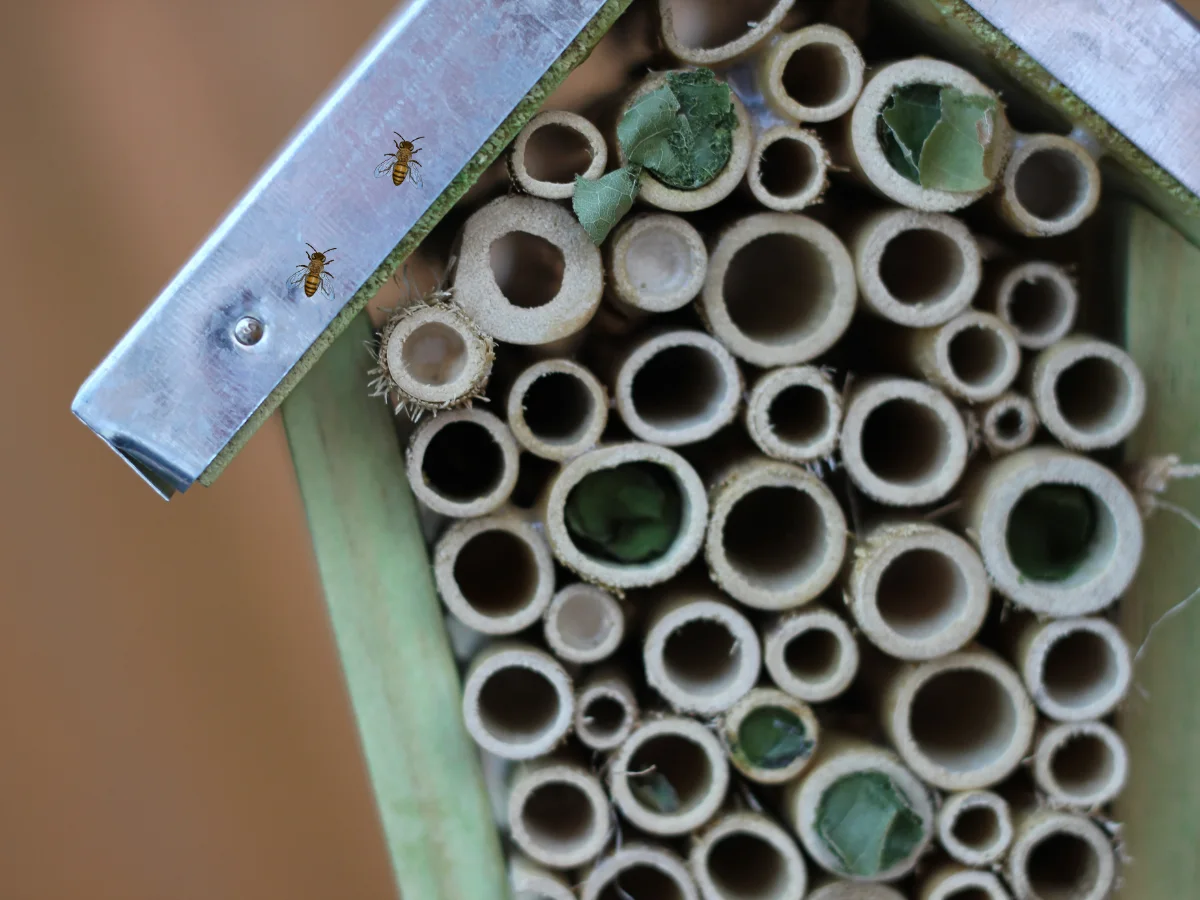
Thus, provide carpenter bees with nesting sites outside so that they can help us without damaging household wooden structures. The best way to achieve this is by planting bee friendly trees in your garden.
Thus, before taking drastic measures to eliminate them, consider their ecological benefits and explore non-lethal control methods whenever possible.
I always recommend that you follow safe methods to get rid of ground bees that don’t kill them. Try other methods until and unless you fail to get rid of them naturally.

SunVara Mason Bee House — Pollinator Bee Hotel
Provide ground bees a dedicated nesting spot away from your home — the most bee-friendly long-term prevention method.
See Price on Amazon →
How to Get Rid of Wood Bees
There are several strategies to eliminate wood bees, ranging from preventive measures to direct removal. First, let’s learn the ways available to get rid of wood bees. Then I will tell you what the safest method is to follow to remove wood bees forever.
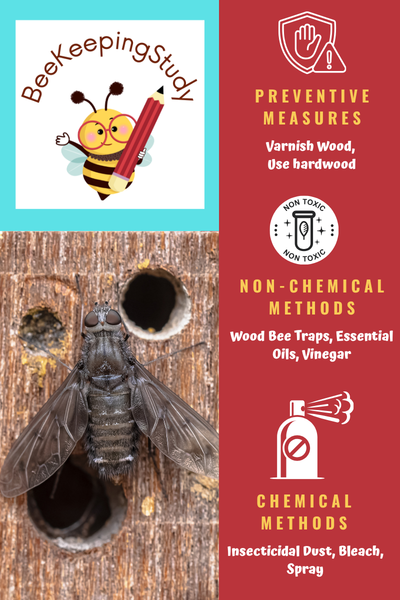
Preventive Measures
Prevention is better than a cure. It will prevent damage as well as help bees to pick other suitable nesting sites.
Because wood bees can come back to the same nesting site in the next spring. Thus, you have to take preventive measures so that when they are gone, they are actually gone forever.
There are several ways to prevent wood bees from damaging wood. The following are some of the effective methods that I found useful to prevent wood bees.
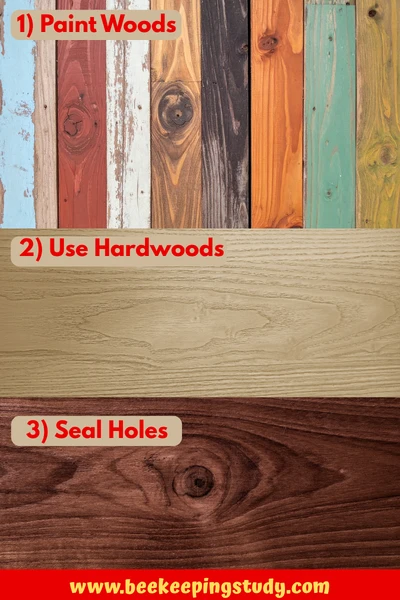
1. Paint or Varnish Wood
Carpenter bees prefer untreated, unpainted wood. Painting or varnishing wooden surfaces can deter them from boring into these areas. This simple action can significantly reduce the likelihood of an infestation by wood bees.
2. Use Hardwood
Whenever possible, use hardwoods for outdoor construction. Wood-eating carpenter bees prefer softer woods like pine and cedar. Hardwoods or pressure-treated wood are less appealing to them and can help prevent nesting.
3. Seal Existing Holes
If you notice any existing holes, seal them with wood putty or caulk. This prevents bees from reusing old nests and encourages them to look elsewhere for nesting sites. This also forces the existing wood bees that are inside to leave the wooden material.
In most cases, the above 3 methods are good enough to treat and prevent carpenter bees forever. Also, try to keep things away that attract ground bees to your household.
Non-Chemical Wood Bee Removal Methods
The preventative approach helps you to drive and keep wood bees away. But if these methods fail or you are unable to perform them, you should try these next methods.
It is highly recommended to use non-chemical methods to get rid of wood bees. You shouldn’t kill them, as they are helpful to nature. The following are effective methods to get rid of wood bees without killing them.
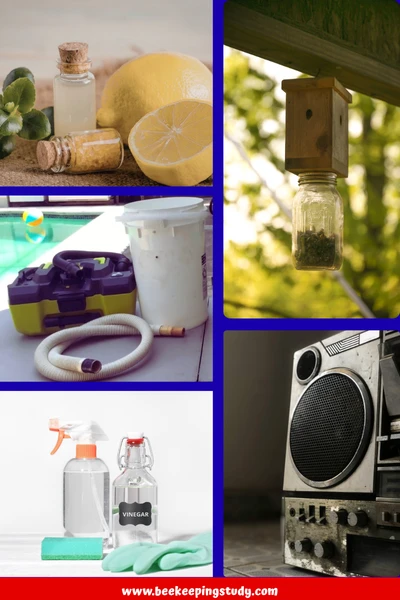
4. Bee Traps
Bee traps are an effective way to capture and remove wood bees without harming them. These traps are designed to attract bees and capture them, allowing you to relocate them away from your home.
These traps are cheap. You can purchase one from an online store or create a carpenter bee trap on your own. Place traps near areas where you see bee activity for the best results.
Don’t kill them. If you catch wood bees using bee traps, relocate them far from your home. Or allow them to live in the trap till the summer.

Carpenter Bee Trap — Outdoor Hanging Wood Catcher Kit
Natural wood trap for humane carpenter bee control — simply hang near problem areas to catch boring bees without chemicals.
See Price on Amazon →
5. Vacuuming Wood Bees
Using a bee vacuum with a hose attachment, you can remove wood bees from their nests. This method is best performed at night when the bees are less active. Once removed, be sure to seal the holes to prevent re-infestation.
Before using a bee vacuum, you must know how a bee vacuum works. Without proper knowledge, you might end up killing a lot of bees using a bee vacuum.
After catching wood bees using a bee vacuum, make sure to release it to a safe place.
6. Use Essential Oils (Citrus, Peppermint, Almond, Lime, or Lemon)
Carpenter bees don’t like the smell of certain essential oils at all. Thus, spraying any of these essential oil and water mixtures will force the carpenter bees to leave your area.
The following essential oils are proven effective for getting rid of wood bees.
- Almond.
- Lime.
- Citrus.
- Peppermint.
- Lemon.
Here is how to get rid of wood bees with essential oils
- Take a spray bottle and fill it with water.
- Add 10-15 drops of citrus or other essential oils mentioned above using a dropper.
- Shake well to mix it up.
- Spray the mixture 2-3 times on the first day around the holes in wood created by carpenter bees.
- Spray at least once regularly for the next few days to prevent the return of carpenter bees or wood bees.
7. Use High Volume Vibrating Music
Bees like music of a certain frequency. However, bees do not like music with heavy sound and vibration. The vibrating music forces bees to leave any place.
Thus, if you are dealing with a lot of carpenter bee problems, this method will be very effective.
- Place a speaker close to the wooden materials with carpenter bee infestation.
- Play music with vibration at high volume.
- Repeat and try with several heavy vibrations until all bees are out of the wooden materials.
Note: If bees are gone after applying vibrating music with high volume, take preventative actions. You can also keep playing the same vibrating music with high volume often so that bees never comes to your house.
8. Use Vinegar Spray(My Most Successful Method)
Vinegar is an excellent bee repellent. This effectively helps you to get rid of wood bees without killing them.
Last time I used this method to remove all the wood bees successfully from my door and other wooden materials.
This is a very easy method. Here is how I successfully removed wood bees using vinegar.
- Mix water and vinegar together in a spray bottle.
- Then spray it around the hole created by the wood bees.
- Don’t spray vinegar directly on bees, as it can be deadly.
Bees don’t like the smell of vinegar. So, when you spray vinegar mixed with water around the nest, they will run away. You might check this for how to get rid of ground bees using vinegar in detail.
What You’ll Need

Iberia Distilled White Vinegar — 32 fl oz
Pure distilled white vinegar — ideal for the 1:2 vinegar-water mix

Teyssor Fine Mist Spray Bottles — 2 Pack 10 oz
BPA free, adjustable nozzle, refillable — perfect for the vinegar solution
Chemical Treatments (Not Recommended Until Other Methods Tried)
I never recommend deadly methods to get rid of wood bees. I have never tried any single chemical method that I am going to share here. However, if you have totally failed to get rid of wood bees naturally, you might want to try these methods at your own risk.
Note: Beekeepingstudy strongly advocate for the protection and preservation of bees due to their vital role in our ecosystem. The methods below are shared for informational purposes only. If you’re dealing with a severe carpenter bee infestation, we recommend consulting a pest control professional. Any action you take is at your own discretion and responsibility.
While following these methods, make sure to follow the instructions provided on the chemical you are using. Try to remove them, try your best not to kill them.
9. Insecticidal Dust
Insecticidal dust can be an effective solution for severe carpenter bee infestations. Apply the dust directly into the nest entrance. The bees will carry the dust throughout the nest, which will help eliminate the population.
It’s often best to consult a pest control professional for this method to ensure safe and effective application. If you do this in the wrong way, it may kill all the bees and can cause damage to the woods too.
10. Sprays and Foams
There are various sprays and foams available that are designed to remove wood bees. These can be sprayed directly into the nest entrances. Be sure to follow the manufacturer’s instructions carefully and take necessary safety precautions.
11. Clorox or Bleach
Clorox is a bleaching agent that is widely used to get rid of ground bees. Clorox can be deadly to wood bees if not used correctly. So, before using Clorox or bleach, learn how to use Clorox to safely remove bees.
If you can follow my instructions, you will be able to get rid of wood bees without killing them.
Note: If you want to get rid of wood bees safely, call a pest control specialist. They will guranteedly help you to remove carpenter bees and prevent them coming again ever.
Repairing Damage Caused by Wood Bees
Once you have dealt with the wood bees, it’s essential to repair any damage they have caused to prevent future infestations and maintain the integrity of your home.
I do the following to repair damage caused by wood bees. You can also follow these strategies.
- Filling Holes: Fill any holes with wood putty or caulk to restore the surface and prevent other insects from using the same holes. After filling the holes, repaint or varnish the surface for added protection.
- Replacing Damaged Wood: In cases of extensive damage, you may need to replace the affected wood. Use hardwoods or pressure-treated wood to reduce the risk of future infestations.
- Paint the Woods: After repairing damaged wood, paint it with a deep color to prevent wood bees from returning. Bees will avoid painted wood to create their nest.
Regularly inspect your property for signs of new activity to catch problems early. Also, follow methods to prevent ground bees and wood bees from returning.
Recommended Products for Wood Bee Damage Repair

Gorilla All Purpose Wood Filler, Natural Finish, 16 oz — Water Resistant
Fill carpenter bee holes indoors or outdoors — sandable, paintable, stainable

Tried & True Original Wood Finish, 8 oz — Linseed Oil & Beeswax Blend
Non-toxic, food safe wood sealer — coat repaired wood to deter wood bees from returning
Frequently Asked Questions
What does WD-40 do to carpenter bees?
WD-40 is a carpenter bee killer. Carpenter bees will die as soon as they come in contact with WD-40. Bees are helpful for our ecosystem. Thus, it is always recommended to try non-chemical methods to treat carpenter bees.
What is the best homemade spray for carpenter bees?
The best homemade spray for carpenter bees is a water mixture with citrus essential oil. Spraying this mixture around wooden materials helps to remove wood bees and discourages them from nesting.
What smell do carpenter bees hate the most?
Carpenter bees hate the smell of citrus most. They also hate the smell of almond, lemon, peppermint, eucalyptus, and more.
The Bottom Line
Knowing how to get rid of wood bees involves a combination of preventive measures, non-chemical methods, and, if necessary, chemical treatments. By understanding their behavior and taking proactive steps, you can protect your home from damage while still appreciating the role these bees play in nature.
Make sure to repair any damage they cause and regularly inspect your property to keep it bee-free.
Hopefully, by following my guide, you are ready to manage wood bees and ensure your home remains safe and intact.
Which method helps you among these 11 effective methods to get rid of wood bees? Comment below.