This post might be created with help from AI tools and carefully reviewed by a human (Anthor Kumar Das). For more on how we use AI on this site, check out our Editorial Policy. This post contains affiliate links. We may earn a small commission at no extra cost to you. Learn more.
40 Bee Friendly Plants for the USA

Bees are attracted to flowers and plants that can produce pollen. But they are not attracted to all kinds of plants.
Have you ever noticed that in the spring, a garden somewhere in your region is full of bees? On the otherhand some other gardens might have very low to zero bee traffic.
This is because the one with bee-friendly plants attracts more bees than the one full of other kinds of plants. This is why it is important to know which flowers and plants attract bees.
From over 10 years of beekeeping experience and having communication with beekeepers across the USA & UK, I learned what truly attracts bees and what repels them. That’s what I am going to discuss in this article.
We will cover a list of bee-friendly plants in the United States. Try to keep them as much as possible if you don’t want your bees to travel longer for foraging.
Location Matters More than the Plant List
Before I dive into the bee friendly plants list, this is what truly matters. Because plants in one region might not work in another region. Thus, plants that work for attracting bees in the United States might not work in the United Kingdom.
This is why I decided to make this one specifically for the United States. For the United Kingdom, you will find a separate dedicated article as well.
However, this difference can not only vary by country, but also within states. So, you have to know which plants are native and useful for your state as well.
For Texas, the most successful plant that attracts bees is “Texas Kidneywood”. On the otherhand the “California Buckwheat (Eriogonum)” is the single most valuable bee plant in California.
So, you have to know which plants are suitable for your region to attract bees. Communicate with local beekeepers as well if you want to plant trees to truly help bees coming into your garden.
40 Bee Friendly Plants in the United States
Despite the variation among states, here is a list of plants that are bee-friendly within the United States. Plant the ones that are native and useful to your region.
Crocus – One of The Most Famous Bee Friendly Plant
This is the first plant I would recommend you have in your garden. This plant helps bees when they need pollen most in the early spring. Crocus blooms as early as late February through April in USDA zones 3–8.
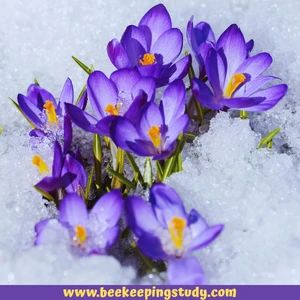
It provides one of the first pollen sources of the year at a time when honey bee colonies are recovering from winter and desperately need fresh pollen to feed their growing brood. The flowers produce generous amounts of rich, golden-yellow pollen that bees eagerly collect.
On mild March afternoons, honey bees and early native pollinators actively forage on the blooms. The Crocus flowers open in the sun and close during cold or cloudy weather. This smart behavior protects their pollen until bees are able to fly.
Pro Tip: For maximum bee attraction, plant crocus bulbs in large clusters 3-5 feet wide. Because a single scattered flower won’t draw them in..
Once established, crocus naturalizes easily and returns year after year with minimal care. This is why it is the simplest and most rewarding bee friendly plant across the United States.
Snowdrops (Galanthus nivalis)
It is another modest source of pollen for bees that blooms through actual snow as early as January or February. While Snowdrops offer more modest nectar and pollen compared to some other early bloomers, their real value lies in their timing.
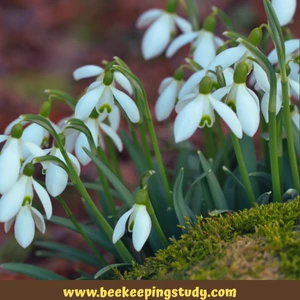
They provide vital forage when colonies are just beginning to stir after winter dormancy and almost nothing else is flowering.
Their nodding, downward-hanging flowers are not just charming. This drooping shape helps protect nectar and pollen from rain, frost, and snow. It also keeps the flower slightly warmer, making it easier for bees to access these resources during short winter foraging periods.
Winter Aconite (Eranthis hyemalis)
Winter aconite is a tiny powerhouse that often blooms even before crocus and snowdrops. Sometimes appears through snow as early as January.
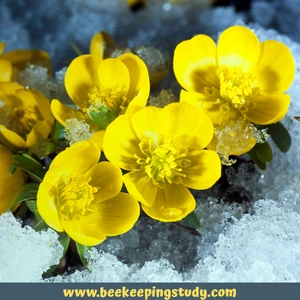
Its bright, buttercup-yellow flowers produce generous amounts of pollen. This helps support brood rearing just as honey bee colonies begin to become more active, even though forage is still scarce.
On sunny late-winter days above 45°F, bees quickly move in and out of the blossoms to make the most of this short-lived opportunity. The cup-shaped flowers also contain small tubular nectaries that provide nectar for the few insects willing to forage in the cold.
Like crocus, winter aconite flowers open fully in the sun and close during cold or cloudy conditions, protecting their resources until pollinators can reach them.
The only limitation is availability. Winter aconite has limited availability in only a few states in the United States. Because it is not native to the US. However, available in the Northeast, Midwest, and Mid-Atlantic regions.
Siberian Squill (Scilla siberica)
Another spring attractor for bees. Siberian squill produces vivid, deep blue bell-shaped flowers in early spring, blooming slightly later than snowdrops and crocus.
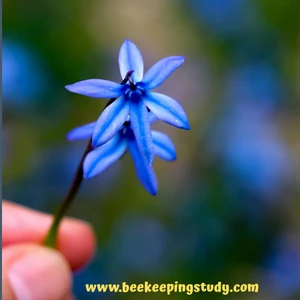
Because it blooms a bit later, it attracts a larger variety of early bees, including mason bees, mining bees, multiple species of bumblebees, and a steady stream of honey bees.
Its most striking feature is its steel-blue pollen, which creates a remarkable sight when honey bees pack their pollen baskets full of vivid blue loads and carry them back to the hive.
It serves as an early source of much-needed nectar for native bees emerging in spring.
Despite its small stature, it produces a surprisingly powerful fragrance that draws in bees, butterflies, and other pollinators.
Maple (Red and Sugar)
Red maple is one of the first native trees to bloom in the US. It flowers as early as late January in the South and mid-February to March further north.
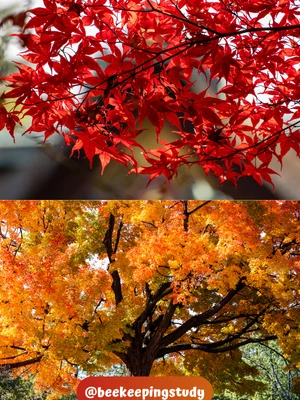
Its tiny red flowers appear before the leaves. They produce abundant nectar and protein-rich pollen at a time when almost nothing else is available.
Honey bees, bumblebees, cellophane bees, mining bees, and sweat bees all forage on these blooms. The influx of fresh maple nectar signals honey bee colonies to ramp up brood production for spring.
Sugar maple blooms a couple of weeks later than red maple. It serves the same critical role of feeding early pollinators. Together, these two maples cover a longer window of early spring forage. Both are hardy across much of the eastern US.
Pussy Willow (Salix discolor)
Pussy willow is one of the earliest-blooming plants in the North American landscape. Its fuzzy gray catkins are familiar to most people. But when left on the plant, those buds burst open into bright yellow, pollen-rich blooms.
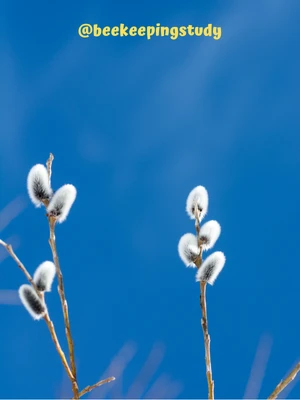
This is a critical food source. Honey bees, mason bees, mining bees, and other early pollinators swarm to it. Unlike many catkin-bearing trees, pussy willow actually requires insects for pollination.
So the relationship is truly mutual. Bees need them for collecting pollen and nectar, and they need bees for blooming.
Dandelion (Most Widely Available But Might Not Be the Suitable One)
Dandelions are one of the most accessible and widespread bee plants in the US. They are among the first flowers to bloom in spring. They keep blooming well into fall. That long season makes them a reliable backup food source across many months.
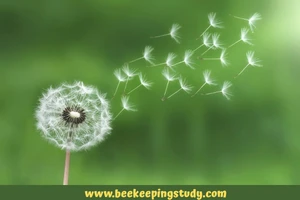
Their bright yellow flowers are rich in both nectar and pollen. They feed honey bees, bumblebees, butterflies, hoverflies, beetles, and over 100 species of insects.
However, the full picture is more nuanced than social media suggests. Dandelions are not actually the first food for bees. Trees like maples, willows, and elms flower earlier.
Honey bees only rely on them when there are no flowers for foraging. This is why dandelion pollen is not a preferred food for honey bees.
Fruit Trees (Apple, Cherry, Plum, Pear)
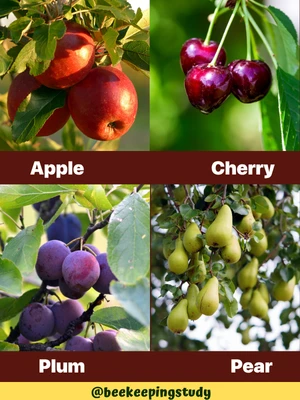
Fruit trees are among the most important bee-attracting plants in the US. These are the common fruit trees across the USA for attracting bees.
- Apple
- Sweet cherry
- Plum
- Pear
Most of their varieties absolutely depend on bee pollination to produce fruit. Without bees visiting the blossoms, these trees simply will not bear a crop. Thus, the relationship is mutual here as well.
Fruit tree blossoms provide generous nectar and high-quality pollen during mid to late spring. This timing fills a crucial gap after the earliest spring flowers have faded but before summer wildflowers kick in.
Apple blossoms are especially attractive to bees. They produce good amounts of nectar and are heavily visited by honey bees, mason bees, mining bees, and bumblebees.
Over 260 bee species have been collected near Pennsylvania orchards alone. Cherry and plum trees bloom earlier in the season.
Pear also produces a lower amount of honey but is not as efficient as the other options.
Black Locust (Robinia pseudoacacia)
Black locust is one of the most important honey-producing trees in the US. It is native to the Appalachian region and the Ozarks but has been planted across the entire country.
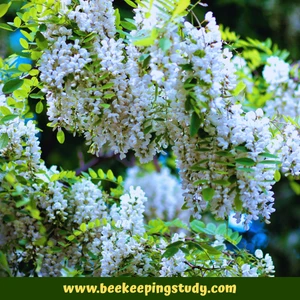
In late spring to early summer, it produces cascading clusters of fragrant white flowers. These flowers produce massive amounts of nectar and pollen.
In a good bloom year, the outer branches look like they are piled with snow.
Honey bees, native bees, hummingbirds, butterflies, and moths all swarm to the blossoms.
Beekeepers particularly love this tree. Black locust honey is light in color with a mild, floral flavor. It resists crystallization, making it highly prized worldwide.
The bloom window is short, typically just one to two weeks. But during that time, the nectar flow can be extraordinary.
Linden / Basswood (Tilia Well Known as Bee Trees)
Linden trees are so beloved by bees that they are often called “bee trees”. When a linden blooms in late June or July, you can smell its sweet fragrance from nearly a mile away.
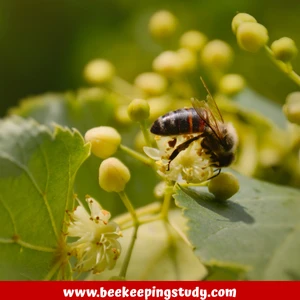
Bees can detect it too. They travel long distances to reach blooming lindens.
The small, yellowish-green flowers produce exceptionally generous amounts of nectar. It is not uncommon to see bees covering nearly every flower on the tree.
However, the nectar window is short. It lasts only about three weeks. Bees must work quickly.
The honey produced from linden flowers is a premium product. It is light in color, with a fruity flavor and notes of mint and green apple. Many beekeepers consider it among the finest honeys available.
Clover (White Dutch, Sweet, Alsike, Crimson) – Heavyweight Contestant
Clover is the backbone of American honey production. More honey in the US comes from clover than from almost any other source. Each variety has its own strengths.
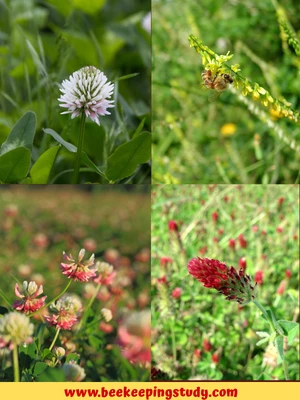
White Dutch Clover (Trifolium repens)
- The most common lawn clover in the US.
- Its short florets make nectar easily accessible to honey bees.
- It keeps coming back year after year.
- You can even mow it and it will regrow and rebloom.
- It thrives in sandy to loamy soils.
Sweet Clover (Melilotus alba and Melilotus officinalis)
- The most popular clover among beekeepers in the upper Midwest.
- It produces excellent nectar flow, especially in hot, dry summers on heavy soils.
- Yellow sweet clover blooms about two weeks earlier than white sweet clover.
- The name Melilotus actually comes from the Latin word for honey.
Alsike Clover (Trifolium hybridum)
- It loves wet, clay soils where other clovers fail.
- Its pinkish-white flowers produce large amounts of nectar.
- The honey is white in color, mild in flavor, and regarded as some of the finest table honey.
Crimson Clover (Trifolium incarnatum)
- It blooms earlier than the other clovers, often in April.
- It is a dependable honey crop in the southern states.
- Crimson clover has shorter florets and bees work it readily.
Tip: For the best results, plant a mix of these varieties. Their different bloom times create a longer window of continuous forage for bees across the season.
Berry Bushes (Raspberry, Blackberry, Blueberry)
Berry bushes offer a win-win for gardeners and bees. A mutual relationship between bees and these plants. The plants need bees to produce good fruit. And bees get valuable nectar and pollen in return.
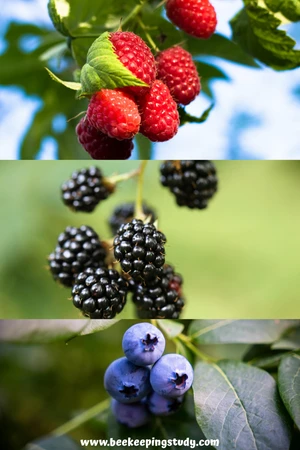
Raspberry and blackberry
- Mostly self-pollinating.
- Bee-visited raspberries produce berries that are about 30% larger, plumper, and better formed.
- Honey bees visit the blossoms to collect both nectar and pollen.
- The flowers are generally attractive to bees.
Blueberry (Heavily Depends on Pollination)
- Blueberries have some of the most demanding pollination requirements of any fruit crop.
- Bumblebees are actually the best blueberry pollinators because they can “buzz pollinate.” They vibrate the flower with their flight muscles, shaking pollen loose from the anthers.
- Honey bees are less efficient for blueberry.
Herbs (Sage, Thyme, Oregano, Mint, Borage, Chives)
Flowering herbs are some of the best and most overlooked plants for attracting bees. They are easy to grow, fit into small spaces, and do double duty as kitchen ingredients. The key is simple: let them flower.
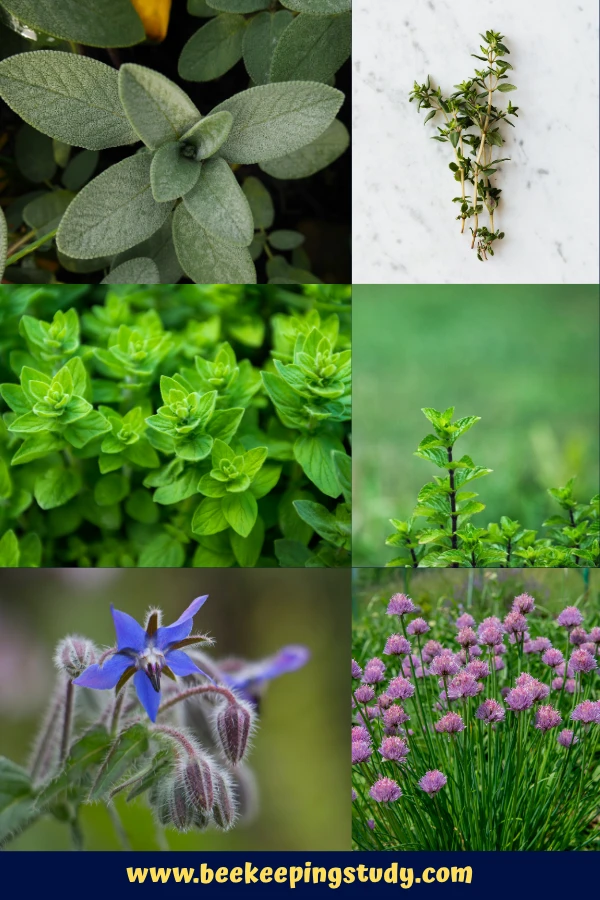
Here are the most popular flowering herbs that are bee friendly.
Sage (Salvia officinalis)
- Produces beautiful purple flowers that attract bumblebees in particular.
- Its strong scent draws pollinators from a distance.
Thyme (Thymus)
- A low-growing herb with tiny purple flowers rich in nectar.
- It blooms from late spring into summer.
- Bees, butterflies, and hoverflies all forage on it.
Oregano (Origanum)
- Wild bees and bumblebees are especially fond of it.
- The cluster formation of the flowers helps bees conserve energy by giving them many flowers in one concentrated spot.
Mint (Mentha)
- Hugely popular with pollinators.
- Its flowers support bees and butterflies through summer.
Borage (Borago officinalis)
- A pollinator superstar.
- Its bright blue, star-shaped flowers refill with nectar roughly every two minutes. That makes it one of the most productive nectar plants available.
- Honey bees love it.
Beekeepers sometimes seek out borage fields specifically to produce borage honey.
Chives (Allium schoenoprasum)
- One of the first herbs to bloom in spring.
- Their round, mauve flower clusters provide nectar when few other sources are available.
- They are easy to grow from seed, return every year, and will thrive in a pot on a windowsill or balcony.
Anise Hyssop (Agastache foeniculum)
Anise hyssop is one of the top-tier pollinator perennials in the US. It is native to the upper Midwest and Great Plains.
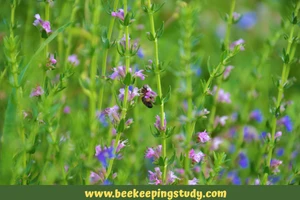
The plant produces tall spikes of lavender-blue tubular flowers from midsummer well into fall. That extended bloom time is its superpower.
Many other plants begin to fade in the heat of July and August. Anise hyssop keeps flowering right through it. Thus it is one of the best summer flowers for bees in the USA.
On a warm July day, every spike will be covered with bumblebees. Honey bees, native bees, butterflies, and hummingbirds all visit it constantly.
Bee Balm (Monarda) – Magnets for Pollinators
Bee balm is a native North American perennial that lives up to its name. Among 16 species, the two most common are scarlet bee balm (Monarda didyma), with bright red flowers, and wild bergamot (Monarda fistulosa), with lavender-pink blooms.
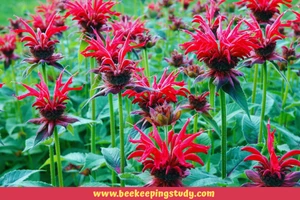
Bumblebees, honey bees, butterflies, and hawk moths all visit them heavily. A specialist sweat bee called Dufourea monardae has been recorded only on Monarda. That makes it a true keystone plant for native pollinators.
Lavender, Catmint, Russian Sage – Powerful Trio for Attracting Bees
These three plants form a powerful trio of bee-attracting perennials. They share similar growing needs: full sun, well-drained soil, and excellent drought tolerance. Their bloom times overlap and extend through summer, creating weeks of continuous forage for bees.
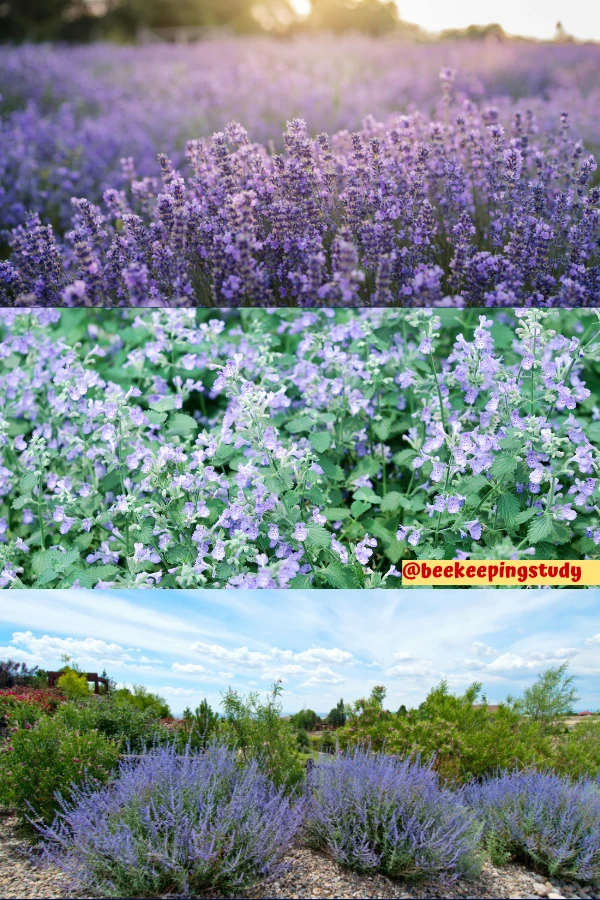
Lavender (Lavandula) – a Famous Bee Plant on Earth
- Its fragrant purple flower spikes are loaded with nectar.
- Honey bees, bumblebees, and butterflies swarm to it.
- The strong scent carries over long distances, drawing pollinators from far away.
Catmint (Nepeta) – a Low-maintenance Workhorse for Pollinators
- Its soft blue-purple flower spikes bloom for an exceptionally long period, often from late spring through fall with deadheading.
- Bees adore it.
- It is extremely easy to grow
Russian Sage (Perovskia atriplicifolia)
- Blooms later in summer and into fall.
- Its airy, silvery-blue flower spikes provide nectar when many other plants are finished.
- It attracts bees, butterflies, and hummingbirds.
- It is extremely drought tolerant and thrives in poor, dry soils.
Sunflowers – The Real Pollination PowerHorse
Sunflowers are one of the most bee-friendly plants you can grow. What looks like a single flower head is actually made up of hundreds of tiny individual florets. Each one produces its own nectar and pollen.
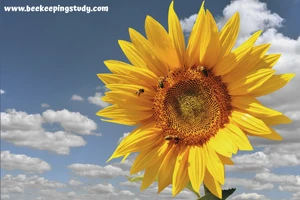
For a foraging bee, that is an enormous payoff from a single landing.
Honey bees, bumblebees, sweat bees, mining bees, and mason bees all work sunflowers heavily. There are even specialist pollinators called sunflower bees (Diadasia and Svastra species) that are particularly drawn to them.
Coneflower (Echinacea), Coreopsis, Black-Eyed Susan
These three native wildflowers are the backbone of a midsummer to fall pollinator garden. They are all members of the daisy family.
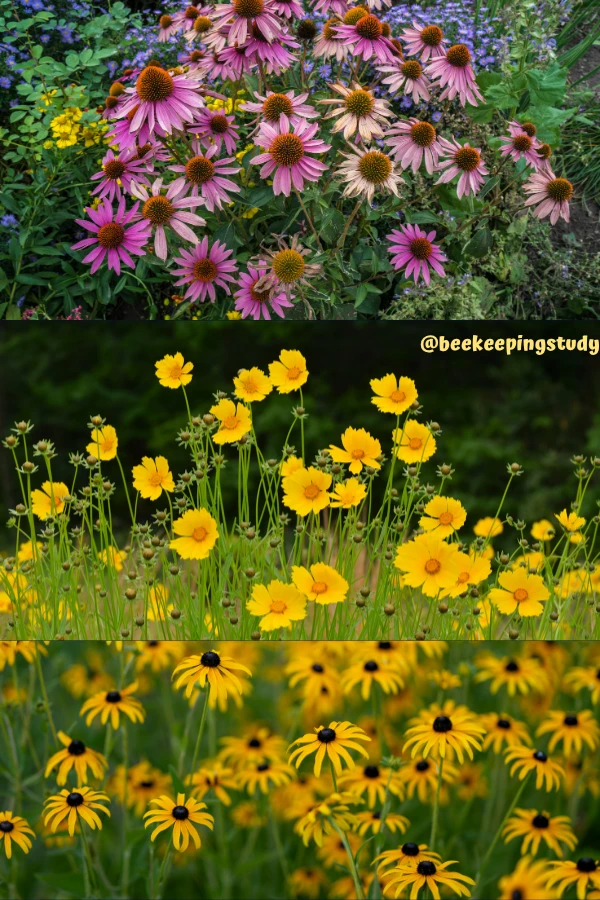
They share similar growing needs: full sun, well-drained soil, and excellent drought tolerance. They are all easy to grow, long-lived perennials.
Purple Coneflower (Echinacea purpurea) – Keystone Species for Native Pollinators
- It is among the most important flowers for specialist bees in the US.
- Its large, showy pink-purple flowers with raised central cones bloom from early summer through fall.
- The cone provides an easy landing platform for bees.
- Honey bees, bumblebees, butterflies, and many native bee species visit it constantly.
Coreopsis (Tickseed)
- Cheerful yellow wildflower native to much of the eastern US.
- Its bright, open flowers are easy for many bee species to access.
- It attracts a wide range of pollinators including bees, butterflies, and beneficial insects.
Black-Eyed Susan (Rudbeckia)
- Another classic native wildflower.
- It is a valued late-season source of pollen for bees.
Goldenrod (Solidago) – Late Season Pollinator Plant
About 100 species of goldenrod are native to North America. They bloom in late summer and fall, typically August through October.
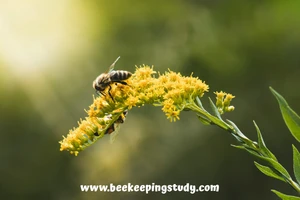
Their bright yellow flowers produce copious amounts of nectar and pollen at a time when bees are desperately stocking up for winter.
Honey bees, bumblebees, butterflies, wasps, beetles, and flies all forage heavily on goldenrod. Several specialist bee species can only raise their brood on goldenrod pollen.
Asters (esp. New England Aster) – Final Lifeline for Bees Before Winter
New England aster (Symphyotrichum novae-angliae) is the standout species. They are among the very last wildflowers to bloom each year.
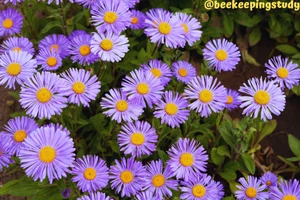
Honey bees, bumblebees, monarch butterflies, and many native bee species flock to them. Some solitary bees specialize in asters and rely on them almost exclusively.
Research from Penn State found that the straight native species of New England aster received three times more pollinator visits than the cultivar ‘Purple Dome.’
Joe Pye Weed & Ironweed – to fill a Critical mid-to-late Summer Gap
These two mostly attract butterflies. However helpful for bees as well.
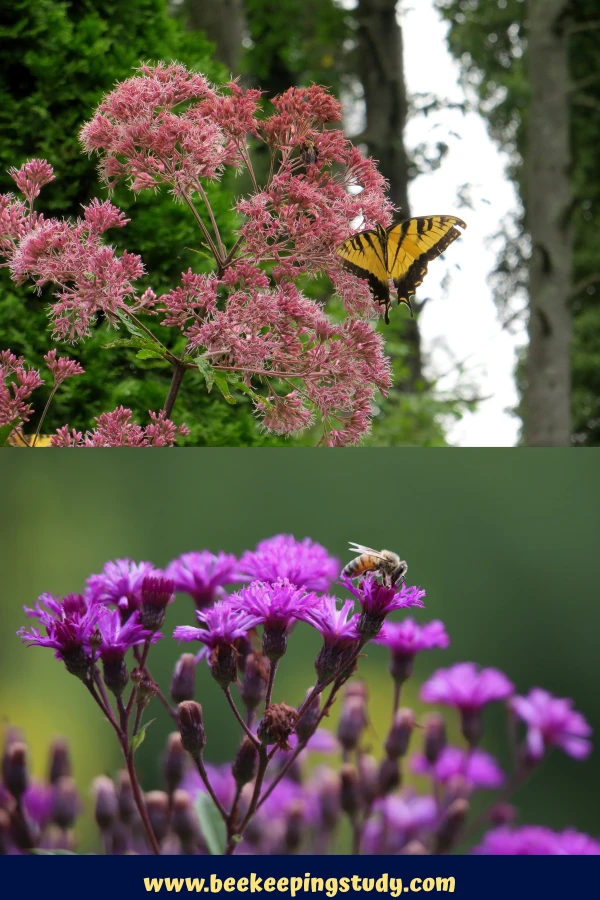
Joe Pye Weed (Eutrochium species)
- Produces massive dome-shaped clusters of pink-purple flowers. Each cluster can contain dozens of flowers.
- Multiple pollinators can feed on a single plant at the same time.
- Bees of all kinds forage on it, including honey bees, bumblebees, cuckoo bees, and leafcutter bees.
Ironweed (Vernonia)
- Its flowers are a vivid, deep magenta-purple.
- Butterflies, bees, and other pollinators love them.
Sedum & Buckwheat – “A friend in need is a friend indeed”
These two very different plants share one powerful trait. They feed bees when other sources are scarce.
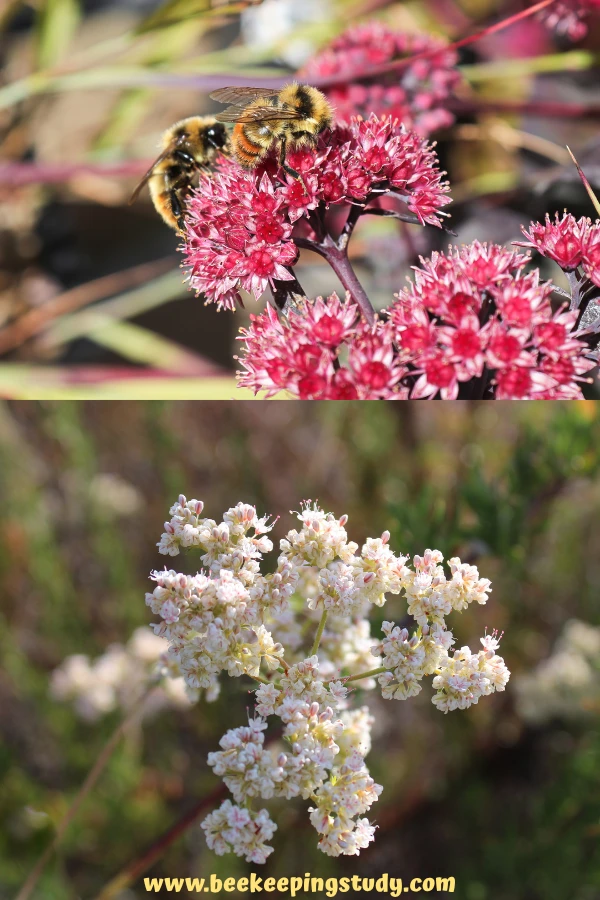
Sedum (Stonecrop)
- Its flat clusters of tiny star-shaped flowers are loaded with nectar.
- On a warm autumn day, a single sedum plant can have a dozen or more bees, butterflies, moths, and hoverflies feeding on it at the same time.
Buckwheat (Fagopyrum esculentum)
- A fast-growing annual cover crop that flowers within 3 to 6 weeks of planting.
- Honey bees are enthusiastic foragers of buckwheat.
- Bumblebees and native bees also visit it heavily.
- Buckwheat is excellent for filling the midsummer nectar dearth.
Ivy (Hedera helix)
Ivy is the last bee friendly plant in our list for the United States. English ivy is a controversial but genuinely important late-season bee plant.
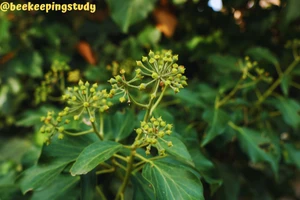
For honey bees, ivy flowers are one of the most important food sources in autumn. Studies have shown that 89% of pollen pellets collected by honey bees in September and October came from ivy flowers.
The nectar is sugar-rich. Bees use it to build up winter stores before the cold sets in. Honey bees, bumblebees, wasps, hoverflies, flies, and late-flying butterflies like Red Admirals all visit it.
Friendly Reminder & Tips for Better Pollination
Hopefully now you have the list of bee-friendly plants that you can have in your garden. However, to build an ideal bee-friendly garden, here are some friendly tips for you.
- It is highly recommended to check your local beekeeping association’s forage list when deciding your ultimate list.
- Plant in clumps of 3+ feet or 5–7 plants of one species.
- Keep varieties across each season so that bees can have pollen throughout the entire year.
- Try different plants in different years and stick with the one that mostly worked in the previous year.
- Avoid pesticides in any of the bee friendly plants. Pesticides are harmful for bees.
So, which bee-friendly plants do you currently have in your backyard? Let me know! Happy Apiary!