This post might be created with help from AI tools and carefully reviewed by a human (Anthor Kumar Das). For more on how we use AI on this site, check out our Editorial Policy.
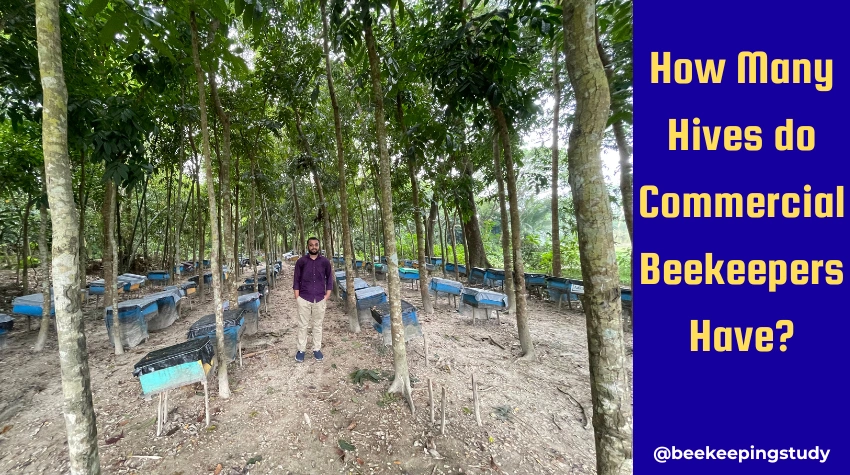
How Many Hives Do Commercial Beekeepers Have?
Before starting commercial beekeeping, one of the major considerations is how many hives to get started with commercial beekeeping. Before starting my beekeeping journey, I got the idea from other experienced beekeepers in my area.
So, how many hives do commercial beekeepers have? The hive count is different in different regions. In the United States, Commercial beekeepers usually have 50 to 500 hives. On the other hand, in the United Kingdom, this number is between 30 to 400 hives. In Asia, this number is between 50 to 200 hives in most cases.
However, the exact number can vary based on expertise, the goal of the beekeeper, environmental factors, and resources available.
If we can get an idea of the average number of hives for commercial beekeeping, we can easily set our goal before starting our commercial beekeeping journey.
That’s what I am going to discuss with you in detail. From my 10+ years of beekeeping experience and learning from other beekeepers, here is what I am going to share with you in this article.
- What Is Commercial Beekeeping?
- How Much Hives On Average Do Commercial Beekeepers Have?
- And How Do You Make Money As A Commercial Beekeeper?
Who Is Called A Commercial Beekeeper?
A beekeeper who keeps bees to make money from them is called a commercial beekeeper. Usually, commercial beekeepers have large apiaries. Above 25 to a few hundred hives may a commercial beekeeper can have.
More precisely, the aim of beekeeping to make money can be considered as commercial beekeeping. The person involved in it is called a commercial beekeeper.
The amount of honey a single beehive produces is, on average, 60 to 100 pounds per year. Thus, more beehives mean more excess honey and more earning opportunities.
People also keep bees as a hobby. In the case of hobbies, the main purpose is not to make money through them. But still, you can make money by selling honey and bee products, without having a commercial apiary.
In commercial beekeeping, there is a large no. of hives per apiary. In the general case, it is usually 2 to 6 hives per apiary.
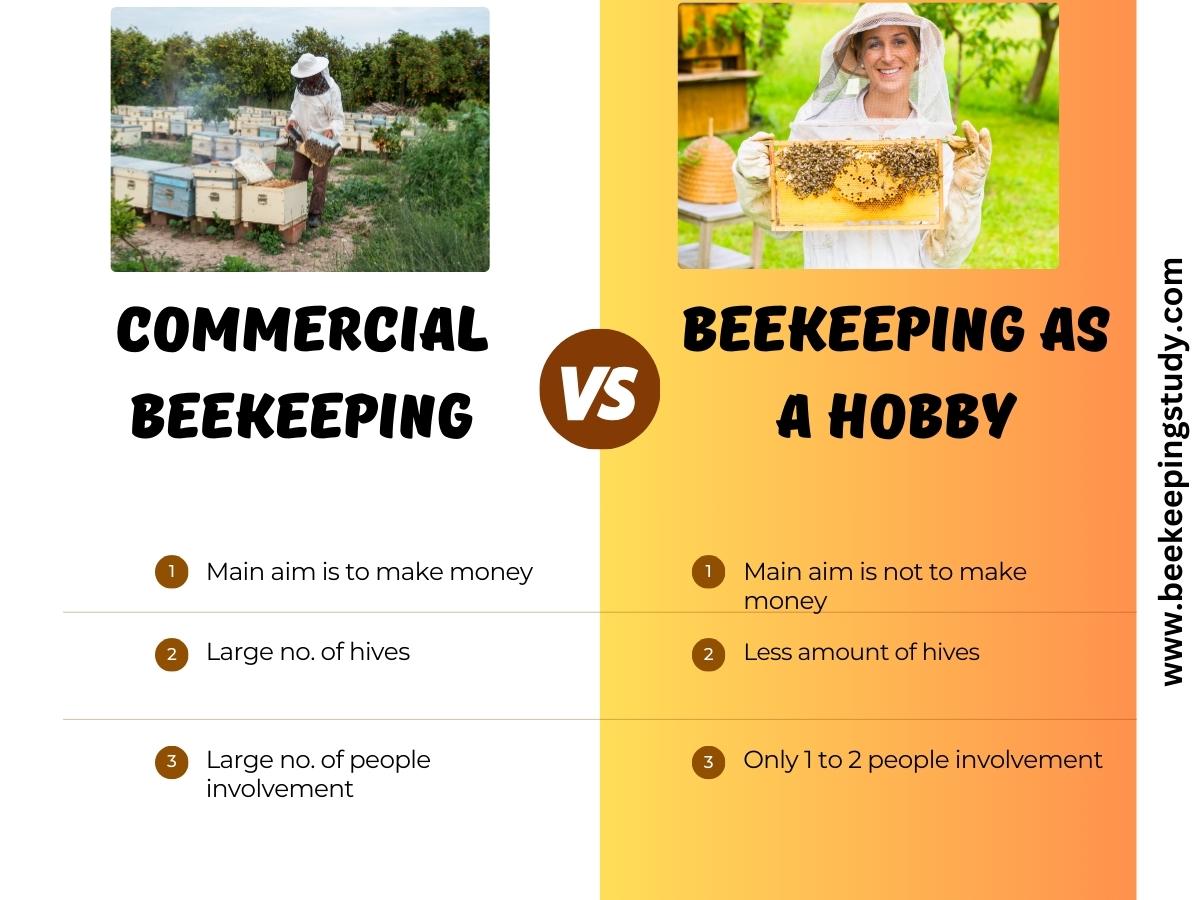
Differences Between Commercial Beekeeping Vs Beekeeping As A Hobby?
You can distinguish commercial beekeeping and beekeeping as a hobby from the following points of view.
| Consideration | Commercial Beekeeping | Beekeeping As A Hobby |
| Size Of Apiary | Usually 20 to 35 hives per apiary | Not more than 10 hives per apiary |
| No. Of Hives | A few to a few hundred | Usually, less than 50 hives in total |
| Money Making Goal | Mandatory | Not mandatory, but have options |
| No. of people involvement | A large group of people | Usually, 1 to 2 persons |
| Apiary Type | Permanent Or Mobile Apiary | Permanent |
We can say commercial beekeeping involves large-scale beehive maintenance. So, a large group of people are mandatory for hive maintenance.
But a single person or somebody who may be with his/her fiance can start beekeeping as a hobby. They would not require a large no. of hives. They can start with one or two hives. My recommendation is to start with 2 hives.
So, How Many Hives Do Commercial Beekeepers Have?
In the United States, commercial beekeepers have on average 300 to 600 hives. In fact, some commercial beekeeping associations, having a large no. of people involved, have more than 10,000 hives. Doesn’t it sound insane!
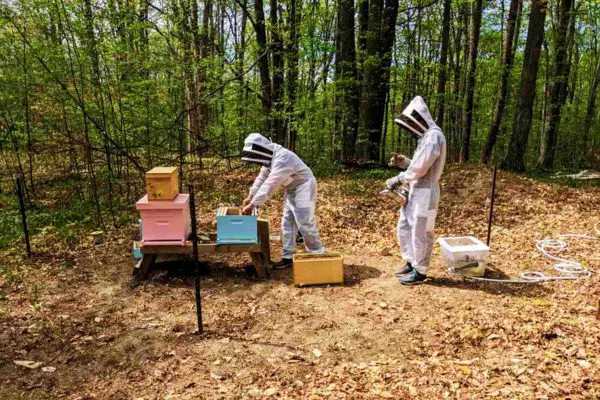
Though it seems insane, it is hugely profitable. The math is simple, the more people involved and the more space you have, the more no. of hives you can have. Also, more no. of hives for commercial beekeeping means more revenue will be generated.
Important Info: In the US, as of today (24 December 2025), Sweet Harvest Foods is the leading commercial beekeeping company with 120k+ hives. They have 100+ beekeepers involved for the maintenance. The second leading company is Adee Honey Farms with 80k+ hives.
In the United Kingdom, usually, commercial beekeepers have around 300 hives on average.
Whereas in Asian regions, commercial beekeepers have 100 to 200 hives on average. The number is lower for Asian regions due to the unavailability of modern beekeeping tools.
This number will vary for different regions. But on average, you can say commercial beekeepers have 200 to 600 hives worldwide.
Without having any prior knowledge, you can’t go with a large no. of hives. You should go with a proper plan to start making money through beekeeping.
You should pick the right spot to set your apiary. Then learn how to manage them and come up with a proper plan. If your plan goes wrong, it’s probably going to be costly for you.
How Many Beehives To Start Making Money?
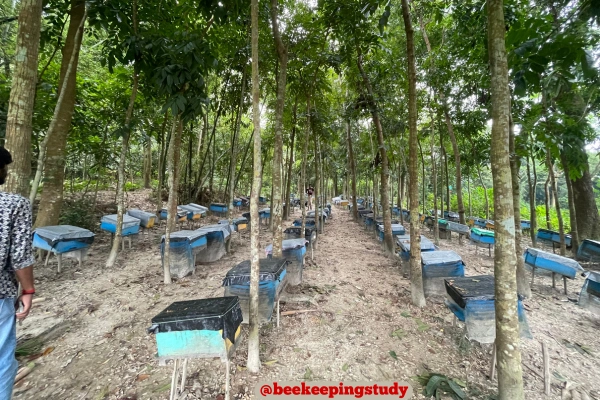
- Your Region: If you are living in a location where most of the time of the year, the environment is harsh, you may not start with more than 20 hives at the beginning. If your area has good weather conditions maximum time, you can even go with 100 hives. A bee-friendly weather is considered not too cold and not too hot.
- Budget: Budget matters the most. The more you can spend, the more hives you can afford to get started. Having proper knowledge will reduce the cost of beekeeping.
- How Much Land Do You Have: Obviously, you require a large no. of space for a large no. of hives. Each beehive will have, on average, 20-25 inches on both sides. Also, you have to keep at least an 8-inch gap between consecutive hives.
- No. Of People: If you have large people, you can go with a large no of hives.
- Demands of Bee Products: It is a crucial factor to be considered. If you have a large apiary but there is not much demand for bee products in your region, it might not be worth going with a large no. of hives. Because your beekeeping earnings estimate will largely depend on the demand for bee products in your target market or region.
- Availability of Modern Beekeeping Tools: If you have an excess of modern beehive monitoring tools, you will be able to easily manage a large no. of hives.
Common Ways To Make Money Through Commercial Beekeeping
No, obviously not. There are various ways that commercial beekeepers use to generate income.
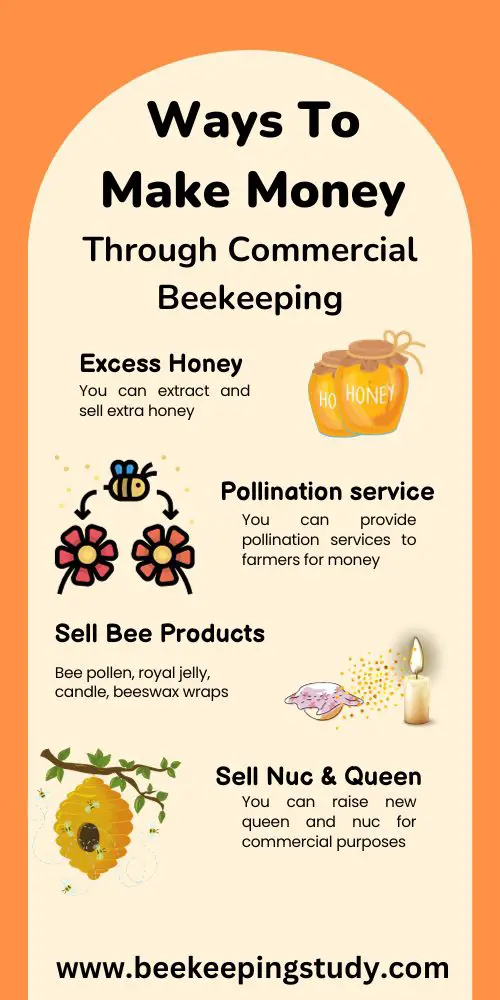
- From Excess Honey: Keep the necessary amount of honey in the hive that your bees need to survive winter. Then extract the extra honey for commercial purposes.
- Selling Wax: You can also sell wax and candles produced from wax.
- Selling Bee Products: You can make different bee products from honey and wax and sell them. Famous bee products are lip balm, beeswax wraps, candles, honeycomb, royal jelly, etc.
- Bee Pollen: Bee pollen is very nutritious for humans and pets. Bee pollen is widely used for allergic treatment for dogs and other animals.
- Providing Pollination Services: Commercial beekeepers that have mobile apiaries also make money from farmers by providing pollination services.
- Selling Nucs: You can produce a new nuc and sell it to other beekeepers.
- Rearing And Selling Queens: Sometimes, beekeepers have to purchase a queen in a cage to requeen a queenless hive or for other purposes. So, you can raise 2 queens within each hive. Put one queen in a cage that you are going to sell.
Frequently Asked Questions
How many hives do most beekeepers have?
Most beekeepers have 10 to 25 hives. In the case of commercial beekeeping, most have over 400 hives.
Can you make a lot of money beekeeping?
If you are a full-time beekeeper having over 300 hives, it is expected you will be able to make a decent amount of money. The amount of money you can earn depends on your planning and investment of people and resources.
What is the most profitable part of beekeeping?
The most profitable part is increasing pollination near the beehives. If your apiary is placed inside a crop field, it will increase crop production in your region. You can also provide pollination services to local farmers for money.
Final Words And References
References Related to The Topic
- Right Time To Inspect A Hive.
- Economic Value Of Commercial Beekeeping – download the pdf.
- Conditions When You Should Avoid Opening A Beehive.
- Designing and implementing a genetic improvement program in commercial beekeeping operations. Authors: Gertje Eta Leony Petersen, Peter F. Fennessy, Peter R. Amer, & Peter K. Dearden.
- An overview of the United States Beekeeping Industry.