This post might be created with help from AI tools and carefully reviewed by a human (Anthor Kumar Das). For more on how we use AI on this site, check out our Editorial Policy. This post may contain affiliate links. We may earn a small commission at no extra cost to you. Learn more.
6 Best Beekeeping Books for Beginner to Advance Beekeeper

Reading honey bee farming related books is one of the effective ways to learn beekeeping. I have read so many books on beekeeping. Among those books, “The Beekeeper’s Bible by Richard A. Jones & Sharon Sweeney-Lynch” seems to be the most useful book to me. This book covers honey bee behaviours, lifecycle, honey usage, and beekeeping best practices.
I know reading a single book may not provide you with everything you need to learn about honey bee management. That’s why I prepared my pick for the 6 best beekeeping books.
I suggest you at least have the first 4 of these books in order to gain most of the knowledge you need for honey bee management.
Reading books related to bees and beekeeping is one of my favorite ways to enhance my knowledge of beekeeping. I have read more than 25 books related to bees and beekeeping so far. My list is increasing day by day.
However, from my list, I have chosen the 6 best books on beekeeping. If you want to learn beekeeping by reading books, hopefully, these 6 books will be very useful.
I am giving you the books in priority order. So, you can start from the first book. When you are done reading the first book, then read the second one and so on.
4 Must-Have Best Beekeeping Books
First of all, you have to learn the lifespan and basic lifestyle of honey bees. You should know basic chemistry and biology going on inside a honey bee colony. That’s why you have to learn the biology of honey bees first, then you can move on to books related to beekeeping.
I am sharing the must-have top 4 best beekeeping books first. Then I will share 2 more books on beekeeping that are also useful.

1) Biology of the Honey Bee – Mark L Winston
Our first pick is “Biology of the honey bee by Mark L Winston“. This is what I found very informative to learn about honey bees. This book broadly covers the following major topics.
- Evolutionary history of honey bees.
- Honey bee anatomy.
- Different honey bee nest architectures.
- Honey bee communication mechanisms.
- Role of queen, workers, and drone bees.
- Mating flights of queens and drones.
- Honey bee defense mechanism and collection of food.
This book will give you a complete vision of how things go inside a honey bee colony. That’s why my first recommendation is that every beginner beekeeper should read this book first.
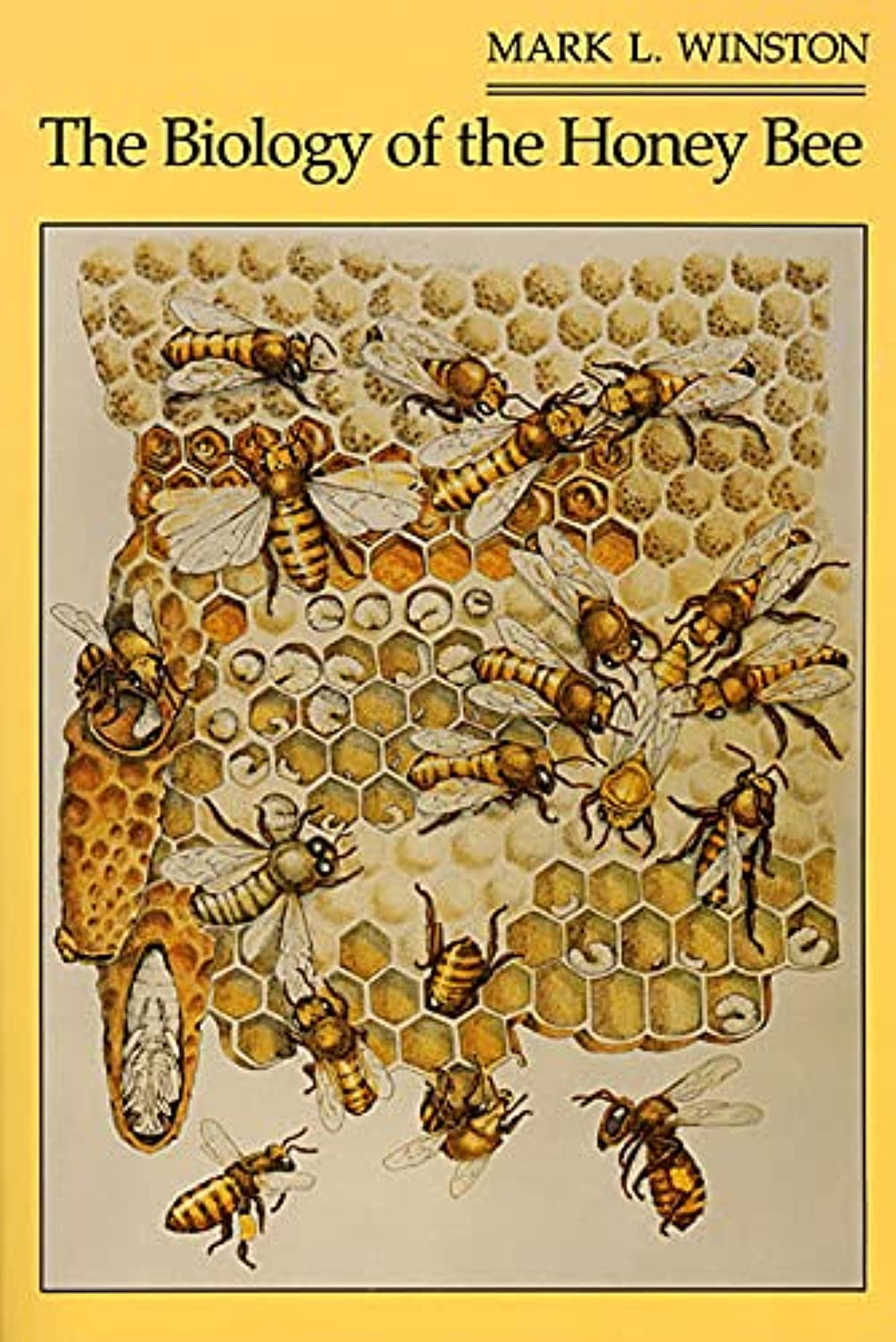
The Biology of the Honey Bee — Mark L Winston
The most comprehensive guide to honey bee biology – covers nest architecture, division of labor, swarming, mating cycles, and the social organization that makes bee colonies extraordinary.
See Price on Amazon →
2) The Beekeeper’s Handbook
After getting knowledge about honey bees and their basic biology, you can move on to a book that shares the steps of starting your first honey bee apiary. There are a lot of books available for this. The one that is most suitable for beginners is “The Beekeeper’s Handbook Paperback” written by Diana Sammataro and Alphonse Avitabile.
This book covers almost everything you need to know to kick off your beekeeping journey. The following major things are covered in this book.
- Learning honey bee colony activities.
- Accumulating the necessary tools to start your apiary.
- How to get your first bee package.
- How to transfer a package of bees to a full-sized hive.
- Feeding bees and taking care of bees.
- Queen rearing and requeening queenless hive.
- Bee diseases, pests, and parasites.
- Hive management for different seasons, etc.
This book will deliver you basic guidelines for managing the overall health of the colony. Also, shares techniques on how to winterize a hive. So, this will be a great one to learn the basics of beekeeping.

The Beekeeper’s Handbook — Diana Sammataro & Alphonse Avitabile
The best single-volume guide to start beekeeping – step-by-step instructions for setting up an apiary, seasonal colony care, Varroa mite prevention, and maintaining a healthy, honey-producing hive.
See Price on Amazon →
3) Beekeeping For Dummies – David Wiscombe
This book is suitable for both beginners and those who want to learn advanced techniques of honey farming. This book is great for teaching you how to get the maximum out of a beehive. Because this book covers honey extraction, bottling, and selling ultimate guide.
This book is mostly suitable for United Kingdom beekeepers. You will get a step-by-step guide to start beekeeping. Besides the effects of honey bees various diseases and what to do.
The major topics covered in this book are:
- Honey extraction to selling guideline.
- Suitable location to place your apiary.
- Setting everything rightly for a healthy colony.
- Honey bee swarming behavior in different climates, etc.
This book is my 3rd recommendation for the best beekeeping books. Because you will learn some advanced-level honey farming practices here. So, first read the 2 books above, then read this book.

Beekeeping For Dummies – 5th Edition
The most comprehensive guide for hobbyist beekeepers – covers getting started, bee nutrition, colony health, honey extraction, and advanced techniques with a simple, easy-to-follow approach.
See Price on Amazon →I love the way the author explained everything in this book. Easier to understand and relate to the best practices of beekeeping. This is why this book is my top favorite book in beekeeping.
4) The Beekeeper’s Bible
“The Beekeeper’s Bible” by Richard A. Jones, Sharon Sweeney-Lynch is a real treasure for commercial beekeepers. This book covers the most important things to make the most outcome from commercial beekeeping.
The major topics covered in this book are:
- History of beekeeping from the Ancient Era to the modern era.
- Managing hives in different circumstances.
- Ideas of different bee products.
- Production of a variety of bee products guide. (e.g. honey, recipes, candle, wraps, handcrafted bee products, etc)
- The ultimate guide to getting the maximum out of a hive.
This book specially covered all commercial beekeeping techniques for Beekeepers in America. Beekeepers in the American region must read this book. It has all the quality information to generate maximum profit through commercial beekeeping.

The Beekeeper’s Bible – Bees, Honey, Recipes & Other Home Uses
Part handbook, part history, part cookbook – covers hive management, honey harvesting, beeswax crafts, and nearly 100 honey-based recipes. A beautifully illustrated guide to maximize your hive’s potential.
See Price on Amazon →
2 More Useful Books on Beekeeping
The above 4 beekeeping books are must-have for serious beekeepers. I have 2 more favorite books on beekeeping if anybody is interested in learning more about bees and beekeeping.
5) The Bees in Your Backyard
“The Bees in Your Backyard by Joseph S. Wilson and Olivia Messinger Carril” is specially focused on North American bees.
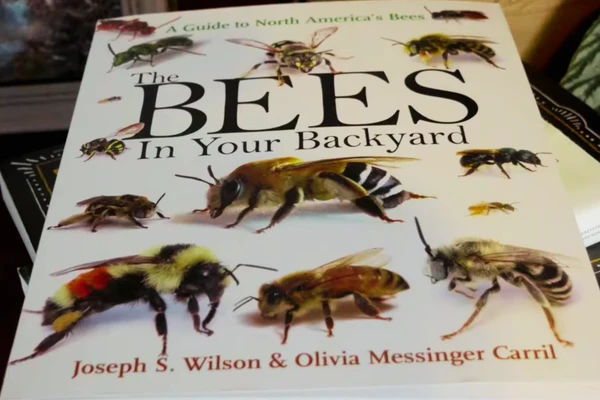
This book covers the following.
- Discussed about around 4,000 bees found in North American regions, including the USA & Canada.
- Contains 900+ color photos of different North American bee species.
- Provides helpful identification tips for different bee species in North America.
- Also provides helpful tips and tricks to attract more bees to your garden and backyard.

The Bees in Your Backyard – A Guide to North America’s Bees
Covers 4,000+ bee species across the US and Canada with 900+ stunning color photos – includes identification tips, nesting habits, and a full chapter on attracting bees to your backyard.
See Price on Amazon →
6) 100 Plants to Feed the Bees
“100 Plants to Feed the Bees, written by The Xerces Society“, is an excellent book that covers plants that help bees. From this book, you will be able to know which plants are most useful to provide food to the greatest pollinators of the earth.
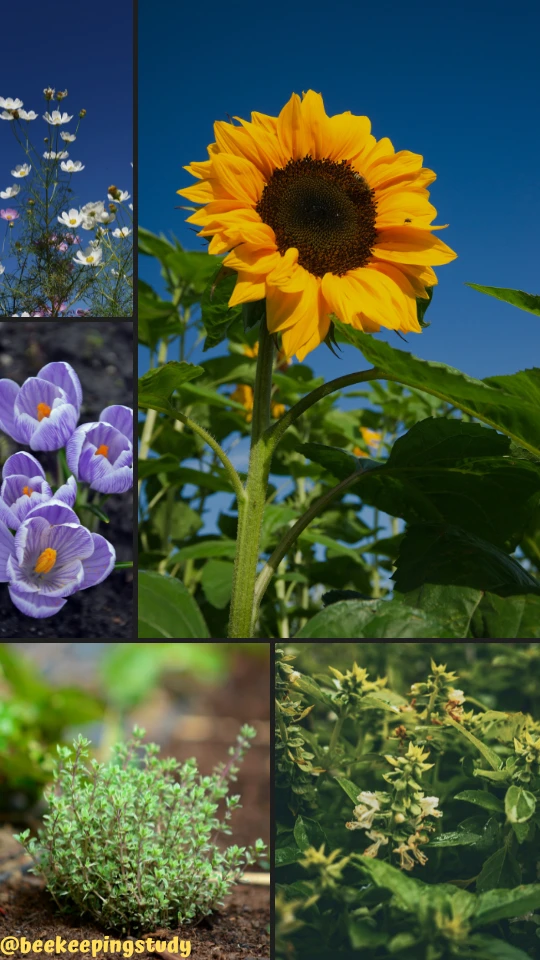
This helps you to choose pollinator-friendly plants for your garden. This book covers 100 plants that will help bees and the owner of the garden as well. Planting these bees you will be able to help the bees as well.

100 Plants to Feed the Bees – Provide a Healthy Habitat to Help Pollinators Thrive
Profiles of 100 pollinator-friendly flowers, herbs, shrubs, and trees – helps you pick the right plants to support bees, butterflies, and hummingbirds throughout the growing season.
See Price on Amazon →
Frequently Asked Questions
Beekeeping is not going to be an expensive hobby if you want to go with a single hive. If you want to start commercial beekeeping it might require some initial investment. Thus the expense of beekeeping depends on the purpose and scale of the production. There are a lot of ways to earn money through bees and beekeeping. From my perspective rearing queens, and selling bee nuc is the most profitable bee business. If you have mobile apiary providing pollination service is also a good profitable bee business. Beekeeping is both a challenging and rewarding side hustle. Anyone of any age can start beekeeping as a side hustle. It is always preferred to learn the basics of beekeeping before starting your first colony.Is beekeeping an expensive hobby?
What is the most profitable bee business?
Is beekeeping a good side hustle?
Final Thoughts
Reading beekeeping books is an excellent way of learning beekeeping. But to learn beekeeping my recommendation is to join a local beekeeping community. They will teach you everything by hand.
Reading books is never a lost project. Reading books is an excellent way to enhance knowledge on any topic. So, whether you are in a beekeeping community or not, reading beekeeping-related books will always help to build a healthy honey bee colony.
Beekeeping is both challenging and rewarding as well. So, reading beekeeping books will help you to deal with different worst-case scenarios during beekeeping.
The 6 books discussed above are the best books that I have ever found in the literature of beekeeping. These books will guide you on how to requeen a hive, winterize a hive, queen rearing, feeding bees, bee disease, and everything you need to know to achieve the best outcome of beekeeping.