This post might be created with help from AI tools and carefully reviewed by a human (Anthor Kumar Das). For more on how we use AI on this site, check out our Editorial Policy. This post may contain affiliate links. We may earn a small commission at no extra cost to you. Read our affiliate disclosure.
Why Does Honey Crystallize – Tips to Prevent

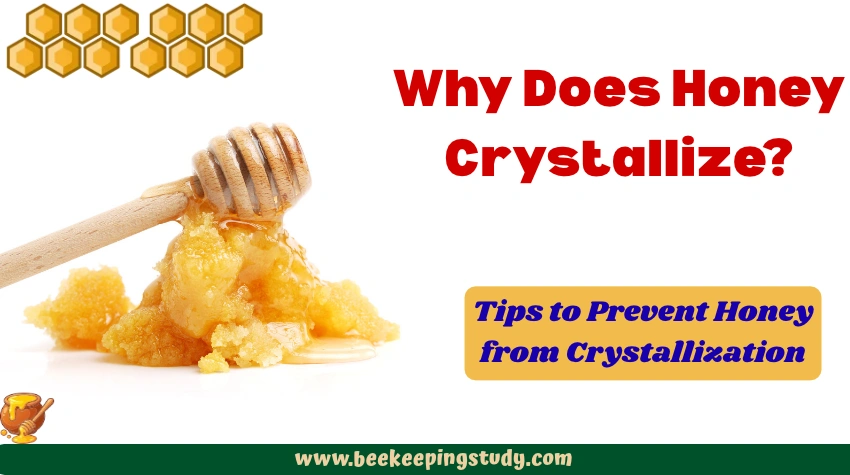
Crystallization is when liquid honey turns cloudy, grainy, or solid. Crystallization doesn’t mean it’s spoiled. It’s just chemistry.
We are about to explore why honey crystallizes and how to prevent its crystallization. I will share the tips that I follow in order to store my honey for a long.
Key takeaways
Why does honey crystallize? Low water content and high sugar content is the main reason for honey crystallization. Though it also depends on how honey harvested, handled, and stored.
How to Prevent Honey Crystallization? Following proper harvesting method and proper storing methods. You can keep bulk honey in a honey warming cabinet under proper temperature to prevent crystallization.
What Is Honey Crystallization?
It is a state of honey when the glucose separates from water and forms sugar crystals. Most honey holds more glucose than it can keep dissolved. So the glucose can crystallize on its own at room temperature.
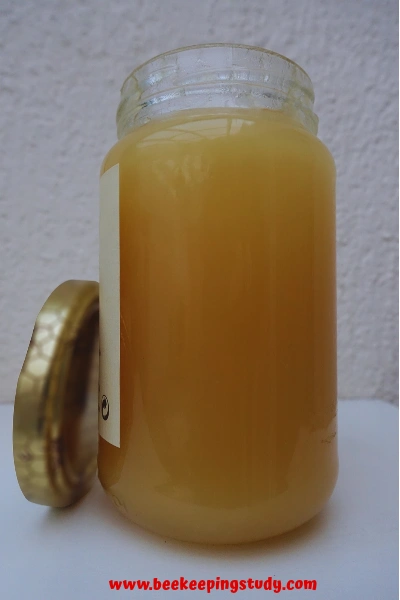
Think of stirring too much sugar into tea. Some of it eventually settles out.
How fast honey will crystallize usually depends on several factors.
- Sugar balance: Honey with a fructose-to-glucose ratio above 1.33 stays liquid for a long time. Below 1.11, it crystallizes quickly. A glucose-to-water ratio below 1.7 means slow crystallization, and above 2.0 means fast and complete crystallization.
- Flower source: It is found that goldenrod honey crystallizes in about three months. Basswood or tupelo honey may stay liquid for years.
- Temperature: Research shows crystallization is fastest at about 10 to 15°C. Above 30°C, it doesn’t happen because glucose dissolves more easily.
- Tiny particles: Pollen, wax, and dust act as starting points for crystals.
Note: For most honey, crystallization often shows up after three to six months of storage.
Why Does Honey Crystallize? (Most Possible Reasons)
Honey crystallizes for a lot of different reasons. These start from inside the honey. Other external reasons can be beekeeping practices, handling methods, storage, and more. Let’s go through them one by one.
Too Much Sugar in Too Little Water: The Root Cause
Honey contains 70%+ sugar and usually less than 20% water. That’s a lot more sugar than the water can comfortably hold, so the mix is “supersaturated.”
Over time, glucose drops out so the honey can reach a more stable state. When that happens, glucose bonds with water and forms solid glucose monohydrate crystals. Those crystals link together and trap the rest of the honey, which turns it semi-solid.

Every reason below does one of two things. It either pushes more glucose out of the liquid, or it gives the crystals a place to start growing.
Reasons Inside the Honey
The primary reasons behind honey crystallization start with the components and mechanism inside honey itself.
- High glucose content: Honey with less than 28% glucose usually doesn’t crystallize. Honey with more than 35% glucose crystallizes quickly.
- A low fructose to glucose ratio: Fructose stays dissolved much more easily than glucose. So the balance between the two matters a lot. Honey with a fructose to glucose ratio above 1.33 stays liquid for a long time. Below 1.11, it crystallizes quickly.
- Low water content: This one surprises people. Drier honey crystallizes faster. With more glucose and less water, the honey is even more supersaturated, so crystals start forming sooner. When the glucose-to-water ratio is below 1.7, crystallization is slow. Above 2.0, it’s fast and complete.
- Other sugars in the mix: Sucrose, maltose, and water also had a significant effect on crystallization. Honey contains more than 180 identified substances, including minerals, acids, and proteins. These affect the crystallization process too.
- Melezitose (the “cement honey” sugar): This mostly affects honeydew honey. When honey contains 20% or more melezitose, it crystallizes right inside the comb. It gets so hard that beekeepers can’t spin it out. Other research links levels as low as 8 to 20% to crystallization. It can happen very fast. This kind of honey can turn gel-like or crystallize just 2 or 3 days after the bees collect it.
- The flower source: This is the biggest real-world predictor. Rapeseed (canola) is the most famous fast crystallizer. Mustard honey often crystallizes within weeks of harvest. Goldenrod takes about 3 months, while basswood or tupelo may stay liquid for years. The National Honey Board lists alfalfa, cotton, dandelion, mesquite, and rape as faster than average. Acacia, sage, sourwood, tupelo, and gallberry are slower than average.
- Harvest season: This matters too. I have seen July harvest stay liquid, but fall honey from goldenrod and asters only stays liquid for around a month. I also noticed later-season honey crystallizes sooner than early-season honey.
Reasons Regarding Beekeeping Practices and Handling
Honey crystallization is also affected by beekeeping practices and handling throughout the whole harvestment process.
- Pollen, wax, dust, and propolis: Crystals need a starting point. Any small particle can trigger crystallization, including dust, pollen, bits of wax, or propolis. Crystals first form on tiny solids like pollen, dust grains, or existing crystals. Then more glucose builds up around them.
- Air bubbles: Tiny air bubbles work the same way. Bubbles trapped in the container can trigger crystallization.
Tip: Flash heating honey to 60 to 71°C (140 to 160°F) pushes out trapped air, which helps stop crystals from forming.
- Leftover crystals from older honey: Crystals that already exist are the perfect starting point for new ones.
- Comb or wax chunks in the jar: A jar with a piece of honeycomb looks pretty. But the wax gives crystals a surface to grow on, so that honey will crystallize faster.
- Stirring and shaking: Stirring and impurities like air bubbles or pollen make the honey less uniform. That makes it easier for crystals to start, so crystallization speeds up.
- Honey Extraction & Processing Methods: Honey taken out of the comb with extractors and pumps crystallizes faster than honey left in the comb. Most liquid honey crystallizes within a few weeks of extraction. Keeping honey at 40 to 71°C (104 to 140°F) during bottling also slows crystallization. Sometimes harvesting honey from moldy frames already has crystallized honey.
Reasons Regarding Storage
Proper storage of honey is crucial to prevent crystallization. If not stored properly, it will crystallize very soon.
Here are the mistakes people often make when storing honey, due to which honey crystallizes.
- Storing it in the “fast zone” temperature: Honey usually crystallizes when stored at a temperature between 8 to 20°C. Most studies found that honey crystallizes fast when stored at a temperature less than 15.5°C. Above 27°C, crystals don’t form, but the honey degrades faster.
- Temperature swings: Changing temperatures can trigger crystallization too. Once after harvesting the honey I kept it outside at day time and brought back to the home at night. I found that this actually crystallizes honey faster than keeping it inside always.
- Freezing and then thawing: Some people use freezing to prevent crystallization. However, it is also found that after freezing, once honey thaws, it tends to crystallize faster than before.
- Losing moisture from the container: Low-density polyethylene containers can let moisture escape during storage, which may help crystallization along.
- The container itself: The container also influences honey crystallization. Plastic containers are poor for storing honey.
- Time: Given enough time, nearly all honey crystallizes, since it’s supersaturated. At room temperature, it usually starts within weeks or months.
Reasons Inside the Hive
Sometimes honey crystallizes before it’s even harvested. Fall honey crystallizes in the frames sooner because nights get cooler and bees only keep the brood area warm.
Spring brings a similar problem. I talked with an American beekeeper, Edward Terrena, who said spring honey can crystallize in the cold edges of the hive. He warned against leaving capped honeycombs out of the hive’s warmth for many days before extracting.
Note: All of these reasons takes to one root cause: whenever sugar becomes much more than water, it fails to disolve which results crystallization.
How to Prevent Honey Crystallization
If you want to stop honey crystallization forever, it may not be possible no matter how you store the honey. However, we can slow down the crystallization by following proper storage methods.

Avoid the 10 to 15°C Zone
Some beekeepers mentioned that only avoiding the temperature 15 °C is good enough. But I noticed that when I store honey above 15°C temperature it stays liquid longer than any other temperature range.
Thus, I recommend storing honey at 16 to 24°C to be on the safe side.
Choose the Right Container
Never use a plastic container to store honey. Instead, always choose a high-quality glass jar with a tight metal lid. Because honey crystallizes very fast if stored in a plastic container. The lid must be properly tightened every time after use.
If you are purchasing bulk honey, you can also use a food-grade bucket for proper storage.
Glass Honey Containers – Daily Use vs Storage

Hunnibi No-Drip Glass Honey Dispenser – 8 oz
One-hand trigger pour for tea and toast – ideal if you use a little honey every day

Adodeen Airtight Glass Storage Jar – 32 oz
Thick, lead-free airtight glass – ideal for storing larger amounts of honey in the pantry
When Honey Warming Cabinet Becomes Handy?
This is the most controversial part. Many people claim that frozen honey doesn’t crystallize for years. But I have seen that storing honey at too low a temperature degrades the quality of honey significantly.
Crystallized honey is totally safe. You can easily liquefy crystallized honey with the help of a honey warming cabinet or honey bucket heater. No matter what you use, just keep the honey around 40°C (104°F).
I love this tool. Because in a honey warming cabinet you have more flexibility to control the temperature than in a freezer.
You can make a honey warming cabinet using an old refrigerator or even without a refrigerator in your home. Or you can purchase one as well.
Honey Warming Options – Buckets vs Jars

FUFAXHX 5 Gallon Honey Bucket Heater – 50–122°F, 24H Timer
For honey stored in 5-gallon buckets – set it around 104°F to melt crystals gently

CAMMOO 5-Tier Heated Holding Cabinet – 133 Qt
Holds batches of jars on 5 shelves – adjustable from 86°F to keep honey near 104°F
Strain it Finely
Particles speed up crystallization, especially small bits of honey that have already crystallized. Straining as finely as you can helps.
Choose the Right Variety
If you are purchasing honey, choose the variety high in fructose. Such as tupelo or acacia, which rarely crystallize. On the otherhand canola honey crystallizes faster.
Be Careful with Heat
Some people use a method like flash-heating (71°C) honey and then cooling it quickly to prevent crystals. But this poorly affects the quality of honey. Enzymes start breaking down around 120°F (49°C), and longer heating does more damage.
Make Creamed Honey
Creamed honey stays creamy indefinitely at around 65°F (18°C). Creamed honey is also useful for making delicious dishes.
So, by making creamed honey, you prevent honey from crystallizing and can enjoy it in many delicious dishes.
Already Crystallized?
If you have already crystallized honey, storing it in a honey warming cabinet at a slightly higher temperature, around 40°C, will be useful. But this method will take a few days.
If you need a faster solution, here is how you can do this easily.
- Take the lid off and set the jar in warm water no hotter than 110°F (43°C)
- Stir every five minutes until it turns liquid again
That’s it! You have successfully decrystallized crystallized honey within a few minutes.
Note: Honey only needs to reach about 40°C (104°F) to melt the crystals. So, never use high heat or boiling water.
Keep Honey Liquid – Tools and Varieties

VIVO Double Sieve Honey Strainer – Stainless Steel
Two mesh layers catch wax bits and debris that help crystals form – fits 5-gallon buckets

TempPro TempSwift Digital Thermometer – 1 Sec Reading
Fast digital readings help keep your warm-water bath under 110°F when decrystallizing

Sleeping Bear Farms Raw Tupelo Honey – 2 lb Jar
Raw tupelo honey, high in fructose – can stay liquid for years in the pantry

Sanniti Fulmer Hungarian Acacia Honey – 17.64 oz, 2 Pack
Hungarian acacia honey, high in fructose – a good pick if crystals bother you
The Bottom Line
Honey crystallizes because it holds more sugar than its water can dissolve. High glucose, low fructose, low moisture, and certain sugars like melezitose all make it happen faster. So do pollen, wax, air bubbles, and leftover crystals.
Storage matters most. Because if you don’t store it in a proper container and at the proper temperature, honey will crystallize faster.
Honey crystallization doesn’t mean it is spoiled. You can easily decrystallize it and retain most of its actual quality.