This post might be created with help from AI tools and carefully reviewed by a human (Anthor Kumar Das). For more on how we use AI on this site, check out our Editorial Policy. This post contains affiliate links. We may earn a small commission at no extra cost to you. Learn more.
What Is a Nuc in Beekeeping? (Types, Costs & Buying Tips)
A nuc or nucleous colony in beekeeping simply refers to a smaller version of a large beehive consisting of the queen or queen broods with some worker bees and drone bees. It is usually smaller than the actual beehive.
A nuc is very important for beekeeping. Having a nucleus colony is a great way to kick off beekeeping as a beginner. That’s why you are here to find a detailed answer to What is nuc in beekeeping?
I also started my honey farming by purchasing a Nuc of bees and transferring the Nuc to a full-sized hive. If you are a beginner, you must know the most important things about a nuc of bees.
This is what I am going to tell you in this article. From this article, you will learn:
- What is a nuc in beekeeping?
- What is inside a nuc and the different types of nuc?
- Differences between the Nucleus colony and the Packaged bees.
- What to consider when purchasing a nuc with expert tips.
- Mistakes to avoid related to getting a nuc and setting it up.
What Does “Nuc” Mean in Beekeeping?
The term Nuc is mostly used as a shortened version of “Nucleus colony”. But people often get confused because some beekeepers use terms like “a nuc” and “a nucleus colony” for different meanings.
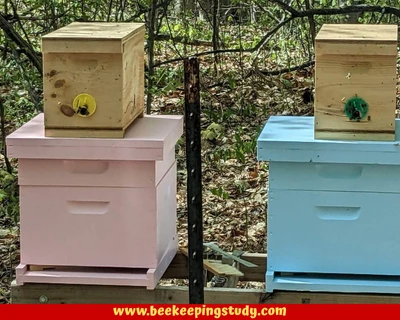
However, the correct meaning should be a nuc is a small version of a beehive where a small portion of a honey bee colony resides. It is mostly created to build a new colony or to rear a new queen.
The spelling of nuc is something like “Nuke”.
As people often mix it up, it is important to know the exact meaning when beekeepers use nuc and nucleus colonies for different purposes.
Nuc: Simply refers the structure or the wooden box inside which the bee colony reside. Smaller version of widely found beehive types worldwide.
Nucleus colony: It means the small honey bee colony which is inside the nuc box.
Here is a quick comparison of Nuc vs Nucleus colony so that you never get confused again.
| Aspect | Nuc box (equipment) | Nucleus colony (the bees) |
| What it is? | A small physical hive box made of wood, plastic, or polystyrene. | A small honey bee colony separated from an established colony. |
| What you buy | A piece of equipment, a single box. | A living small honey bee colony. |
| Purpose | Temporary house – for transporting bees, raising queens, or making splits. | A head-start colony ready to grow into a full hive immediately. |
| Reusability | Yes – reused for splits, swarm catches, or queen rearing season after season. | No – the colony is transferred to a full hive once established. |
| Beginner need | Good to have on hand, usually not included in a beekeeping starter kit. | For beginners, Nuc is a safer option than packaged bees to head start. |
What’s Inside a Nuc?
A healthy nuc will always contain some worker bees, capped broods, a bit of capped honey, pollens, and a queen or queen cells. If the nuc is used to start beekeeping, you have to purchase it with a healthy queen on it.
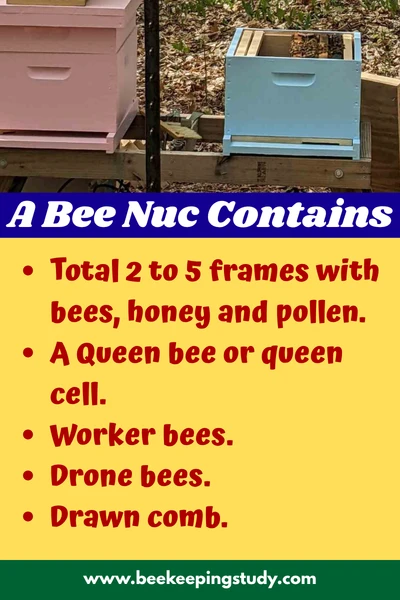
Some nuc’s may not contain the queen bee. But it will have some existing brood cell from which the worker will raise the queen. Sometimes the selected queen cell is noticeable from which the worker is raising the new queen.
The colony is not large, just a small portion of an established colony. A standard nucleus colony contains around 8,000 bees. Usually 5,000 to 10,000. On the other hand, a fully established healthy colony may contain more than 50,000 honey bees.
So, here is what you can expect inside a nuc.
- Queen bee or queen cells with broods.
- Worker bees.
- Drone bees or idle bees.
- Drawn comb.
- 2 to 5 frames with bees, honeycomb, or honey and pollen.
How Much Does a Nuc Cost?
The price of a bee nuc greatly varies based on location, frame count, queen quality, and type of nuc. Here is a basic overview of the price of nuc in 2026 that I found by doing research in online beekeeping communities.
Nuc Prices in USA (Based on 2026 Data)
I found the typical nuc price range discussed by several USA beekeepers in forums. Here is the overview.
- Budget spring nuc (5-frame): $150–$185
- Standard spring nuc (5-frame): $180–$240
- Overwintered / premium nuc: $240–$350
Nuc Prices in UK (Based on 2026 Data)
Here is what UK beekeepers are discussing about the nucleus hive price in the United Kingdom.
- Entry-level overwintered nuc (5-frame): £170–£220
- Standard overwintered nuc (6-frame): £250–£320
- Premium overwintered nuc (6-frame, poly box included): £300–£380
Pro tip: When you are budgeting your beekeeping cost, don’t sacrifice or try to reduce the nuc cost. A good quality nuc is vital, thus it may cost a bit higher. You can use our beekeeping cost calculator to get an estimated idea for optimal budgeting.
Types of Nucs
There are several types of nuc available. Based on the living region and beekeeping goal, there are 4 types of nucs most widely used by beekeepers.
Standard Nuc (4-frame vs. 5-frame)
The standard nuc simply referred to a nuc of bees with 4 or 5 standard honey bee frames. It contains the exact frames that are being used in a standard langstrogth beehive.
5-frame nuc is the most common industry standard, which is built with a wooden structure. This contains at least 3 frames of fully covered worker bees and brood bees. The remaining two might have less bee traffic but contain capped honey or capped broods and pollen. This is also often called “Wooden Frame Nuc” by beekeepers.
4-frame nucs are also considered standard and used by many beekeepers in the United States and the United Kingdom.
For the beekeepers in the United Kingdom, the nuc, which is made from expanded polystyrene, is very popular. Because it provides better insulation to control extra moisture during winter. This type of standard nuc is also known as “Poly Nuc” or “Insulated Nuc” due to its material or use case.
Spring Nuc
Spring nuc is the most common type of nuc you will see when trying to purchase online or from communities. Simply, a spring nuc is a nuc of bees split from an existing healthy colony during spring.
Mostly experienced beekeepers split a beehive from mid-spring to late spring to generate this type of nuc. This is one of the techniques expert beekeepers use to prevent swarming of an overcrowded colony.
A spring nuc will contain a queen or a sealed queen brood. It is widely used among most beginners to start beekeeping as it is widely available.
Overwintered Nuc
An overwintered nuc simply refers to a portion of a honey bee colony that has just survived the winter. It is the top-most recommended type of Nuc for beginners.
Because in an overwintered nuc, the queen is already tested and she survived the winter. This indicates the colony is strong and has resilience to survive winter in that particular region.
An overwintered nuc is produced from the split in the early summer of an existing colony that successfully survived the winter.
Spring Nuc vs Overwintered Nuc – Which One to Buy?
Here is the comparison of Spring Nuc vs Overwinered Nuc.
| Spring Nuc | Overwintered Nuc |
| Created in the Current Spring season from an existing healthy colony. | Created during the summer or autumn from a colony that survived an entire winter. |
| The queen is young approx 12 weeks, newly mated in the current season. | Around 1 year old, mated in the old season. |
| Available late spring, mostly May to July, depending on the region. | Available earlier between March and April. |
| It is a budget-friendly option: costs around $180–$220 / £150–£180. | Cost is typically higher, $220–$280 / £180–£250. |
| Moderate build-up speed. | Explosive build-up and rapid spring expansion. |
| Lower disease risk as the colony is newer, with fewer seasons of comb buildup. | Slightly higher disease-prone if not purchased from a trusted source. |
| Less chance of getting honey in the first year. | Guaranteed extractable honey from the first year. |
Expert tip: If you want safe and quick headstart go with overwintered nuc, as the queen is proven, the colony is tested for local environment, and higher chance of getting honey in the first year. But make sure you have all the must have knowledge of beekeeping and beehive maintanence kits and preperations. Because overwintered nuc of bees are explosive in production thus can swarm away if not managed properly.
Recommended Books to Learn Beekeeping


Storey’s Guide to Keeping Honey Bees, 2nd Edition
by Malcolm T. Sanford

The Lives of Bees: The Untold Story of the Honey Bee in the Wild
by Thomas D. Seeley
As an Amazon Associate, I earn from qualifying purchases at no extra cost to you.
Mating Nuc / Baby Nuc ( For Experienced Beekeepers)
The last popular type of nuc is mating nuc, also known as baby nuc. It is named so due to the purpose of this nuc. A baby nuc or mating nuc is mainly used to raise a new queen.
This is used by experienced beekeepers for rearing new queens for commercial purposes. This one is used to generate queen in a cage or packaged queen to sell it to other beekeepers.
Nuc vs. Package Bees – Which One is Ideal?
This is another important topic that most beekeeping beginners want to know. A package of bees and a nuc of bees are both used to start a new colony. But there are huge differences between these two methods of establishing a honey bee colony.
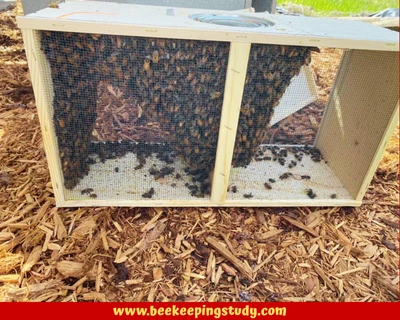
A package of bees contains unrelated worker bees with a caged queen and a sugar syrup container. There are no frames, broods, or combs with it. That means when it transfers to a full-sized hive, the bees have to build the colony from scratch.
Here is a quick comparison of a Nucleus colony vs package bees.
| Aspects | Nucleus Colony (Nuc) | Package Bees |
| What’s included | 4 to 5 frames with drawn comb, brood (eggs, larvae, capped), honey, pollen + laying queen. | ~3 lbs of loose bees, a caged queen, and a syrup can. |
| Queen status | Mated, laying, and already accepted by the colony. | Caged, expected to get accepted within 2 to 8 days. |
| Queen’s success rate | 80%-95% | 50%-70% |
| Colony buildup | Rapid. Population boom within weeks. | Slow. First builds combs, then slowly starts raising broods. |
| Feeding required | Minimal – has already capped honey and pollens. | Continuous – until comb is built and stores established by the worker bees. Typically, 6 to 8 weeks. |
| Cost | Higher – Typically $180-$250 | Lower – $100$-$150. |
| Hive Compatibility | Mostly only with the Langstroth hive and the British National Hive. | Flexible – Langstroth, top bar, Warré, British National Hive, and more. |
| Local Adaptability | Strong – local genetics, adapted to your climate and forage | Depends on from where you purchased. |
Which One is the Best Option?
You should go with nuc if you want
- Laying queen from day 1.
- Minimal feeding and management.
- Honey from the first year.
- High adaptability to your local region.
You can go with Package bees if
- Don’t find any nuc in your local region.
- Don’t have the budget for a bee nuc.
- Using hives of other than Langstroth or BS national hive.
- You want to learn honey bee colony building from scratch.
My Honest Recommendation: If you are about to start your first honey bee colony, go with Nuc instead of package bees. Because package bees doesn’t guarantee the adaptability and has a lower queen success rate.
How to Choose a Quality Nuc
To start a healthy colony, choosing the highest quality nuc is very crucial. Because if the nuc is not healthy, they might not survive long.
The most important rule is you have to purchase the nuc from your local beekeepers. Because a locally sourced nuc contains bees that are adapted to your region. Until and unless you are not getting it locally then go for other trusted sources.
What to Look For in a Good Quality Nuc
To get a good-quality nuc, you have to inspect carefully and ensure several things about the nuc. Here is my checklist to determine a good-quality nuc.
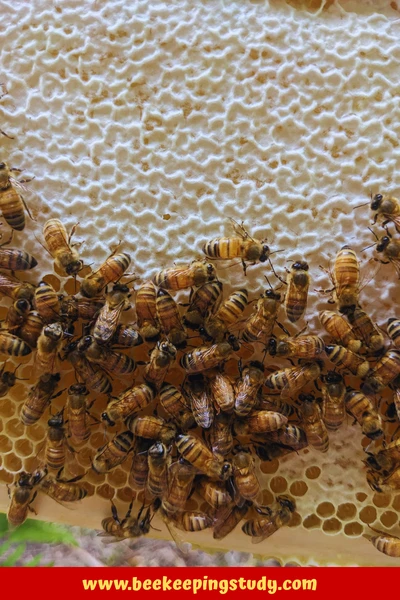
- The frames are covered by bees. The more bees on the frame, the better the nuc quality is.
- Look for a tight, solid brood pattern on the frames. A few holes in the pattern are okay.
- The nuc has broods of all stages (eggs, larvae, and pupae)
- Must have a healthy queen with 2 frames of broods and around 2 frames with honey and pollen.
- Frames must be White and caramel-coloured.
- The queen is marked, mated, and laying.
Must ensure the nuc fulfills all these 6 things before purchasing.
Questions to Ask the Seller About the Nuc
These are the most important questions you have to ask the beekeeper from whom you are about to purchase the nuc.
- Is the queen marked, mated, and laying?
- How old is the queen?
- When is the queen mated?
- Is the queen related to the worker bees?
- Is there any disease record of the colony from which the nuc is created?
- How long was the nuc in the functioning colony?
- Are the bees from a local colony or imported?
- When was the last time the hive was inspected for varroa mites and hive beetles?
- When was the last time the varroa or hive beetle treatment was performed? ( If any previous record is available).
If the seller is not willing to answer any of your questions or tries to avoid them, don’t purchase from him. Also, make sure you are purchasing the nuc from a real beekeeper.
Signs of a Poor Quality Nuc – Red Flags
This is the biggest mistake beginners often make. They ignored the signs and bought a poor-quality nuc. As a result, they lose their colony in the first year.
When I purchased my first nuc, I also ignored these signs. However, in my case, as I purchased from a local beekeeper, the nuc was of comparatively good quality.
Here are the signs to look for in order to avoid beginner mistakes when purchasing a nuc.
- The most important point is to purchase it from a local beekeeper or from someone involved in a beekeeping association.
- The seller must be honest, ask as many questions as you can so that you can identify whether he is providing you honest answer or not.
- If you see irregular brood patterns on frames, ignore that nuc.
- If there are no or very few eggs visible in the frame, ignore the nuc.
- If you notice very few bees covering most of the frames, it is better to skip that nuc.
- Don’t purchase a nuc if there is no drawn comb, capped honey, and stored pollen.
- If there are any dark or black frames in the nuc, it is a direct indication of old frames. Thus, avoid that nuc as well.
- If you found any dead bee smell, this means the nuc might have American foulbrood disease, varroa mite attack, or any other disease. It is a huge red flag.
- If bees are not calm and gentle, this means they are not happy with the queen or the colony. This is a red flag as well.
- If the seller doesn’t let you inspect carefully, run away from purchasing any beekeeping equipment from such a seller.
Note: After getting the nuc, make sure to transfer the bees from the nuc to a full sized beehive within 24 hours to 48 hours.
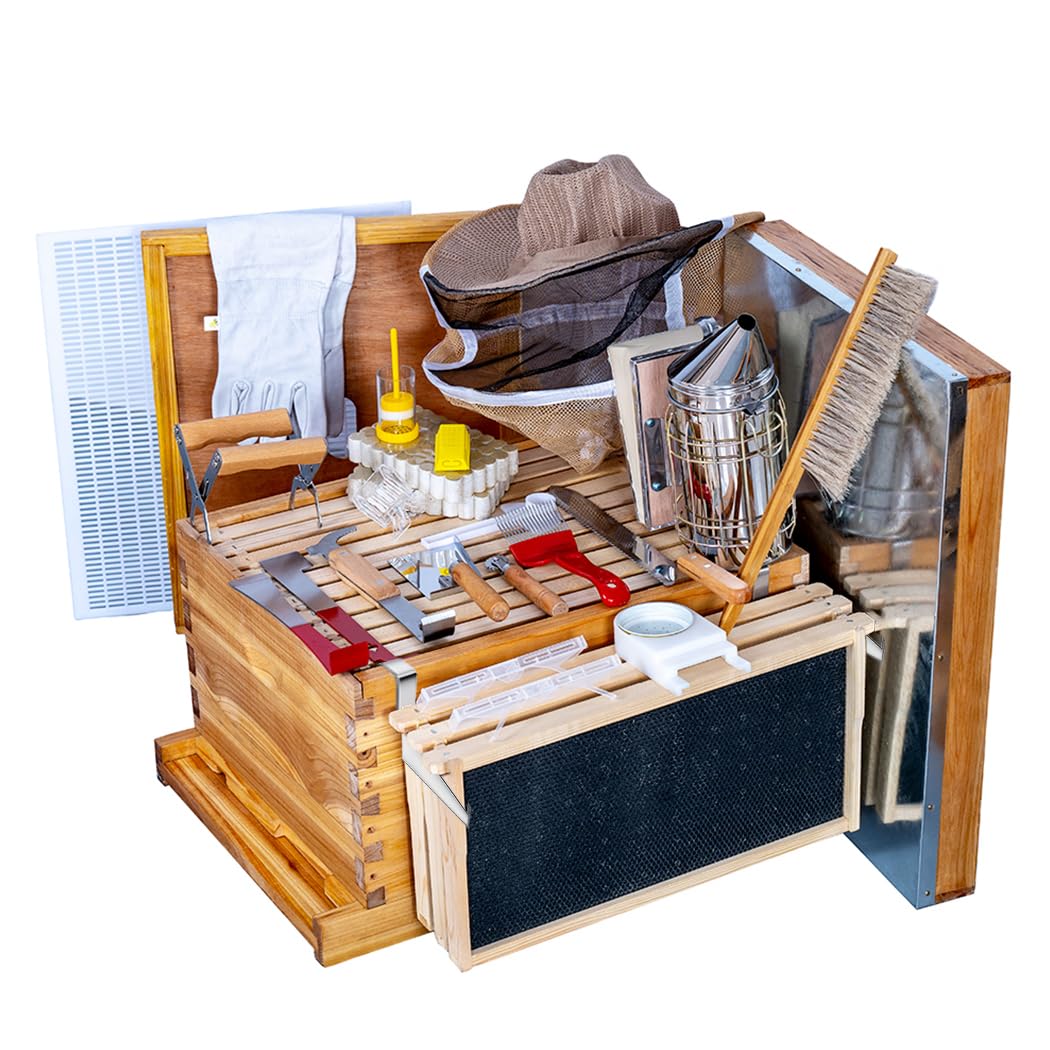
Beehive Starter Kit — 8-Frame Wax Coated Bee Boxes with Tools & Veil
Complete 8-frame setup with wax coated hive boxes, frames, beekeeping tools kit and veil — everything compatible right out of the box.
See Price on Amazon →
Frequently Asked Questions
What's the difference between a nuc and a hive?
A hive is an established colony of honey bees. On the other hand, a nuc is a small portion of a honey bee colony taken from a full-sized hive and used to establish a new colony.
How long can bees survive in a nuc?
Bees can survive in a nuc for at most 7 to 14 days. It is always recommended to transfer the nuc into a full-sized beehive within 24 hours to 72 hours.
Is it better to buy a nuc or a package of bees?
A nuc of bees is a better option for beginners for a quick head start. A package of bees is better for an expert or those looking for a budget-friendly option.
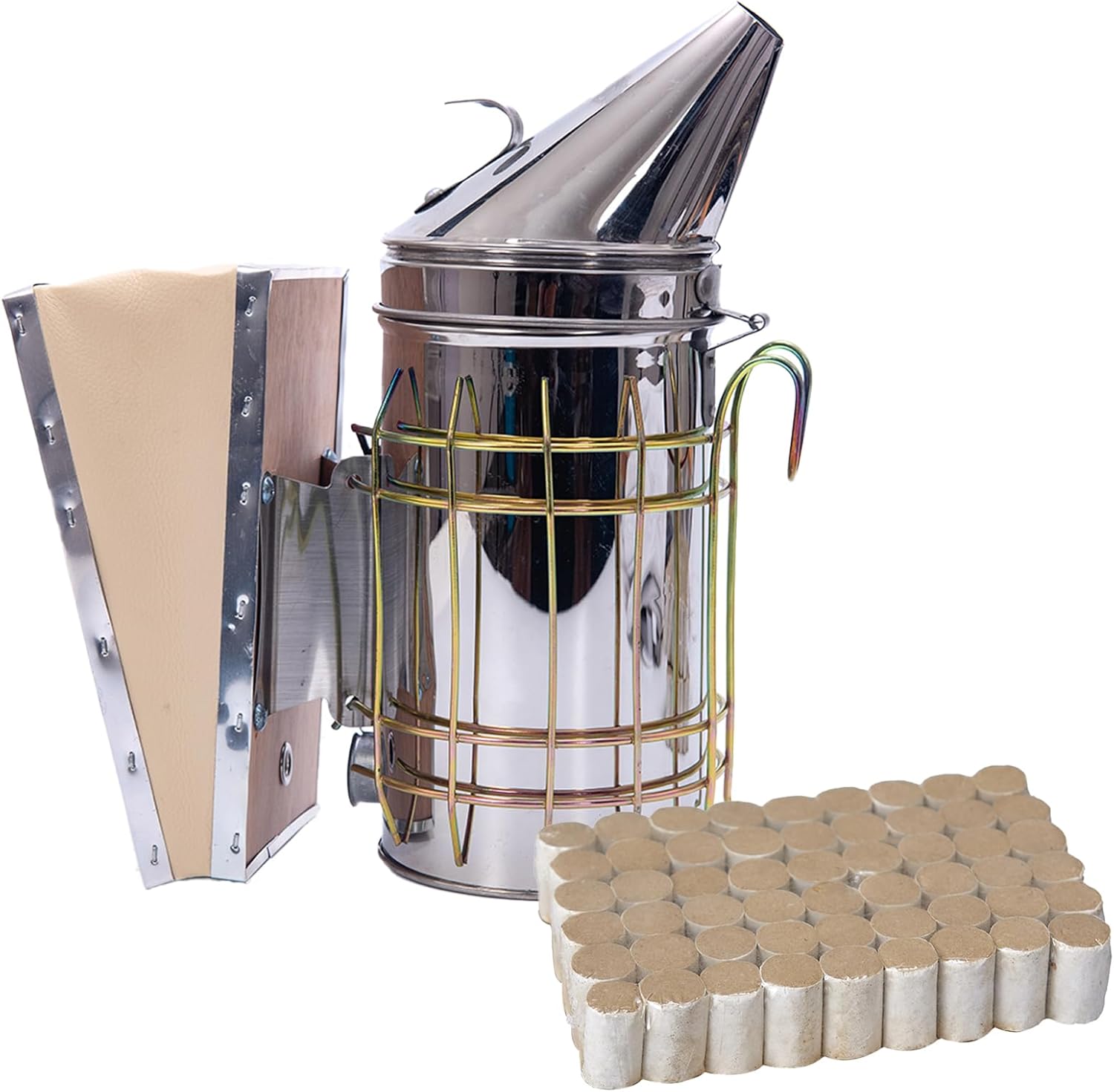
Bee Hive Smoker Kit — Stainless Steel with Heat Shield & 54 Pellets
Stainless steel build with heat shield for safe handling — comes with 54 smoking pellets so you’re ready from day one.
See Price on Amazon →