This post might be created with help from AI tools and carefully reviewed by a human (Anthor Kumar Das). For more on how we use AI on this site, check out our Editorial Policy.
How to Help Bees: 25 Simple Ways to Save the Bees
When I was thinking about how to help bees, only one thing came to mind. Keeping a beehive. But the more I learned, the more I realized something simple.
You can help bees even if you never become a beekeeper.
Bees matter because they pollinate many of the foods we eat and the flowers we love. They also support the whole natural system around us.
Right now, bees face real problems.
Less wild habitat, fewer flowers through the year, pesticide exposure, and extreme weather can all make survival harder.
That is why I made this guide.
I will share 25 practical ways you can help bees in your backyard and in your local area. By doing this you will be contributing to save the bees and save the nature.
I will also cover quick help tips for situations like how to help a bee that cannot fly, or how to help a dying bee.
You do not have to do everything. Pick a few ideas that fit your life, then build from there.
Why Helping Bees Matters
Helping bees is not only about saving insects. It is about protecting the food chain and keeping nature healthy.
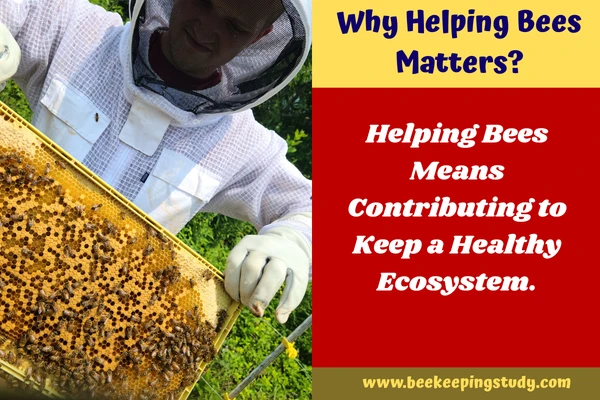
When bees have steady food and safe places to live, they can do their job.
That means better pollination for gardens, farms, and wild plants.
The good news is this. Small actions add up when many people do them.
Even one small backyard change can give bees more food, more water, or a safer place to rest. And that can be enough to help a struggling bee survive another day.
How to Help Bees (25 Simple Methods)
When it comes to the main question “how to help bees?”, I discovered 25 simple methods. You don’t have to do all these methods.
Pick 2 or 3 to start. Then add more over time. Even small changes in one backyard can help bees find food, water, and safe rest.
How to Help Bees in Your Backyard
We should start practicing from our backyard. Here is the options we all should try (atleast 1 or more).
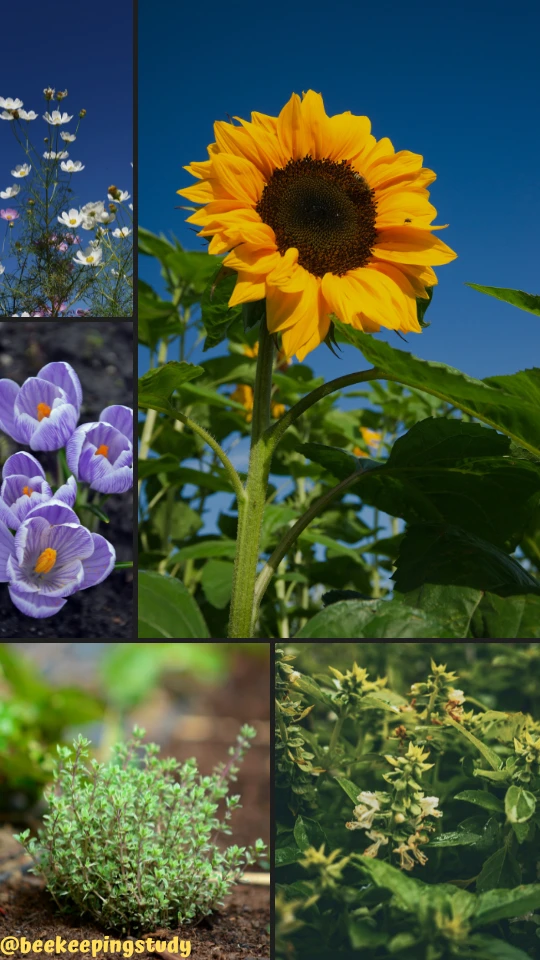
1) Plant native, bee friendly flowers (with different bloom times)
Native plants usually match your local bees best.
Try to plant a mix that blooms in spring, summer, and fall so bees can find food for more months. Such as Lavender, Sunflower, Thyme, Borage and many more.
2) Grow herbs that flower
Herbs are easy and they work even in small spaces.
Let some basil, mint, coriander, or thyme flower. Bees love those tiny blooms.
3) Add early bloom plants for spring
Early spring is when bees often struggle to find food. Bees have limited options to eat when there are no flowers. Thus it is the best time to help them.
Plants like crocus and fruit blossoms can help a lot. If you have dandelions, letting some grow for a while can also help.
4) Add summer bloom plants for steady nectar and pollen
Summer is when many colonies grow fast and need constant food.
Choose a few reliable summer flowers so there is always something blooming week after week. Try any one or more of these if native to your region.
- Coneflower
- Bee Balm
- Sunflower
- Cosmos
- Salvia
5) Add fall bloom plants for late season food
Fall flowers help bees build reserves before colder weather.
Even a small fall flower patch can give bees one last strong food source for the season. Here are some ideas.
- Asters
- Sedum
- Goldenrod
- Sneezeweed
6) Skip pesticides, especially during bloom
If a plant is flowering, bees will visit it. Spraying at that time can hurt bees directly or leave residue they carry back home.
Thus never ever think of using any kind of pesticides or chemical during that period.
7) Use natural pest control options instead of sprays
If you notice any disease or pest in your plants, try the simple options first.
Hand pick pests, use insect netting, or rinse plants with water. These steps reduce harm to bees. Try best not to spray any pesticides.
8) Leave a small patch of lawn unmowed for flowers
This is one of the easiest ways to help bees in your backyard.
Even a small corner can grow clover and other tiny flowers that bees use every day. These are helpful for bees and you don’t have to do any work as well.
9) Create a simple water station (shallow water and stones)
Bees need water, especially in hot weather. It will encourage them to create nest nearby.
Use a shallow dish, add stones for landing, and keep it filled with fresh water.
10) Provide shade and shelter using shrubs and mixed planting
Bees get stressed during extreme heat and strong wind.
Shrubs, small trees, and mixed planting can create calmer spots where bees can rest and travel safely.
Note: Backyard beekeeping is becoming popular day by day. If you are about to start beekeeping your backyard can be a ideal spot to place your beehive.
Provide Nesting and Shelter for Bees
Bees are not harmful until you disturb them. Thus, providing a nesting site is not harmful. Instead, they will bless you by enhancing crops and blossoms in your region.
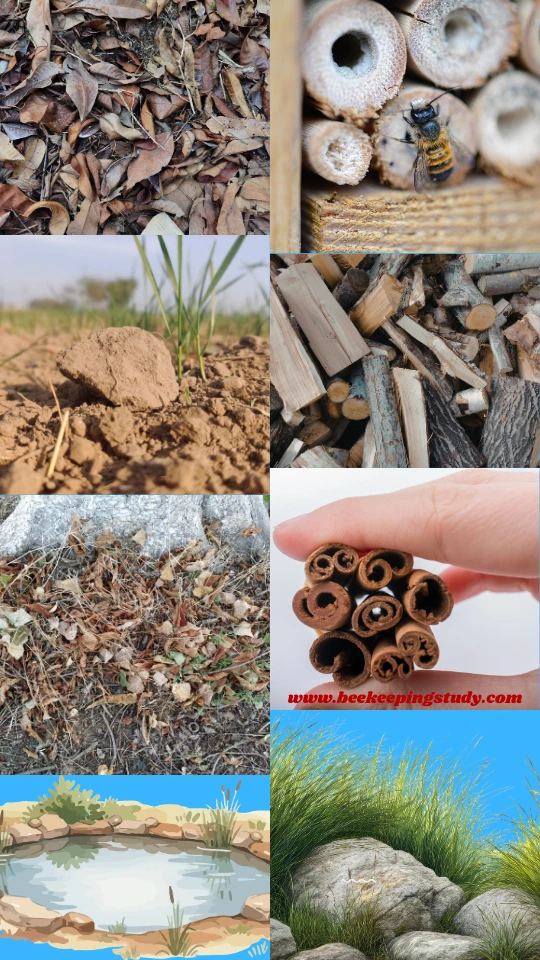
11) Leave some bare soil for ground nesting bees
Many wild bees nest in the ground, not in hives. These ground bees are not aggressive.
If every inch of your yard is covered with mulch or thick grass, they may have nowhere to nest. Thus, leave some bare soil for pollinating carpenter bees.
12) Keep a small wild corner with leaves and stems
A tidy yard looks nice, but it removes natural shelter.
Leave a small corner with dry leaves, hollow stems, and plant debris so bees and other pollinators can hide and rest.
13) Install a bee hotel the right way
Bee hotels can help, but only if they are done correctly. Installing a bee hotel doesn’t require a lot of work.
Use small tubes, keep it dry, and choose a design you can clean or replace so it does not turn into a pest and disease spot. This will invite the helpful pollinators, which are ground bees.
14) Keep old logs or untreated wood in a quiet area
Some bees use small gaps in wood to nest.
A log pile or untreated wood in a calm corner can create natural nesting options without any extra work.
15) Avoid over mulching every part of the yard
Mulch is useful, but too much can block nesting areas.
Try leaving a few open spots, especially in sunny, well drained areas.
How to Help Bees Locally in Your Community
This one is the most effective option. Try one or more of these if possible.
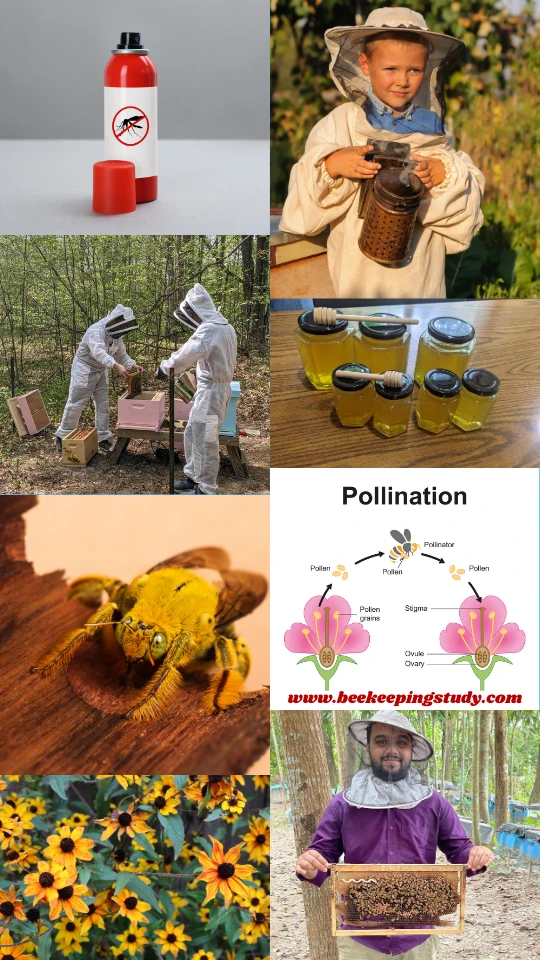
16) Support local farmers or gardens that avoid harmful sprays
When you buy from bee friendly growers, you support better habits.
Even small choices can encourage safer farming and gardening in your area.
17) Ask your local park or building to plant pollinator beds
Many public spaces have lawns that do not help bees.
A simple flower strip or a few pollinator planters can feed bees for months. If you can’t plant on yourself, raise awareness about planting trees in your region.
18) Join or donate to a local pollinator project
Some groups plant pollinator gardens, restore habitats, or teach bee safe practices.
If you do not have space at home, helping a local project is a great alternative.
19) Share plants or seeds with neighbors
This is an easy way to spread bee friendly plants across a whole street.
More gardens nearby means more food and fewer gaps for bees. Share with your neighbors ideas about what attracts ground bees. Also, share why bees matter and why we should help bees.
20) Teach kids and friends simple bee safe habits
Many bees get harmed because people panic.
Teach simple rules like not swatting, not spraying flowers, and giving bees space to fly away. Share what to do to avoid danger from a bee swarm.
Support Bees With Your Shopping Choices
This is the easiest method, which doesn’t require any change in your daily life. If you can’t even plant trees, or provide any nest site to bees, you can help them by purchasing bee products.
21) Buy local honey and bee products from trusted beekeepers
Buying local supports the people who manage colonies and protect pollination in your area.
It also helps keep beekeeping skills and knowledge alive in your community. Bee products are extremely beneficial for people of all ages.
Honey provides numerous health benefits. Bee pollens are also beneficial for women and men. Beeswax is used to build candles, wraps, and many more.
Helpful Resource: Are you using beeswax wraps to store foods? Learn how to clean a beeswax wrap and how to store and use it safely.
22) Support brands that protect pollinators and habitats
Some brands donate to habitat projects or avoid harmful practices in their supply chain.
When possible, choose options that support pollinator friendly work.
23) Avoid products that encourage heavy pesticide use where possible
Some lawn and garden products are designed for broad spraying.
If you can choose safer options, you reduce the risk for bees visiting nearby flowers. If needed, consult with the local Department of Agriculture and encourage the producers in your region not to use pesticides.
Keeping Bees Responsibly (Optional)
This one is suitable for bee-loving people like me. I have started my first hive back in 2014 and helping bees for more than 10 years. I have more than 100’s of beehives right now.
24) Start beekeeping only if you can manage pests and disease responsibly
Keeping bees can help with pollination and local bee populations when it is done well. But it also comes with responsibility, because pests and disease can spread if a hive is ignored.
Beekeeping has plenty of rewarding benefits. If you want to keep bees, learn the basics of hive health, mite control, and seasonal care first.
Pro Tips: There are many options available to learn beekeeping. Here you can also find 4 best beekeeping books to learn beekeeping basics for free.
If you do not want to keep bees, that is totally fine. You can still help bees a lot with the other ideas in this guide.
Rescue and Emergency Help
This one is a very helpful initiative about helping bees.
25) Learn safe ways to help a bee in trouble and when not to interfere
Sometimes a bee is only tired, overheated, or caught in a dangerous spot. Other times, it is simply at the end of its natural life.
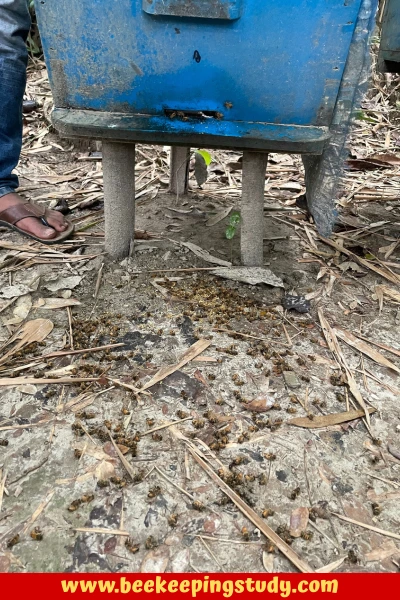
Knowing the difference helps you act in a safe way for both you and the bee. You can learn what to do when there are lot of dead bees on the ground.
Next, I will share quick mini guides for how to help a bee that cannot fly, how to help a dying bee, and how to help bees in early spring and hot weather.
Quick Help Guides for Common Situations
Sometimes you want to help right now, not next week. These quick guides are simple, safe, and easy to follow.
How to Help a Bee That Can’t Fly
Step 1: Move it to a safe spot.
- Gently guide the bee onto a leaf or a piece of paper.
- Place it somewhere quiet, away from foot traffic, ants, and direct wind.
Step 2: Offer a drop of sugar water only if needed.
- If the bee looks weak and cannot move well, you can offer a tiny drop of sugar water.
- Mix 2 parts white sugar with 1 part water and stir until clear.
- Use a spoon tip or a bottle cap. Do not soak the bee.
Step 3: Let it rest.
- Give it time.
- Many bees only need a few minutes to warm up and recover.
Step 4: Know when to stop.
- If the bee does not improve after some time, it may be injured or near the end of its life.
- At that point, the kindest thing is to leave it in a protected spot and let nature take its course.
How to Help a Dying Bee
- First, move it to a safe place away from people and pets.
- If it is cold or windy, a sheltered spot can help it stay calm.
- If the bee is weak but still moving, you can offer a tiny drop of sugar water.
- Use the same mix: 2 parts white sugar to 1 part water.
- Avoid using honey as rescue food.
- Honey can carry germs from other colonies, and it is not a good emergency choice.
Also, be honest with yourself. Sometimes the bee is simply at the end of its life, especially in late season.
In that case, giving it a safe resting spot is still a kind thing to do.
How to Help Bees in Early Spring
Early spring can be a hungry time for bees. Flowers may be limited, and the weather can change fast.
- Focus on early flowers: Plant or protect early bloom plants so bees have food when they first become active.
- Avoid early-season pesticide use: Bees start visiting flowers as soon as they appear.
- Provide water: A small water station helps when natural water sources are still low.
- Reduce yard cleanup: Leaving some stems and leaf cover a bit longer can protect nesting bees that are still waking up.
How to Help Bees in Hot Weather
Heat can stress bees fast, especially in dry areas. Your goal is to help them cool down and find water safely.
- Add shade near flowers: Shrubs and taller plants create cooler paths for bees.
- Set up a fresh water station: Use shallow water with stones for safe landing.
- Avoid spraying anything during heat: Sprays can drift, and the stress from heat makes bees more vulnerable.
How to Help Bees Survive Heat
If the heat lasts for days, bees may need more help than usual. These small steps can make a big difference.
- Put water stations in multiple spots: This reduces crowding and gives bees options.
- Add landing stones: Bees can drink without drowning.
- Keep water clean and refill often: Fresh water is safer and more attractive to bees.
How to Help Bees From Going Extinct
One person cannot fix everything, but many people doing small things can. The biggest wins usually come from habitat, food, and safer pest control.
- Protect habitat: More wild spaces and flowering plants give bees places to live and forage.
- Grow food diversity: Plant different flowers across seasons so bees are not hungry for long periods.
- Use safer pest control: Avoid broad spraying, especially on flowering plants.
- Encourage local action: Talk to neighbors, schools, and parks. Small projects scale fast when people copy them.
- Spread Social Awareness: Share the importance of the bee reserve through social media, podcasts, and among local people in your region.
Bottom Line
Hopefully, now you know how to help bees. Helping bees does not need to be complicated.
Start small, then stay consistent with a few simple habits. Plant flowers across seasons, provide safe water, and avoid spraying blooms.
Those steps alone can make a real difference.
If you want, share your country and the flowers you see bees using most in your area. I will appreciate any of your feedback, such as more ideas on how we can help bees.