This post might be created with help from AI tools and carefully reviewed by a human (Anthor Kumar Das). For more on how we use AI on this site, check out our Editorial Policy.
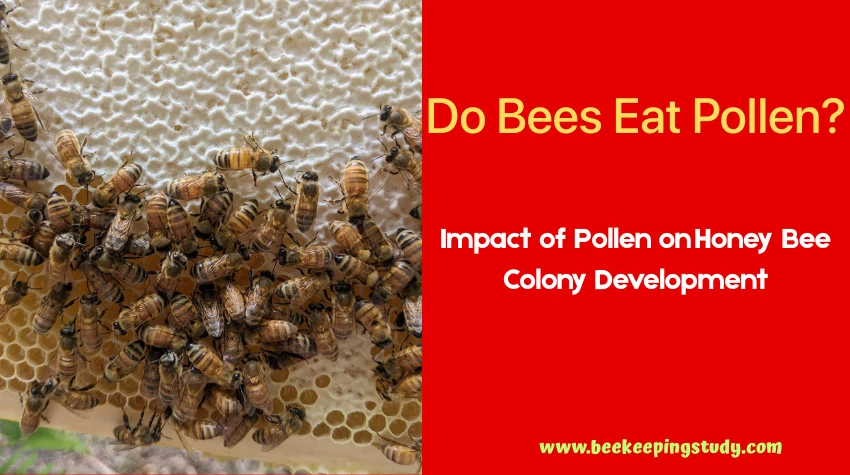
Do Bees Eat Pollen? The Truth & Impact on Honey Bee Colony
The first time I really noticed pollen, I was standing near my hive in the late afternoon. Bees were flying back fast, and many had bright yellow and orange “pollen pants” on their back legs.
I kept thinking of one simple question. Do bees eat pollen, or do they just carry it home?
If you are wondering the same thing, you are not alone. Many new beekeepers see pollen coming in and assume it is only for making honey.
But pollen has a different job inside the hive. Bees use bee pollen for several stages of the colony.
In this guide, I will answer the main question in a clear way. You will learn how worker bees use pollen, how the queen gets fed, and how brood depends on pollen for growth.
I will also share simple tables so you can scan the key points fast. By the end, you will understand why pollen is one of the biggest drivers of colony strength.
How I learned this: When I started watching my hives, I noticed pollen coming in on busy days almost always matched stronger brood patterns a week or two later. I also read through beekeeper discussions and trusted bee education sites to confirm what I was seeing. The big takeaway was simple. Pollen is the building food of the colony, and nurse bees are the main ones that turn it into brood food.
Do Bees Eat Pollen?
Yes, honey bees use pollen as a key food source. Pollen is their main source of protein and other nutrients that help them grow and stay strong.
But not every bee eats pollen the same way. Some bees eat a lot of it, while others depend on food made by worker bees.
How Adult Worker Bees Use Pollen
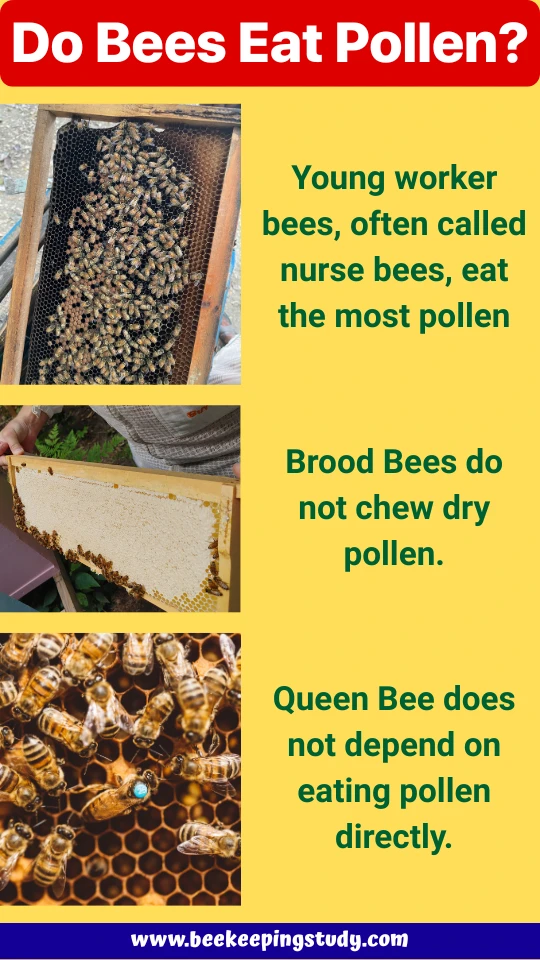
Young worker bees, often called nurse bees, eat the most pollen. They use it to build their body and to make brood food for the larvae. Older worker bees that forage outside usually eat less pollen.
They mostly use honey and nectar for quick energy during flights. Pollen is more about building and repair, not fast fuel.
Do Queen Bees Eat Pollen?
The queen is mainly fed by worker bees. Her main food is royal jelly made by nurse bees.
So the queen does not depend on eating pollen directly like nurse bees do. She depends on workers turning pollen into the rich food she needs.
Do Bee Larvae Eat Pollen?
Larvae do not go collect pollen, and they do not chew dry pollen as we might imagine. Brood bees are fed by nurse bees.
Very young larvae get a rich, milky food made by nurse bees. As larvae grow, their food includes more stored pollen that has been packed and fermented inside the hive.
This stored pollen is often called bee bread.
Who Depends on Pollen the Most in a Honey Bee Colony?
Here is a comparison for pollen dependency of different members of a honey bee colony.
| Colony member | Do they eat pollen directly? | Main food they receive | Why they need it | Dependency level |
|---|---|---|---|---|
| Nurse worker | Yes, a lot | Pollen and bee bread, plus honey | To make brood food and build body reserves | High |
| Forager worker | Sometimes, but much less | Mostly nectar and honey for energy | Energy for flight and work outside | Low |
| Queen | No, not in a meaningful way | Royal jelly from worker bees | Egg laying and long term body support | Medium (indirect) |
| Worker larvae | No (fed by nurses) | Brood food, then more bee bread as they grow | Growth and development | High |
| Drone larvae | No (fed by nurses) | Brood food, then more bee bread as they grow | Growth and development | High |
| Drones (adult) | Rarely | Honey and nectar fed by workers | Energy and survival | Low |
Real beekeeper observations (simple and practical)
Beekeeping is a rewarding and interesting hobby. I am in beekeeping from 2014. Here is what most experienced beekeepers observed about bee pollen and bees.
- Nurse bees do the heavy lifting: Many experienced beekeepers explain it like this. Foragers bring pollen home, but nurse bees are the ones that eat it and turn it into brood food for larvae.
- Most brood is fed, not self feeding: A common point in beekeeper discussions is that larvae are mainly fed by nurse bees. They are not chewing dry pollen like people often imagine.
- Bee bread is stored pollen: Beekeepers often describe bee bread as pollen packed into cells and mixed with nectar or honey, which helps it keep longer and makes it easier for the colony to use.
How Pollen Helps Honey Bee Colony Development
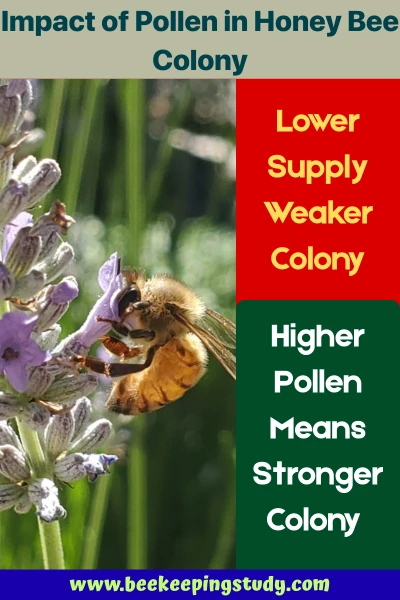
Pollen is the building food of the hive. It helps the colony raise brood, build strong workers, and keep nurse bees healthy.
When a hive has steady pollen coming in, you often see faster growth. More pollen usually means more brood can be fed, and the colony can expand at a better pace.
Pollen also supports wax making in a simple way. When bees have enough food and strong bodies, they can build comb more easily and keep the hive moving forward.
What Happens When Pollen Is Low
When pollen is low, the hive often slows down. Bees cannot raise as much brood because nurse bees have less to work with.
Here are the adverse effects that can happen when the pollen supply is low.
- Smaller brood area: The queen may lay less, or the colony may reduce brood feeding.
- Slower growth: Fewer young bees means fewer workers for future foraging and hive tasks.
- Weaker nurse bees: Nurse bees may struggle to produce enough brood food.
Note: Flower pollen is the primary food source for the entire colony. Thus the pollen supply rate heavily impacts on the strength of the colony.
What Pollen Provides to Bees and How It Supports the Colony
Here is a brief overview of what components pollen contains and how it helps the development of the honey bee colony.
| What pollen provides | Why it matters for bees | What you may notice in the hive when it is available |
|---|---|---|
| Protein and amino acids | Helps build bee bodies and supports brood food production | More brood being raised and stronger nurse bees |
| Lipids and fatty acids | Supports energy storage and healthy development | Better looking brood pattern and steady colony growth |
| Sterols | Important for growth and normal body functions | Healthy young bees and fewer signs of stress during growth |
| Vitamins | Supports overall health and normal development | More active workers and better day to day hive activity |
| Minerals | Helps with body functions and balanced nutrition | Steadier brood rearing during normal seasons |
| Antioxidants and plant compounds | Supports health and helps bees handle stress | A more stable, stronger colony during busy periods |
Pollen Sources by Plant (And Which Bees Benefit Most)
Bees collect pollen from many different plants. That is one reason they can survive in so many places.
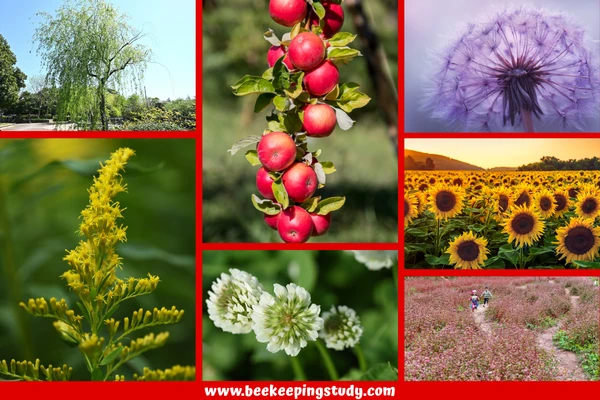
A mix of pollen sources is better than only one. Pollen from different plants offers different nutrients, and variety helps the colony stay stronger.
Common Pollen Sources and Which Bees Benefit Most
The plant source greatly varies the quality of the pollen. Here are the comparison of pollen quality coming from different plant sources often found in most areas in the world.
| Plant source (common name) | Season | Pollen notes (high level) | Which bees rely on it most |
|---|---|---|---|
| Willow | Spring | Early pollen that helps colonies build up after winter | Nurse bees and larvae |
| Dandelion | Spring | Common early pollen source in many areas | Whole colony, especially brood rearing |
| Clover | Spring to summer | Steady source during warm months when colonies expand | Nurse bees, larvae, and growing colonies |
| Sunflower | Summer | Strong pollen flow in some regions, helps maintain brood | Whole colony during peak season |
| Goldenrod | Fall | Late season pollen that helps prepare for colder months | Whole colony, supporting winter bees |
| Buckwheat | Summer | Useful mid season source where it is grown | Nurse bees and larvae |
| Fruit blossoms (apple, citrus, and more) | Spring | Short but important pollen window during early build up | Nurse bees and brood growth |
Note: Pollen sources in different regions will be different based on available local plants. Learn from local beekeepers if your region contains different plants than discussed above.
FAQs
No. Nurse bees eat the most pollen. Many other bees get their nutrition through food made and shared by workers. Bee bread is stored pollen that bees pack into comb cells. It is mixed with nectar and natural microbes, which helps preserve it and makes it easier to use. The colony often slows down. Brood rearing drops, and the hive may grow weaker over time.Do all bees in the hive eat pollen?
What is bee bread?
What happens if bees cannot find pollen?
Bottom Line: Do Bees Eat Pollen?
Yes, bees do use pollen as food. It matters most for nurse bees and brood growth.
When pollen is steady, the whole colony usually grows stronger.
If you keep bees, tell me your region and the main pollen plants you see near your hives. I love comparing notes because local plants can make a big difference.