This post might be created with help from AI tools and carefully reviewed by a human (Anthor Kumar Das). For more on how we use AI on this site, check out our Editorial Policy. This post may contain affiliate links. We may earn a small commission at no extra cost to you. Read our affiliate disclosure.
How to Store Honey Long Term

Honey has an almost infinite shelf life but yet it’s quality can degrade if not stored properly. So, you are here to learn how to store honey long-term. This is what I am going to share with you.
Key Takeaways.
- I store honey in a in a glass container rather than a canned or plastic container.
- I Alwyas try to maintain a temperature below 24°C or 75.2°F and above 8°C or 46.4°F to store honey.
- “Safe to eat” and “still tastes great” are two different things.
- I keep honey away from direct sunlight and in a cool dark place.
Shelf Life of Honey
Honey is one of the few foods that almost never spoils. Sealed honey can last almost forever. Archaeologists have found pots of honey in ancient Egyptian tombs that were thousands of years old and still preserved.

The pH value of pure honey is roughly 3 to 4.5, which kills most microbes. This keeps honey safe to consume for centuries.
Why Does a Honey Jar Have a Date on it?
A honey jar doesn’t usually contain an expiry date. In most cases, you will see a “best by” or “use by” date. This date doesn’t mean the honey will be contaminated after that day.
The National Honey Board says sealed honey can stay stable for decades or even centuries. But it slowly darkens and changes, so a two-year shelf life is often used for practical purposes. This means the quality and taste can degrade after that time.
When Can You Say Honey Has Gone Bad? (Not Safe to Consume)
In most cases, if you purchase honey from untrusted sources, you might not get pure honey. As a result, that kind of honey can easily go bad over time.
If you notice any of the following sign, this means your honey went bad and you should throw it away.
- Foam or bubbles.
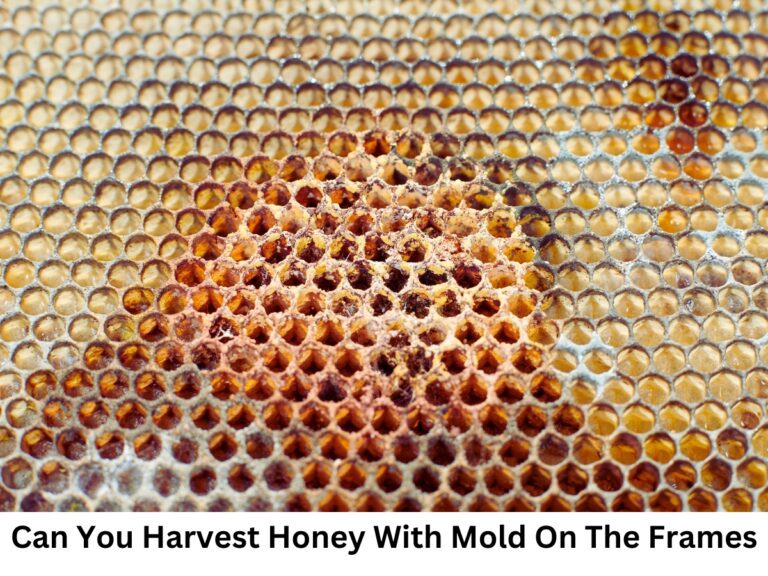
- Visible mold.
- A sour smell means it has fermented from extra moisture.
One safety note: never give honey to babies under 12 months old.
How to Store Honey for Long Term
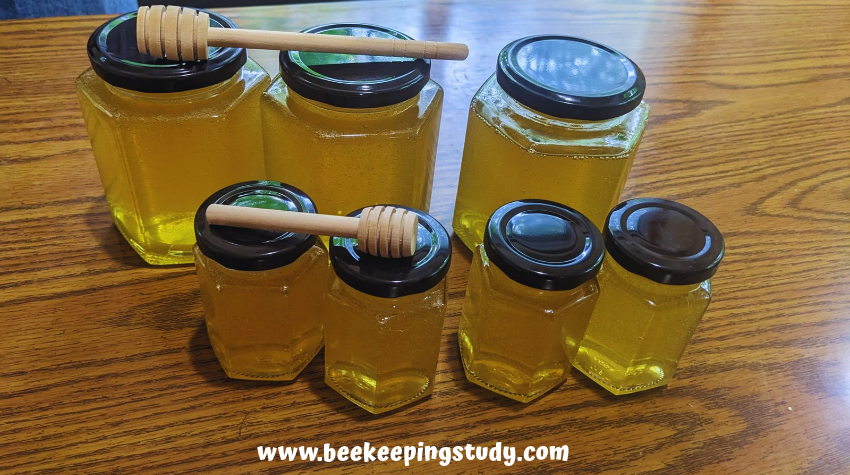
I always store honey that is for my family after extraction from our apiary in a glass jar. Also, as we have a large amount of honey production, I use food-grade buckets to store bulk honey for a long.
I regularly communicate with other beekeepers in the USA and the UK. From my storage technique and what I learned from them, here are the ideal methods to store honey long term.

1) Use a Glass Jar with a Tight Lid (Food Grade Bucket for Bulk)
Some people might use plastic or canned containers to store honey. But it is a huge mistake. It is the main reason for honey becoming fermented within a few months.
I always recommend using a glass jar. And for a glass jar, the lid is the weakest point. Try to purchase a glass jar with a metal lid that can be tightened properly.
It has been found that glass jars with a metal lid can protect honey from air and mold formation for years.
If you are purchasing honey in bulk, you can use a high-quality food-grade bucket with a tight lid.
As in bulk you are getting high amount of honey store the bucket in a honey warming cabinet during winter and in refrigerator during summer. This will help you to maintain ideal temperature.
Bucket quality matters. Standard hardware store buckets have 70 mil walls, while heavy-duty ones have 90 mil walls. Recycle code 2 (HDPE) is the standard food-grade plastic.
One more tip: don’t store honey long term in a bucket with a honey gate (the tap at the bottom). If the gate gets bumped, you could lose 50 pounds of honey.
Honey Storage Containers – Jars vs Buckets

Little Giant Glass Skep Jars with Airtight Lids – 32 oz, 12 Pack
Airtight glass jars for storing family honey in smaller, everyday portions

Food-Grade 5 Gallon Buckets with Lids – BPA-Free, 6 Pack
Ideal if you harvest or buy honey in bulk and need long-term storage
2) Keep Water Out (Most Important Rule)
This is the most important rule. Honey pulls moisture out of the air. FAO data shows that normal honey with 18.3% water or less starts absorbing moisture once air humidity goes above 60%.
Why is it the most important rule?
Extra water can lead to yeast growth in honey. A USDA handbook found that honey with less than 17.1% water won’t ferment within a year, no matter how much yeast it has. Above 19% moisture, honey will probably ferment within a year of harvest, even if it has very little yeast.
This is why it is always important to keep water out. So, strictly follow this rule when you are using honey.
- Use a Dry Spoon.
- Close the lid right away.
- Don’t leave the jar open in a steamy kitchen.
3) Keep it Away from Heat
At the beginning, I mentioned keeping honey below 24°C or 75.2°F always. Because high heat can ruin the quality of the honey over time.
In fact, room temperature (25°C or 77°F) can reduce the quality of honey slowly over time.
Scientists measure this with HMF. HMF is a compound that builds up as honey gets old or hot. Codex and EU rules cap it at 40 mg/kg, or 80 mg/kg for honey from tropical countries.
In a Turkish study, honey kept at 10°C and 22°C for a full year stayed under 40 mg/kg. Honey kept at 35°C went over that limit starting at month 6.
An Algerian study found something even more dramatic. After 9 months at 35°C, HMF reached between 100.84 and 353.09 mg/kg. Storage at 4°C and 20°C barely changed anything.
4) Use a Honey Warming Cabinet to Liquefy Crystallized Honey
A fridge can help you to keep honey fresh for a short time, but it can increase the chance of your honey crystallizing over months. I have seen that when I kept honey for more than 1 year in a refrigerator, my honey became crystallized.
This is why I recommend a honey warming cabinet over a fridge or freezer. Because a low temperature below 8°C or 46.4°F will increase the chance of your honey becoming crystallized.
However, a honey warming cabinet is not suitable for year-round storage of honey. Instead, you can use it mostly to liquefy crystallized honey.
You have to keep the heat off when storing honey in a honey warming cabinet. Only turn the warmer on when you need to liquefy crystallized honey.
In a honey warming cabinet you can easily control the temperature and can keep it within limit. Thus, your honey will last longer.
Honey Warming Options – Buckets vs Jars

FUFAXHX 5 Gallon Honey Bucket Heater – 50–122°F, 24H Timer
For honey stored in 5-gallon buckets – set it around 104°F to melt crystals gently

CAMMOO 5-Tier Heated Holding Cabinet – 133 Qt
Holds batches of jars on 5 shelves – adjustable from 86°F to keep honey near 104°F
5) Keep Honey in a Cool and Dark Place
Light affects the quality of honey too. Glucose oxidase, the enzyme behind honey’s antibacterial activity, breaks down with light and heat.
Stronger light or heat breaks it down faster. This is why always recommended to keep honey in cool and dark place.
Factors That Affect Honey Quality and You Should be Aware Of
Though you learned how to store honey long term, there are still some factors you must consider. These are very important as they affect the shelf life and quality of honey.
1) Moisture Content
This is the single most effective factor. Honey with less than 17.1% water won’t ferment within a year, no matter how much yeast it has. But having water content above that will cause fermentation over time.
However, the yeast count does matter above the safe range of water content. Honey with a very small amount of yeast won’t ferment even if the water content is 18-19%. But with lots of yeast, honey can ferment within a few months even at 18%.
2) Humidity and a Leaky Lid
This one is closely connected to our factor 1. Honey constantly trades moisture with the air around it. University of Florida data shows honey kept at 59% humidity settles at about 17.8% moisture.
Small humidity changes make a big difference. Going from 60% to 70% humidity raises honey’s moisture level from 18.3% to 24.2%.
Thus, a humid room and a loose lid will invoke fermentation easily.
3) Storage Temperature
Extra heat causes fermentation, and extra cold causes crystallization. This is why we should store honey in a temperature not too low or not too high.
My recommendation is always to store honey above 8°C and below 24°C. Because from the above discussion we see that at 35°C, HMF passed the 40 mg/kg limit starting at month 6.
Keep Water Out – Check the Room and the Honey

TempPro TP50 Digital Hygrometer – Indoor Thermometer
Shows pantry humidity and temperature – keep it under 60% and within 8–24°C

Honey Refractometer with ATC – Moisture, Brix and Baume
Measures honey moisture – for beekeepers checking it’s under 17.1% before storing
4) Time
Honey can degrade over time no matter how we store it. Research has found that diastase, phenolics, and antioxidants all went down over time. HMF and acidity went up.
How much degradation will occur over time depends on the type of honey, quality, and storage methods. This is why proper storage is the key to keeping honey high quality for long.
5) Direct Sunlight
Direct sunlight is the real problem. When honey is kept in sunlight, its flavonoids and antioxidant capacity start dropping after just 6 days. Phenolics started dropping after 10 days.
However, normal room light is much less harmful for honey.
The rule is to avoid direct sunlight, not the normal lamp in your room or kitchen.
6) Heat Processing & Reheating
Pasteurizing honey at 78°C for 6 minutes kills its microbes. But it also hurt its overall quality and antioxidant activity.
Enzymes start breaking down around 120°F (49°C), and time also matters as much as temperature. For example, 3 hours at 120°F does more damage than 1 hour at 130°F.
7) The Container
Honey is acidic enough to cause trouble with the wrong metal. With a pH of 3 to 5, it can corrode galvanized steel, aluminum, and brass. This pulls trace metals into the honey.
This is why the right container for storing honey is always the first priority.
8) The Honey’s Own Chemistry
Last but not least. Different honey has different aging. Some honey ages faster than others.
Honey with lower pH can produce more HMF during storage. The worst sample in one study had started with a high HMF level of 82 mg/kg. So a honey that’s already “tired” when you buy it will decline faster.
Honey that usually contains sugar syrup or anything else added won’t last longer as pure honey does.
Frequently Asked Questions
How long does honey keep once opened?
Honey stays good for almost indefinitely once opened if you can store it properly. However, it is always best recommended to consume honey within "best by" labeled if you purchased a labeled jar.
Is 20 year old honey still good?
Yes, if the honey doesn't contain any foam or crystallization and is stored in a tightly sealed glass container, it is still good. If you see any fermentation or foam than don't consume it.
Does honey need to be refrigerated?
No, honey shouldn't be refrigerated for a long time. Because the refrigerator temperature is usually 1°C to 4°C, which can cause honey to crystallize. You can keep it in the refrigerator if you can use all the honey within 3-4 months.
Does store bought honey expire?
In most store bought honey, you will see a "best by" or "use by" date, which doesn't mean the honey will go bad after this date. This indicator means you will get the best quality if consumed within the given date. After that date, the quality might degrade but won't expire or spoil.
Bottom Line
So, how are you going to store honey to use for a long time?
My rule is super simple: I always maintain the storage temperature between 8°C and 24°C. Also, I use a food-grade bucket for bulk storage and a glass jar with a tight lid for basic day to day life use storage.
In general, honey never spoils or becomes poisonous. But always follow the “best by” date when purchasing it from an external source. Also, make sure to purchase the best authentic honey always.
Recommended articles to read next.
- Best dinner rolls recipe with honey.
- How to consume bee pollen the right way.
- 15+ bee pollen benefits for males.
- Bee pollen benefits for females.