
This post might be created with help from AI tools and carefully reviewed by a human (Anthor Kumar Das). For more on how we use AI on this site, check out our Editorial Policy.
How Much Does a Beehive Cost A Comprehensive Guide
Picking your first beehive should feel simple. You want a solid box that lasts and fits your goals. So your very first question is “how much does a beehive cost?“.
A beehive price greatly influences the overall beekeeping startup cost. In this guide, I will try to focus only on Hive hardware cost. No bees, no suits, no tools. Just the box and its parts.
We will try to provide my research data on US and UK prices, show what drives cost, and share smart ways to save. This guide will help you to take advantage of beekeeping smartly.
Here is a quick snapshot.
How Much Does a Beehive cost?
- In the US, basic Langstroth woodware often sits around $175 to $375 for common two to four-box sets.
- Premium systems like Flow Hive start near $669 and go higher with bundles.
- Quality cedar top bar hives commonly land near $700. Prices vary by brand and build quality.
- In the UK, complete National hive kits commonly start in the £200 to £350 range depending on timber and included parts.
Higher spec kits and bundles cost more. We will break down typical price ranges of beehives and bee boxes, and what to check before you buy.
How Much Does a Beehive Cost in the US
Langstroth and Top bar hives are the most popular types of beehives in the United States. Langstroth is budget-friendly as it is the cheapest option. Warre hives are also very popular among beekeepers in the USA.
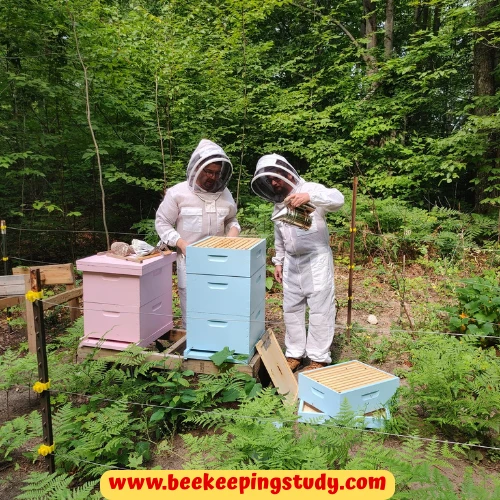
Prices below are for hive hardware only. Ranges change by wood type, frame count, brand, and whether parts arrive flat pack or fully assembled.
Use these bands to plan your budget, then check current listings before you buy.
| Hive type (US) | Typical price range (hardware) | What this usually includes | Notes and sources |
|---|---|---|---|
| Langstroth kits, 8 or 10 frame, 2–4 boxes | About $160 to $375 | Bottom board, 2–4 deeps or mediums, inner and outer covers, frames | Examples show 2 box kits near $162–$247 and 4 box kits near $242–$373. |
| Budget Langstroth kits (big box or marketplace) | About $110 to $215 | Entry level woodware. Often 1 deep + 1 medium with frames | Recent listings show $109–$215 ranges. Quality varies. Check reviews. |
| Top bar hive, cedar | About $700 to $750 | Cedar body, top bars, some models include viewing window | Cedar top bar from a US maker lists at $725. |
| Warre hive kits | About $380 to $450 | Stacked Warre boxes, roof, quilt box. Frames or top bars vary | Recent US listings show $398–$442 for multi box kits. |
| Flow Hive systems (harvest convenience) | About $779 to $929 | Flow super with Flow frames, brood box, roof, base. Model dependent | Current store pricing shows $779–$929 for the Flow Hive. |
| Insulated plastic systems (Apimaye class) | About $400 to $620 | Double walled plastic with built in vents and feeders. Packages vary | Recent roundups place many insulated sets in the $400–$620 band. |
If you want some design or painting on your beehive, you need to order a customized beehive. In such a case, additional costs will be added.
Pro Tips: If you compare across brands, box count, frame count, and assembly level change price a lot. Some sellers include frames and foundation. Others sell boxes only. Verify what is in the kit before you judge the price.
How Much Does a Beehive Cost in the UK
British National Hive is the most popular beehive among beekeepers in the United Kingdom. However, Langstroth, top bar, and warre hives are also found within UK beekeeping communities.
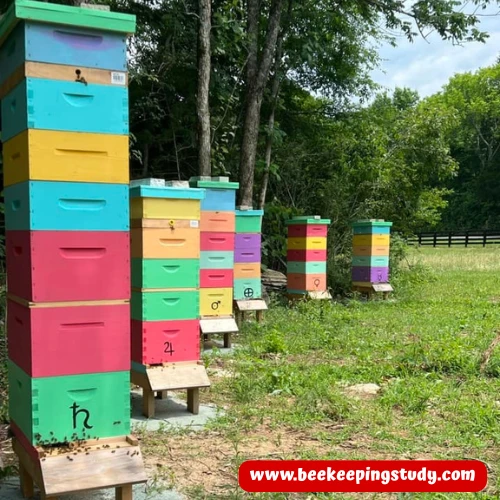
Here are the beehives and their typical price range, with what is usually included with each hive.
| Hive type (UK) | Typical price range (hardware) | What this usually includes | Notes |
|---|---|---|---|
| National (cedar) kits | About £200–£350+ | Floor, brood box, 1–2 supers, crown board, roof, frames | Most common UK hive. Flat-pack is cheaper than assembled. |
| National poly hives | About £215–£300+ | Poly brood box, 1–2 supers, roof, floor. Some kits include frames | Lightweight and insulated. Check if frames are included. |
| WBC kits | About £300–£500+ | Inner National body with outer lifts, floor, roof, frames vary | Classic look. More timber and parts than National. |
| Langstroth kits (UK suppliers) | About £220–£380+ | Floor, brood box, supers, inner/outer covers, frames | Less common in the UK than National. Parts still available. |
| Top bar hives | About £250–£500+ | Timber body, top bars, roof. Some include viewing window | Sizes vary. Check bar count and timber species. |
| Warre hives | About £260–£420+ | Stacked Warre boxes, quilt, roof. Frames or top bars vary | Fewer UK listings. Compare box count and accessories. |
| Flow Hive systems | About £569–£960+ | Flow super with Flow frames, brood box, roof, base. Bundle options | Premium harvesting convenience. Model and timber affect price. |
Pro Tip: Same tip goes here. Always check what the kit includes. Some prices cover boxes only. Others include frames and foundation. Assembly and timber grade can move the price a lot.
How Much Does a Bee Box Cost
A bee box is the core wooden or poly box that holds frames and comb. It is a major part of a beehive. People often use the words bee box and beehive as if they mean the same thing. Actually, they do not.
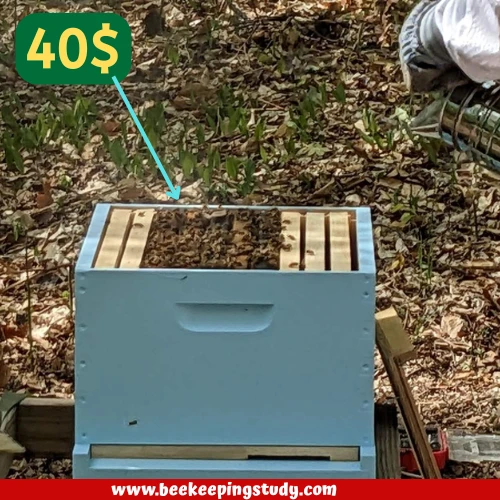
A beehive is the complete setup. It includes the floor, brood box, supers, inner cover, roof, and frames. On the other hand, a bee box is one piece inside that larger system.
A bee box is the box where frames of bees usually go. Brood boxes and honey supers can be considered as bee boxes. A single beehive can contain multiple brood boxes.
Initially, you can go with a single or double brood box system. You can add more boxes as a colony grows. You can also replace a single brood box system with a double brood box system without buying a full hive kit.
Below are typical price ranges for common bee boxes in the US and UK. These are hardware only. No frames unless noted. Prices vary by timber, assembly, brand, and season.
| Bee box type | US price range (USD) | UK price range (GBP) | Notes |
|---|---|---|---|
| Langstroth Deep brood box | $25–$45 flat-pack, $40–$70 assembled | £30–£60 flat-pack, £60–£95 assembled | Pine or cedar. Frames sold separate unless listed as a bundle. |
| Langstroth Medium super | $20–$40 flat-pack, $35–$60 assembled | £25–£50 flat-pack, £45–£80 assembled | Common honey box size. Check rabbet depth and joint style. |
| Langstroth Shallow super | $18–$35 flat-pack, $30–$55 assembled | £22–£45 flat-pack, £40–£70 assembled | Lighter for lifting. Honey capacity is lower than medium. |
| National Brood box (UK standard) | N/A | £30–£60 flat-pack, £60–£95 assembled | National format. Cedar is pricier than softwood. |
| National Super | N/A | £25–£50 flat-pack, £45–£80 assembled | Match to your brood format for frame compatibility. |
| Poly brood box (Langstroth or National) | $70–$120 per box | £60–£110 per box | Insulated. Often includes entrance pieces or feeders. |
| Warre box (per box) | $50–$90 | £45–£80 | Quilt and roof are separate items in most listings. |
| Top bar body (single long box) | $200–$400+ | £200–£350+ | Typically sold as a body with bars and roof. Counts vary. |
| 5-frame nuc box (wooden) | $40–$80 | £60–£110 | Transport or small colony use. Cardboard nucs cost less. |
| Flow super box (add-on) | $350–$500+ with Flow frames | £300–£450+ with Flow frames | Price depends on model and frame count. Used atop a standard brood box. |
Match the box format you choose to the frames you already own. Check if the price includes frames and foundation or box only. Flat-pack saves money if you are comfortable with glue, nails, and paint.
What Drives the Price of a Beehive
Hive hardware costs change for many reasons. Knowing these factors helps you set a smarter budget.
- Hive type: Langstroth is common and often cheaper per box. Top bar, Warre, and Flow systems can cost more.
- Materials: Pine is budget friendly. Cedar and premium hardwoods cost more. Poly hives add insulation benefits at a higher price per box.
- Frame count and box count: More frames and more boxes raise the price. Deep boxes usually cost more than shallow or medium. The amount of honey produced by one beehive depends on the super and frame count.
- Assembly level: Flat-pack is cheaper. Assembled and painted boxes save time but cost more.
- Insulation and design features: Double walls, vents, screened floors, and built in feeders add cost.
- Brand and build quality: Tight joints, better timber, and precise cuts justify higher pricing and longer life.
- Shipping and regional availability: Heavy timber costs more to ship. Rural delivery can add fees. Seasonal demand near spring can raise prices.
Related Startup Costs
While this guide focuses on boxes, your final budget will also reflect bees, tools, and safety gear.
- Bees: Packages and nucs are separate costs. The types of honey bees for beekeeping matters the most. A bee nuc includes frames and brood bees. Bee packages contain only bees with a queen. Some people often purchase a queen in a cage separately.
- Tools and safety gear: Smoker, hive tool, feeder, veil or suit, and gloves add to setup cost.
These extra unavoidable things expand the overall beehive cost. However, the beehive and related tools are a one-time cost in your beekeeping budget. You can get a complete beekeeping startup cost estimation using this calculator.
Save or Spend: Smart Ways to Trim the Bill
Here is a budget-friendly smart plan for starters. Instead of buying the entire full beehive set, you can do some on your own by just purchasing a flat-pack only. Each of the tips below will help you to cut down your cost of beehive.
- Buy a flat-pack and assemble yourself: Glue and nails will help you in the joints. Pre-drill to avoid splits. Paint or oil the exterior to extend life.
- Start with one hive and add later: Begin with a simple setup. Add supers and extra frames as the colony grows.
- Join a local club: Members share deals and warn about poor quality gear. You can find trustworthy used boxes and local NUC sources. This one was really helpful for me when I started beekeeping.
- Avoid very cheap frames: Warped or weak frames waste time and can fail under honey weight. So, avoid purchasing poor-quality, cheap hives. Paying a little more now saves money later.
- Watch seasonal sales: Many suppliers run winter and late summer discounts. Order early to avoid spring back orders.
Quick tip: Track every part you buy. Matching formats across boxes, frames, and foundation prevents costly mistakes. Also, choose ideal location to place a beehive in order to reduce setup cost as well.
DIY vs Ready-Made vs Secondhand
People often ask me, “Hey Anthor, I want to start beekeeping but don’t have so much money to invest. Should I make my first beehive on my own, or should I go for a second hand?“
I explain to them what path is best under different circumstances. However, each path can work. Pick the one that matches your skills, time, and budget.
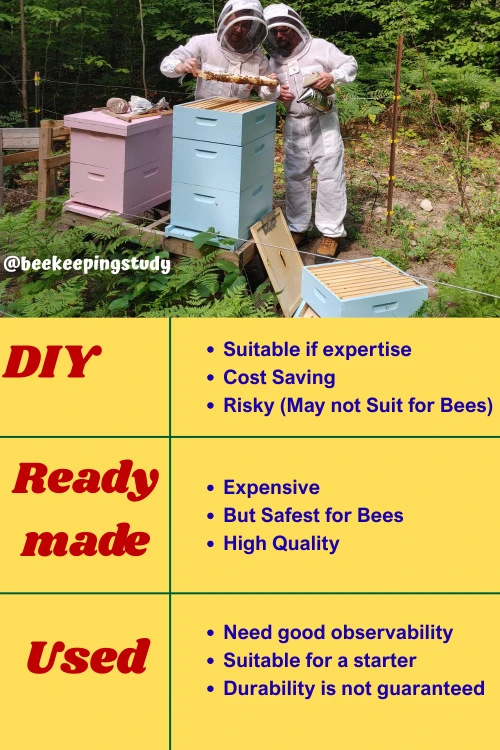
DIY Beehive(build your own boxes)
This is the most wanted path. Most beginner often try to build their own hive. However, without proper knowledge and skill building your first hive may not be suitable for your bees.
Pros of DIY Beehives
- Lowest cost per box.
- Full control of timber and finish.
- Easy to repair later.
Cons of Building Your Own Beehive
- Needs tools, time, and accurate cuts.
- Mistakes can cause poor bee space and weak joints.
- Improper design might negatively impact bees. If bees don’t like it, they won’t stay.
The last point is very crucial. The whole effort is for the honey bees to help them build a strong colony. If they don’t like it, our entire effort will go in vain.
It doesn’t mean you can’t do this. I created my first beehive by myself as well. But an expert beekeeper in my region helped me with this. So, it is always recommended to contact with local beekeeper in your region and learn from them.
Ready-made Beehive (assembled and often painted)
Ready-made beehives have many pros over DIY beehives. However, of course, it is an expensive option.
Pros of Ready-made Beehives
- Fast setup.
- Clean joints.
- Consistent bee space.
- Proper design and structure for building a strong colony.
Cons of Ready-made Beehives
- Higher price.
- Less choice of timber and paint.
- Risk of getting poor-quality hives if not purchased from trusted sources.
This option is suitable if you want to start quickly with minimal tools. Also, if you want the safest hive for your bees.
Secondhand Beehive(used boxes)
Secondhand beehive will serve the purpose of a ready-made beehive if it is still in good condition. So, be careful and check everything before paying.
Pros of Secondhand Beehive
- Cheapest upfront.
- Good for adding supers on a budget.
- Serves almost everything as readymade hives if in good condition.
Cons of Secondhand Beehive
- Risk of disease, warping, and poor fit.
- Cleaning time required.
- Longevity is not guaranteed.
Pro Tips: Go for it if you can inspect carefully and sanitize before use. Ask the owner if bees already abandoned this hive or not. Abandoned beehives are reusable but not always suitable for a new bee colony.
What to Inspect When Buying a Used Beehive
From my personal beekeeping experience, I created a checklist for purchasing used beehives. If you find any negative sign among the following checklists, don’t purchase it.
- Rot and soft spots: Press corners and rims. Wood should feel firm.
- Warping and cracks: Set the box on a flat table. Gaps mean bad mating with other boxes.
- Disease risk: Look for dark, sunken comb stains or old brood signs on wood. When in doubt, do not buy.
- Frame spacing and size: Check that frames sit square and move freely without binding.
- Odor and residues: Strong chemical smells can signal old treatments. Avoid if unsure.
A Comprehensive Beehive Buying Guide
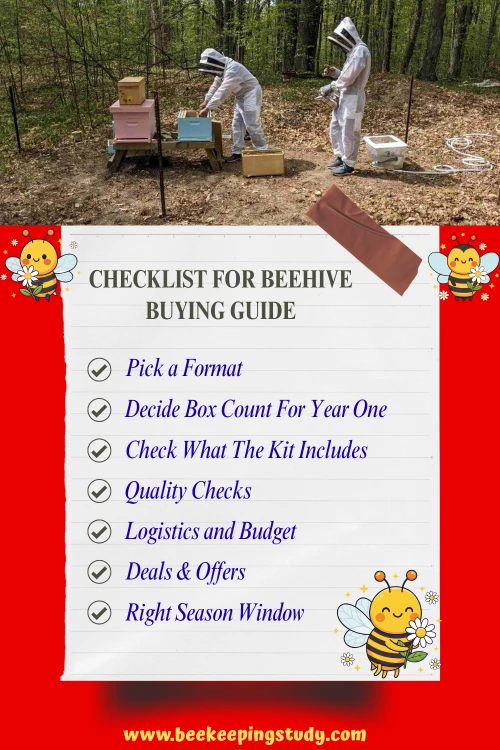
Buying a beehive is very crucial while getting started in beekeeping. Even expert beekeepers often make mistakes in terms of cost and decision-making. However, I prepared a proper plan and checklist for when to buy, what to check.
So, use this checklist before you pay. Also, make sure to let me know if you think any points are wrong or missing in this checklist.
When to Buy and Availability
The timing matters. Sometimes in the year, you often see some best deals with huge discounts. But this might not always be suitable. Learn the best timing and look for deals within the season.
Here is an effective checklist to decide when is the best time to buy a beehive.
- Order bees in winter for spring pickup: Popular pickup dates sell out fast at many suppliers. Plan early.
- Expect spring back orders: Woodware often runs tight near spring. Buy boxes and frames ahead of the rush.
- Watch off-season deals: Late summer and winter sales can cut costs on kits and frames.
- Local timing matters: Match your order window to your climate and nectar flow.
Bees don’t rely on flowers as their only food source. But nectar is their primary food source for brood development and honey production. Thus, it is very crucial to decide the order window based on nectar flow availability in your region.
Pick a Format
First things first, pick a format for your hive setup by deciding the three major things below.
- Hive type: Langstroth, National, Top bar, Warre, or Flow system.
- Frame size: Deep, medium, or shallow. Match parts across all boxes.
- Material: Pine for budget. Cedar for durability. Poly for insulation.
Decide Box Count For Year One
This one is important when you are just getting started in beekeeping.
- Brood area: One deep or a brood format common in your region.
- Honey space: One or two supers to start. Add more if your flow is strong.
Pro tip: My recommendation is to go with one brood box and one super at the beginning. When you see growth, you can add an extra brood box and an additional super.
Check What The Kit Includes
Must check each of these points before deciding to go for a specific beehive.
- Floor or base board?
- How many Brood boxes and the number of supers?
- Inner cover or crown board and roof?
- Frames and foundation included or not?
- Check for entrance reducer, queen excluder, and feeders, if listed.
Quality Checks
This needs some expertise and careful observation capability. Make sure to check the following things when buying offline.
- Joints: Tight cuts. No gaps.
- Square: Dry fit boxes. They should sit flush on each other.
- Finish: If painted, look for even coats. If raw, plan your own paint or oil.
- Hardware: Screws, nails, and handles included if promised.
Tip: When buying online, send a message or email to the seller to make sure these points before sending the product.
Logistics and Budget
This one is for those who have a budget limitation. Optimizing the beehive cost will enhance your overall income from beekeeping.
- Shipping: Calculate the cost for heavy items. Check lead times.
- Assembly level: Flat-pack saves money. Assembling saves time.
- Add-ons later: Plan for extra supers, frames, and a stand.
Before You Click Buy
Last but not the least. These are the common checklists before purchasing any product online.
- Confirm return policy and warranty.
- Read a few recent buyer reviews.
- Match the kit to your frames and tools you already own.
- Set a reminder to order bees early for spring pickup.
Other Costs You Might Consider while Getting Started in Beekeeping
The beehive is a core tool of beekeeping. This is why asking “how much does a beehive cost?” is also natural. However, when estimating beekeeping costs, it is not the only thing on your must-have beekeeping tool list.
When you start beekeeping, there are a few mandatory costs beyond the hive box. These items help you manage bees safely and keep the colony healthy. Plan for them early so your first season goes smoother.
- Bees: Package or nuc. Nucs include frames and brood. Packages do not.
- Protective gear: Veil or jacket, gloves, and boots. Comfort matters during hot days.
- Basic tools: Smoker, hive tool, bee brush, and a feeder that matches your hive format.
- Frames and foundation: Extras for growth. Match size to your brood and super boxes.
- Queen excluder: Optional but common for honey supers.
- Stand and straps: Lift the hive off the ground and secure it from wind or curious animals.
- Feed and supplements: Sugar syrup and pollen substitute when forage is low.
- Mite and beetle management: Monitoring boards, sticky sheets, and approved treatments as needed.
- Winter hardware: Insulation board or wrap, moisture board, and an upper entrance for airflow.
- Extraction gear later: If you plan to harvest honey, budget for a simple extractor or borrow from a club.
- Transport and storage: Nuc box for moves, food grade buckets, tubs for tools, and spare lids.
- Local fees and learning: Club membership, short courses, or books to build skills and get mentor help.
- Permits and rules: Some areas ask you to register hives. Check your local guidance.
- Fencing where needed: In bear country or busy yards, a simple fence or barrier can protect the hive.
Tip: List what you truly need for month one. Add the rest as the colony grows. This keeps your starting bill clean and focused.
Most of these are one-time costs only. These are reusable for years. Your repetitive costs might include a new bee nuc, might treatment, and some winterization tools.
Beekeeping is a rewarding and profitable occupation. But when it comes to cost-cutting, you have to be smart enough.
What type of beehive do you own? Let me know through the comments.