
This post might be created with help from AI tools and carefully reviewed by a human (Anthor Kumar Das). For more on how we use AI on this site, check out our Editorial Policy.
Can Dogs Have Honey – Complete Guide
You are in the kitchen. You drizzle a little honey on your toast. Your dog looks up at you with those big, hopeful eyes. And you think, “Can I share a tiny bit of this with my pup?”
It is a question thousands of dog owners ask every day: Can dogs have honey? And it is a smart one. What is safe for us is not always safe for our dogs.
So, can dogs have honey? The short answer is yes. But there is more to it than just handing over the jar. You need to know when it is safe, when it is not, and how much is too much.
In this guide, I will walk you through everything you need to know. From real benefits to hidden risks. By the end, you will feel confident about whether honey is right for your dog.
Is Honey Safe for Dogs?
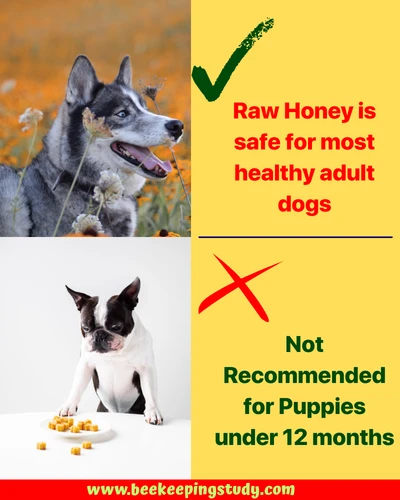
Yes, honey is safe for most healthy adult dogs when given in small amounts. It is not toxic. It will not harm a healthy dog if offered as an occasional treat.
But here is the thing. “Safe” does not mean “safe for every dog.” There are some situations where honey can actually cause harm.
Let me break it down for you clearly.
When Honey Is Safe
If your dog is a healthy adult with no underlying health conditions, a small amount of honey is perfectly fine. We are talking about a teaspoon or less at a time.
Raw honey is generally the better choice. It keeps more of its natural nutrients, antioxidants, and enzymes intact. Pasteurized honey is also safe but loses some of those benefits during the heating process.
One thing to always check before buying: make sure the honey contains no added ingredients. Some processed honey products contain xylitol, which is extremely toxic to dogs. Always read the label.
When Honey Is NOT Safe
Not every dog should eat honey. Here are the situations where you should avoid it:
- Puppies under 12 months: A puppy’s immune system is still developing. Raw honey can contain spores of a bacteria called Clostridium botulinum. In young puppies, these spores can cause a serious illness called botulism. It is best to wait until your dog is at least one year old before introducing honey.
- Diabetic dogs: Honey is high in natural sugar. For a dog with diabetes, even a small amount can cause a dangerous spike in blood sugar. Avoid honey entirely if your dog has diabetes, unless your vet specifically recommends it.
- Overweight or obese dogs: Honey is calorie-dense. If your dog is already carrying extra weight, adding honey to their diet is not a good idea. The extra sugar and calories can make weight problems worse.
- Dogs with a weak immune system: Dogs going through chemotherapy, or those with autoimmune conditions, should avoid raw honey. The bacterial spores in raw honey are usually harmless to healthy dogs, but they can be dangerous for dogs whose immune systems are not working at full strength.
- Dogs allergic to bee stings: If your dog has had a reaction to bee stings before, there is a chance they may also react to honey. Always start with a tiny amount and watch closely.
So, honey is safe for a healthy adult dog. But for puppies, diabetic dogs, and dogs with health conditions, it is a different story. When in doubt, always check with your vet first.
Is Honey Good for Dogs?
So we know honey is safe for most healthy adult dogs. But is it actually good for them? Or is it just a sweet treat with no real benefit?
The answer might surprise you. Honey is not just safe. When given the right way, it can actually support your dog’s health in several meaningful ways.

Let me walk you through what the research and experienced dog owners say about this.
Benefits of Honey for Dogs
Raw honey is packed with good stuff. It contains vitamins A, B, C, D, E, and K. It also has minerals like calcium, magnesium, potassium, zinc, and iron. And on top of that, it is full of antioxidants and natural enzymes.
Here is a quick look at the key benefits raw honey can offer your dog:
- Antioxidant support: Helps fight free radicals, reduces inflammation, and supports a stronger immune system.
- Antibacterial properties: Natural enzymes in raw honey help fight harmful bacteria inside the body and support healing of minor cuts or skin irritations when applied topically.
- Digestive support: Mild prebiotic qualities help maintain healthy gut bacteria and can settle a mild upset stomach.
- Gentle energy boost: Natural sugars in honey absorb slower than processed sugar, giving a steadier energy lift. Great for active or older dogs.
- Skin and wound care: Especially Manuka honey. Helps keep minor wounds, hot spots, and skin irritations clean and speeds up healing.
Pro Tip: always choose raw, unfiltered honey. Processed honey is heated during production, and that heat destroys many of the enzymes and nutrients that make honey beneficial in the first place.
Does Honey Help Dogs with Trachea Problems?
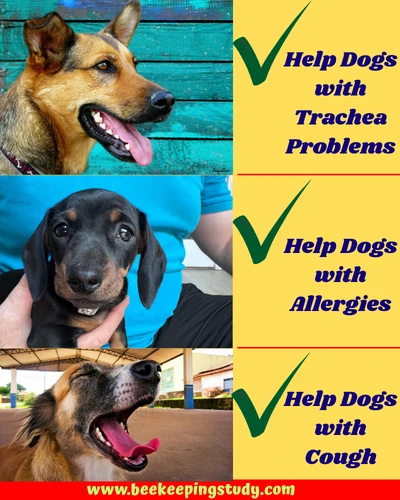
If your dog makes a loud honking cough, it could be a collapsed trachea. This is common in small breeds and happens when the cartilage rings around the windpipe weaken and flatten.
Honey can help manage the symptoms. Its thick consistency coats the throat and airway, calming irritation and reducing the urge to cough.
Many dog owners in online communities report noticeable relief after giving their small dogs a teaspoon of local honey mixed in warm water daily.
For trachea issues, Manuka honey is the top recommendation. It contains a compound called MGO (methylglyoxal) that gives it stronger anti-inflammatory and antibacterial properties than regular honey.
Just remember, honey is not a cure. It helps with comfort and symptom management. Always work with your vet for a full care plan.
Tip: If your dog refuses honey from a spoon, dilute a teaspoon in a little warm water and place it in their bowl.
Is Honey Good for Dogs with Allergies?
Dogs can suffer from seasonal allergies just like we do. Constant scratching, watery eyes, and recurring ear infections are common signs of allergies in dogs.
Raw local honey may help. It contains tiny traces of local flower pollen. When your dog consumes it regularly, their immune system slowly builds a tolerance to those allergens. Think of it as gentle, natural desensitization.
Honey also contains quercetin, a natural compound that works similarly to an antihistamine. It can help reduce itchiness and watery eyes.
Important: If your dog has ever reacted to a bee sting, avoid honey entirely. And always check with your vet before using honey as an allergy support tool. You can also try bee pollen for dogs with allergies.
Is Honey Good for a Dog’s Cough?
Just like honey soothes a sore human throat, it works the same way for dogs. It is one of the most commonly recommended natural remedies for kennel cough.
Kennel cough is a contagious respiratory illness causing a dry, hacking cough. It spreads easily in dog parks, boarding facilities, and grooming salons.
Honey helps by coating the throat to soothe irritation, fighting bacteria with its natural antimicrobial properties, and reducing inflammation to ease the cough.
Many dog owners in forums reported that giving raw honey two to three times a day made coughing noticeably less intense within 24 to 48 hours.
- For mild kennel cough, give honey one to three times daily.
- Small dogs get about one teaspoon per dose.
- Larger dogs can have up to one tablespoon.
- Manuka honey is the preferred choice for its stronger antibacterial effect.
That said, honey is supportive, not a treatment. If the cough is severe, worsening, or comes with fever or breathing difficulty, see your vet right away.
Quick tip: Mix honey with a small amount of warm water for easier swallowing.
So, Can Dogs Have Honey?
After everything we have covered so far, let me give you a clear and direct answer to the main question: “Can dogs have honey?”
Yes, dogs can have honey. But only the right dogs, in the right amount, at the right time.
Honey is not toxic to dogs. It has real nutritional value and can offer genuine health support. But it is also high in sugar and calories. That means it is not a food you should give your dog every single day or in large amounts.

Think of honey as a powerful natural tool. When used correctly, it works well. When overused, it can create problems you did not expect.
So the real question is not just “can dogs have honey?” It is “Should my dog have honey?” And to answer that, you need to understand both the risks and how to check if your dog is actually a good candidate for it.
Risks of Providing Honey to Dogs
Honey is safe when used carefully. But here are the real risks to be aware of:
- Weight gain: One teaspoon has around 20 calories. For small dogs, that adds up fast. Too much honey too often leads to obesity, joint pain, and heart issues.
- Blood sugar spikes: Honey is high in natural sugar. For diabetic dogs or dogs prone to diabetes, even a small amount can be dangerous.
- Tooth decay: Honey is sticky and clings to teeth. It creates the perfect environment for plaque and tartar buildup. Always brush your dog’s teeth on honey days.
- Botulism risk: Raw honey can contain bacterial spores that a healthy adult dog handles fine. But puppies under 12 months and immunocompromised dogs cannot. Never give raw honey to these dogs.
- Allergic reactions: Rare, but possible. Watch for itching, hives, swelling, or breathing difficulty after the first introduction.
- Digestive upset: Too much honey at once can cause vomiting, diarrhea, or stomach discomfort. Always stick to the recommended dose.
None of these risks means honey is off limits. They just mean you need to be smart about how and when you use it.
How to Identify if Your Dog Can Have Honey
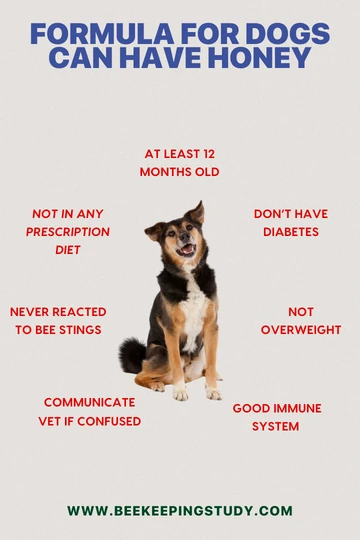
Run through this quick checklist before giving your dog honey for the first time:
- Is your dog at least 12 months old? If not, wait. A puppy’s immune system is not ready for raw honey yet.
- Does your dog have diabetes? If yes, avoid honey entirely.
- Is your dog overweight? Skip honey for now. Focus on reaching a healthy weight first, then revisit.
- Does your dog have a weak immune system? Dogs on chemotherapy or with autoimmune conditions should avoid raw honey. Check with your vet first.
- Has your dog ever reacted to bee stings? There is a real chance of a similar reaction to honey. Avoid it or introduce only a tiny drop while watching closely.
- Is your dog on a prescription diet? Do not add any new food without checking with your vet first.
How to Provide Honey to Dogs
So your dog is healthy, adult, and good to go. Now the next question is simple. How do you actually give honey to your dog the right way? Let’s explore.
How Much Honey to Give a Dog (Dosage Guide)
The right amount of honey depends mostly on your dog’s size and weight. Honey is calorie-dense and high in natural sugar, so more is definitely not better here.
Use this table as your easy reference guide:
| Dog Size | Weight Range | Max Daily Amount | How Often |
|---|---|---|---|
| Extra Small | Under 10 lbs (4.5 kg) | 1/4 teaspoon | 2 to 3 times per week |
| Small | 10 to 20 lbs (4.5 to 9 kg) | 1/2 teaspoon | 2 to 3 times per week |
| Medium | 20 to 50 lbs (9 to 22 kg) | 1 teaspoon | 3 to 4 times per week |
| Large | 50 to 90 lbs (22 to 40 kg) | 1 to 2 teaspoons | 3 to 4 times per week |
| Extra Large | Over 90 lbs (40 kg) | Up to 1 tablespoon | 3 to 4 times per week |
| Puppies (under 12 months) | Any weight | Do NOT give honey | Never |
Note: These are general guidelines for healthy adult dogs. Always start with a smaller amount than listed and increase gradually. Consult your vet if your dog has any health conditions.
One important rule: always start smaller than the table suggests. Give your dog a tiny amount on the first day and watch how they respond over 24 hours. If all is well, you can slowly work up to the recommended amount.
Also remember that honey is a treat, not a meal supplement. Count it as part of your dog’s daily calorie intake. If you are giving honey that day, consider cutting back slightly on other treats to keep things balanced.
How to Give Honey to Dogs
Most dogs love the taste of honey, so getting them to eat it is rarely a problem.

Here are some easy ways to serve it:
- Straight from the spoon: The simplest method. Let your dog lick it off directly. Run the spoon under warm water first so the honey slides off easily.
- Mixed into warm water: Stir the measured amount into a bowl of warm water or milk. Great for dogs that won’t take it from a spoon. Warm, not hot.
- Drizzled over food: Pour it straight onto their regular meal. Works well for picky eaters and makes honey easy to include in their daily routine.
- Mixed with peanut butter: Combine with xylitol-free peanut butter for a tasty treat. Freeze in silicone molds for a cool summer snack.
- In homemade treats: Add a teaspoon to homemade dog biscuits or soft treats. Avoid very high baking temperatures to preserve honey’s natural enzymes.
- Applied to minor wounds: Spread a thin layer of raw honey on small cuts, hot spots, or skin irritations. Manuka honey works best here. Cover loosely so your dog does not lick it off immediately.
Precautions While Feeding Honey to Dogs
A little care goes a long way. Keep these precautions in mind every time you give your dog honey:
- Choose raw, unfiltered honey. Processed honey is heated and loses most of its beneficial enzymes and nutrients.
- Always check the label. Some honey products contain xylitol, which is extremely toxic to dogs. Never skip this step.
- No honey for puppies under 12 months. Their immune systems cannot safely handle the bacterial spores found in raw honey.
- Brush their teeth after. Honey is sticky and clings to teeth. Brushing on honey days protects against plaque buildup.
- Avoid giving to diabetic, overweight, or immunocompromised dogs. The sugar content is too risky for these dogs.
- Always start slow. Even after a long gap, reintroduce honey with a smaller amount and observe for 24 hours before returning to the usual dose.
- Store at room temperature. Keep in a sealed jar away from sunlight. Do not refrigerate as cold causes honey to crystallize.
Signs That Your Dog Should Stop Having Honey
Stop giving honey immediately and call your vet if you notice any of these:
- Vomiting or diarrhea after eating honey, especially if it repeats.
- Unexpected weight gain over a few weeks of regular use.
- Increased thirst or urination, which may signal blood sugar changes.
- Lethargy or unusual tiredness after being given honey.
- Itching, hives, or swelling, especially around the face or paws.
- Difficulty breathing or throat swelling. This is urgent. Contact your vet immediately.
- Worsening dental issues such as bad breath, red gums, or increased plaque, since starting honey.
Frequently Asked Questions
Bottom Line: Can Dogs Have Honey?
Yes, dogs can have honey. And when used the right way, it can genuinely support their health in ways that are worth exploring.
Here is a final checklist for feeding honey to dogs:
- Choose raw, unfiltered, local honey when possible.
- Always check the label for xylitol before buying.
- Match the amount to your dog’s size and follow the dosage guide.
- Give honey two to four times per week, not every day.
- Never give honey to puppies, diabetic dogs, or immunocompromised dogs.
- Brush your dog’s teeth on the days you give honey.
- Watch for any changes in weight, energy, digestion, or behavior.
- When in doubt, ask your vet first.
