This post might be created with help from AI tools and carefully reviewed by a human (Anthor Kumar Das). For more on how we use AI on this site, check out our Editorial Policy. This post may contain affiliate links. We may earn a small commission at no extra cost to you. Read our affiliate disclosure.
Bee Friendly Summer Plants in USA

Summer brings the garden to life in the USA. Bee friendly summer flowers add extra power to the garden and to honey bee colonies as well.
Honey bees, bumblebees, and native solitary bees need nectar-rich and pollen-rich blooms throughout the warmer months to stay active.
Planting the right bee friendly plants can turn a backyard, balcony, or small garden into a dependable pollinator feeding area. From native perennials and heat-tolerant annuals to herbs that bloom during midsummer, there are many bee-friendly options suitable for different parts of the United States.
In this article, I will share some of the best summer flowers for bees in the USA. I will cover their bloom times, growing needs, and the types of pollinators they commonly attract.
So, from this article, you are going to have a good list of bee friendly summer plants in the USA. You will also learn how to choose flowers that keep your garden blooming from early summer through fall.
17 Bee Friendly Summer Flower Plants for Bees in the USA
Here is the list of summer flower plants for bees that can be planted in the USA. I sorted the list based on high to low priority.
Try to have more than 1 of these bee friendly summer plants for bees.
Anise Hyssop (Agastache foeniculum) – #1 Summer Flower for Bees
Anise Hyssop is one of the top summer bee plants you can grow. If you had to pick just one bee friendly summer flower plant to add to your garden this year, this would be a serious contender.
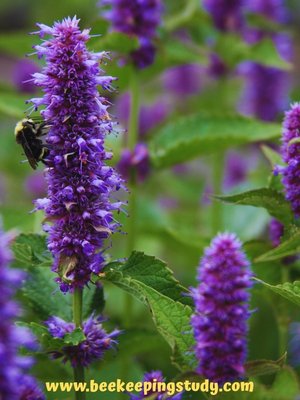
This is a North American native perennial. It grows wild across the northern half of the USA and into Canada. You will find it in prairies, plains, and dry open areas.
Anise Hyssop belongs to the mint family. But do not worry. Unlike other mints, it does not spread aggressively. It stays in a nice, tidy clump.
The plant grows about three to four feet tall. Sometimes it can reach up to five feet.
The showy flower spikes are lavender to purple in color. They can be six inches long and packed with tiny individual blooms.
Here is a mind-blowing fact: A single flower spike can contain up to 90,000 individual flowers. That is not a typo. Each one produces nectar and pollen for bees.
The blooms last a long time. Anise Hyssop can flower from June all the way to September or the first hard frost. That is three to four months of continuous forage. This is huge for beekeepers.
The plant attracts an incredible range of pollinators. Honeybees, bumblebees, native bees, sweat bees, leaf cutter bees, and mining bees all work the flowers. You will also see butterflies, moths, and hummingbirds.
Here is what really excites beekeepers. One acre of Anise Hyssop can support 100 honeybee colonies. It is that rich in nectar. The resulting honey is light and has a mild, pleasant fragrance.
Growing Anise Hyssop is easy.
- It loves full sun and well-drained soil.
- It is drought tolerant once established.
- Deer and rabbits leave it alone.
You can grow it from seed sown directly in the ground. It often blooms in its first year. And it self-seeds moderately for continued blooms in future years.
Sunflowers (Helianthus annuus) – Must Have Summer Flower for Bees
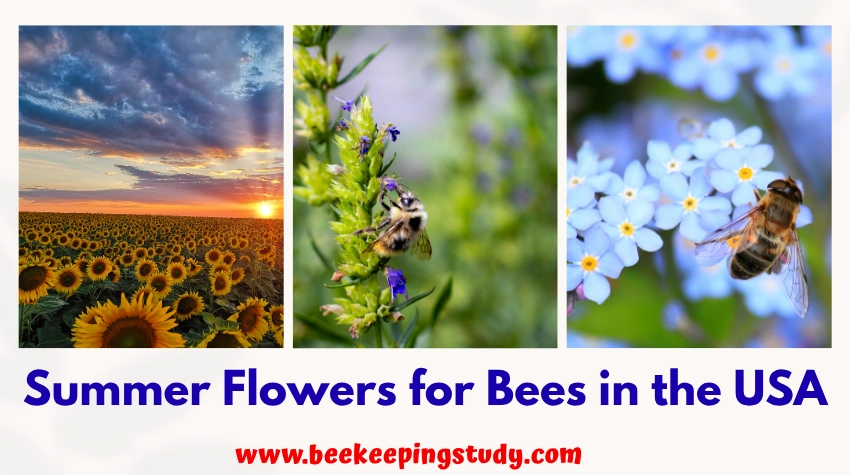
Sunflowers are the summer garden’s biggest showstoppers. And they are one of the most recognizable plants on the planet. Their bright yellow blooms with dark centers turn to follow the sun across the sky.
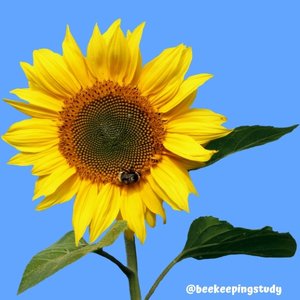
Sunflowers are actually native to North America. They were later commercialized in Russia. Then they made their way back to become a major crop in the United States.
For beekeepers, sunflowers are a fantastic mass-flowering crop. They bloom during late summer. That is often a time when pollen and nectar can become scarce in agricultural landscapes.
A single sunflower head is not really one flower. It is actually made up of hundreds of tiny individual flowers called florets. Each floret produces its own bit of nectar and pollen. That means one sunflower head is essentially a little bee buffet.
The flat, disc-shaped flower head serves as a perfect landing pad. Honeybees can walk from floret to floret without much effort. This lets them collect a lot of resources in a short time.
Sunflowers provide both nectar and pollen to bees. The pollen has a moderate protein content. It also contains beneficial compounds like antioxidants. And an important recent discovery makes sunflowers even more valuable.
Research shows that sunflower pollen dramatically reduces certain bee diseases. It has been shown to lower Crithidia bombi infection in bumblebees. It also reduces Nosema ceranae in honeybees. Basically, sunflowers act like natural medicine for bees.
There is a catch with the nectar, though. Sunflower nectar quality drops during dry periods. If your area is experiencing drought during sunflower bloom, the nectar flow may be poor. Adequate rainfall makes a big difference.
Honey yield from sunflowers varies quite a bit. Some sources report 30 to 100 pounds of honey per acre. The honey is a beautiful golden yellow. It has a bold, distinctive flavor.
Not all sunflowers are equal for bees.
Stick with heirloom, open-pollinated varieties. Lemon Queen is a classic favorite for pollinators. Mammoth Grey Stripe is another great option. These give bees the full pollen and nectar benefits.
Bee Balm (Monarda)
The name says it all. Bee Balm was named for its ability to attract bees. This is a native North American plant with a long history of use by both pollinators and people.
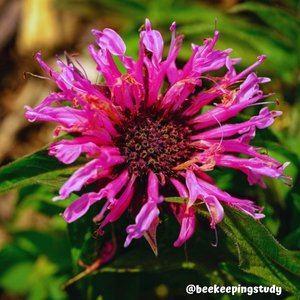
Bee Balm is in the mint family. Like other mints, it spreads by underground runners called stolons. One plant can turn into a nice colony within a couple of years.
There are several native species you can plant. The most common ones are Monarda didyma (Scarlet Bee Balm), Monarda fistulosa (Wild Bergamot), and Monarda punctata (Spotted Bee Balm).
Bee Balm flowers are shaped like tubes. This is actually important to understand. The tubular structure means bumblebees, native bees, butterflies, and hummingbirds work them best.
Honeybees can visit Bee Balm too. But they are not the most efficient pollinators of this plant. That is because they cannot always reach the nectar deep inside the tube.
Interestingly, bumblebees have a workaround. They sometimes bite small holes at the base of the flower. This lets them steal nectar without pollinating. It is called nectar robbing. Honeybees can then use those holes too.
Even so, Bee Balm is a fantastic plant to have in a bee garden. It attracts a huge variety of pollinators. And the diversity of bees visiting will boost overall pollination in your area.
Lavender (Lavandula) – Worldwide Popular Bee Friendly Plant
Lavender is probably the most iconic bee plant in the world. Just say the word “lavender” and most people picture bees buzzing among purple flower spikes.
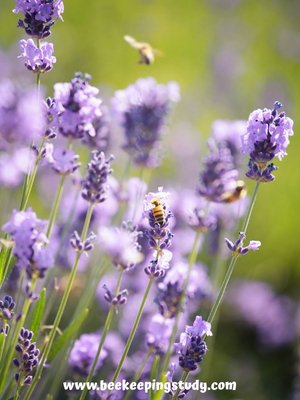
The scent is legendary. So is the plant’s ability to attract pollinators. Lavender produces a chemical called linalool. This gives the plant its distinctive fragrance, and it is what draws bees in from far away.
There are two main types worth knowing about. Lavandula angustifolia is called English Lavender. It generally starts blooming in early June. Then there is Lavandin (Lavandula x intermedia). This hybrid blooms in July and August.
Smart beekeepers plant both types. This extends the lavender nectar flow from June all the way through August. That is a solid three months of high-value forage.
Lavender attracts a wide range of bees. Honeybees, bumblebees, mason bees, and other native bees all love it. The plant blooms during the peak summer bee activity period. So the timing is perfect.
Real monofloral lavender honey is a premium product. It is one of the most sought-after honey varieties in the world. The flavor is light, floral, and delicate. The color is typically pale gold.
Producing pure lavender honey is challenging though. You need a large enough lavender planting nearby.
One US lavender farm reports producing over 300 pounds of lavender honey from 15 production hives. They aim for closer to 1,000 pounds in good years. That gives you an idea of what is possible.
Lavender is drought tolerant and thrives in poor, well-drained soil. It actually does better in tough conditions. Wet feet will kill it fast.
Plant lavender in full sun. Give it good air circulation. Prune lightly after flowering to keep the plant looking tidy and to encourage more blooms.
Catmint (Nepeta)
Catmint is a hardworking, low-maintenance bee plant that deserves more attention. It is often confused with catnip (Nepeta cataria), but the two are different plants.
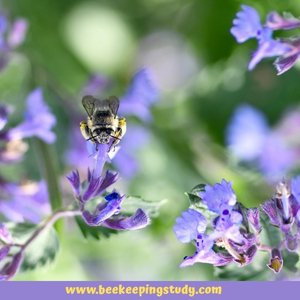
Catmint forms low, mounding clumps. Most varieties grow about 18 to 30 inches tall. It has aromatic gray-green foliage. The flower spikes are covered with small tubular lavender to violet-blue blooms.
The bloom time is one of catmint’s biggest strengths. Flowers appear from late spring all the way into fall. That is a five-month season of steady nectar production.
Pro Tip: After the first flush of flowers fades, shear the plant back by about one-third. This triggers a second round of blooms. You get 3 to 5 extra weeks of nectar for your bees.
Studies from 2024 show that catmint can attract 35% more native bees per square foot than Russian sage over a full season.
Honeybees, bumblebees, leafcutter bees, digger bees, and blue orchard bees all visit catmint. Butterflies and hummingbirds work the flowers too. And the plant provides both nectar and pollen.
Some catmint cultivars like Walker’s Low can host 200+ bees on a single plant during peak July bloom. That is a lot of buzz in a small space.
Growing catmint is genuinely easy.
- It thrives in full sun to part shade.
- It handles poor soils, drought, and heat with ease.
- Deer and rabbits leave it alone due to the strong scent.
Catmint is hardy in USDA zones 3 to 8. That covers most of the USA. It is virtually pest and disease-free.
Russian Sage (Salvia yangii, formerly Perovskia atriplicifolia)
Russian Sage is a bit misleadingly named. It is not from Russia. And it is not a true sage. But everything about this plant makes it a superstar for the bee garden.
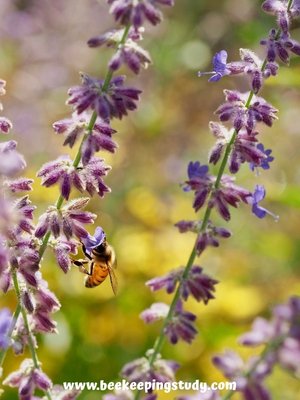
The plant grows into an upright, shrub-like form. It reaches about three to four feet tall and two to three feet wide. The silvery foliage looks beautiful even before the flowers appear.
The bloom timing is really valuable for beekeepers. Russian Sage flowers from midsummer well into fall. It keeps producing nectar when many other summer flowers have finished. That helps fill the late-season gap.
Field trials in the US Northeast show Russian Sage attracting an average of 5 to 6 honeybee visits every 10 minutes during peak bloom. That is heavy traffic. Some studies report 12 to 15 honeybees per square foot during peak afternoon hours.
Bumblebees are particularly fond of Russian Sage. The plants literally buzz with activity during peak flowering. Honeybees, native bees, hoverflies, and butterflies also visit the flowers.
Russian Sage is one of the toughest, most low-maintenance perennials you can grow.
- It loves full sun.
- It handles poor soils including clay.
- It is very drought tolerant once established.
Planting Guide: Russian Sage pairs beautifully with catmint. Plant catmint at the front of the border. Put Russian Sage behind it. You get layered heights, extended bloom times, and a bee traffic magnet.
For beekeepers dealing with the summer dearth, Russian Sage is a lifesaver. Its late summer to fall bloom helps bridge the gap between summer honey flows and fall goldenrod.
Coneflower (Echinacea)
Purple Coneflower is one of the most iconic North American native plants. It is a summer bee garden essential. If you visit any well-designed pollinator garden in the USA, you will almost certainly see Echinacea in bloom.
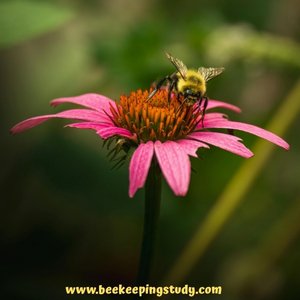
Coneflowers belong to the Asteraceae family, the same family as sunflowers and daisies. Like sunflowers, each Echinacea flower head is made up of many small florets. The bees work each floret individually.
Coneflowers bloom from midsummer to early fall. That gives you months of steady forage for your bees. The individual flowers stay open for weeks. This is much longer than many other summer bloomers.
Coneflowers provide both nectar and pollen. The spiky central cone is where the individual florets sit. Bees walk around this cone collecting resources as they go.
One important tip for beekeepers: Stick with the straight species or single-petaled cultivars. Fancy double-flowered Echinacea varieties look pretty. But they are much less useful to bees. The extra petals often crowd out or replace the nectar-producing florets.
The plant is hardy in USDA zones 3 to 9. That covers most of the USA. It is a true perennial that comes back year after year.
There is another huge bonus with coneflowers. The seed heads are a favorite of birds in fall and winter. Goldfinches especially love Echinacea seeds. So do not deadhead all your plants. Leave some for the birds.
Growing coneflower is simple.
- Plant in full sun.
- Give it well-drained soil.
- Space plants 18 to 24 inches apart.
- Once established, they will slowly form nice clumps.
For maximum pollinator impact, plant coneflowers in groups. Mass plantings of five or more plants are much more attractive to bees than single specimens. Larger blocks make foraging more efficient for your bees.
Coreopsis (Tickseed)
Coreopsis is one of the cheeriest and easiest bee-friendly perennials you can grow. It is native to North and South America. There are over 100 species in the genus.
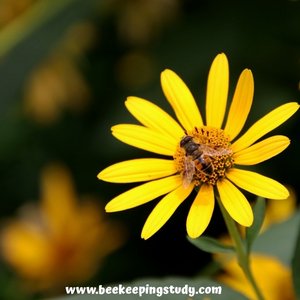
Common names include Tickseed and Calliopsis. The name “Tickseed” comes from the shape of the seeds. They look like tiny ticks. But do not worry. The plant does not attract actual ticks.
Coreopsis is a member of the Asteraceae family. The daisy-like flowers usually have bright yellow petals. Some varieties also have red, orange, pink, or bicolored blooms.
The plant blooms from late spring or early summer well into fall. That is a very long bloom season for a perennial.
According to Prairie Moon Nursery, beekeepers consider all Coreopsis species to be good honey sources. That is a strong endorsement from serious plant experts.
Coreopsis provides both nectar and pollen. Honeybees seem to use it primarily as a pollen source. But native bees like long-horned bees, small carpenter bees, leafcutter bees, and sweat bees all forage on it too.
Several native bee species are actually pollen specialists on Coreopsis. Plains Coreopsis (Coreopsis tinctoria) alone supports at least 22 species of pollen specialist bees. That is a huge biodiversity boost from a single plant type.
The plant is hardy in USDA zones 4 to 9. Some varieties are hardy even further north. It suits nearly every part of the continental USA.
Beyond feeding bees, Coreopsis seeds are a favorite of American Goldfinches and other seed-eating birds. So the plant provides year-round wildlife value. Just leave some seed heads standing into fall and winter.
Black-Eyed Susan (Rudbeckia hirta)
Black-Eyed Susan is another classic North American native. This wildflower is found across most of the eastern and midwestern USA. It also grows in mountain meadows of the western states.
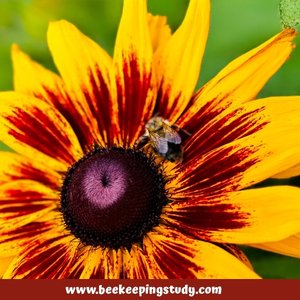
The plant is easily recognized. Bright yellow petals surround a distinctive dark brown or nearly black central cone. The blooms are cheerful and instantly familiar.
The plant is famous enough to be Maryland’s official state flower. It has been since 1918. It is also the official flower of the Preakness Stakes horse race.
For bees, Rudbeckia is a solid summer forage plant. It blooms from midsummer to fall. That is right when bees need reliable food sources.
The plant attracts a nice variety of pollinators. Honeybees visit for both nectar and pollen. Native bees like Andrena, Halictid, and small carpenter bees also work the flowers. Bumblebees, digger bees, and leafcutter bees join the party too.
One interesting fact: There is a specialist bee called Andrena rudbeckiae. This bee relies specifically on Rudbeckia and closely related coneflowers. So planting Black-Eyed Susan supports this specialist species.
Now here is an honest note. Some pollinator experts point out that Rudbeckia hirta and Rudbeckia fulgida do not attract quite as many pollinators as some other native plants. So it is not the number one bee magnet you could plant.
But that does not mean you should skip it. Black-Eyed Susan still supports bees. It also provides seed food for birds like chickadees, cardinals, and nuthatches through fall and winter.
The plant is hardy in USDA zones 3 to 10. That is nearly the entire country. It works in gardens from Minnesota to Florida.
Combine Black-Eyed Susan with coneflowers, coreopsis, and native grasses for a stunning prairie-style planting. This kind of mixed native garden creates the best support for your local bee populations.
Beebee Tree (Tetradium daniellii) – Hidden Gem for Honey Bees
The Beebee Tree is one of those hidden gems that most gardeners have never heard of. But beekeepers who know about it absolutely swear by it. If you have ever dreamed of a tree literally covered in bees, this is that tree.
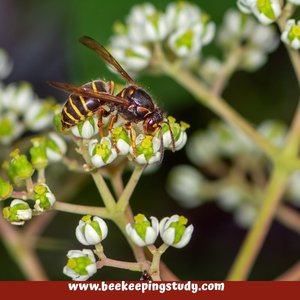
The Beebee Tree is a fast-growing deciduous tree. It typically reaches 25 to 30 feet tall. Under the right conditions, it can grow up to 40 or even 50 feet. Some sources report growth rates of over two feet per year when the tree is young.
Here is what makes this tree so special for beekeepers. The Beebee Tree blooms in mid to late summer. That is July and August in most areas. Sometimes it even keeps producing sporadic blooms into October.
This timing is critical. Late summer is often a nectar dearth period for bees. That means bees are hungry and colonies can struggle to store enough food. The Beebee Tree fills that gap beautifully.
Now for the honey production numbers. The nectar from Beebee flowers contains between 44% and 64% sugar. That is a very rich nectar source. Combined with the massive number of flowers, this tree produces serious amounts of nectar.
The tree also provides good pollen. So bees get a complete nutritional package. That is unusual because many high-nectar plants offer poor pollen.
The Beebee Tree is hardy in USDA zones 4 to 8.
Sourwood (Oxydendrum arboreum) – Another Premium Bee Friendly Plant
Sourwood is a beekeeper’s dream tree. It is native to the southern Appalachian Mountains. It grows in parts of the southeastern USA from Pennsylvania down to Florida and west to Louisiana.
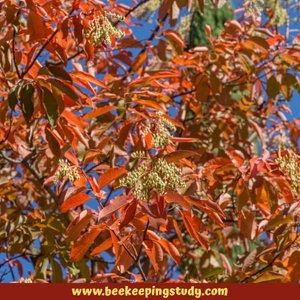
Sourwood honey is legendary. It is one of the most highly prized honey varieties in the world. The honey has a light amber color and a distinctive rich flavor with hints of caramel and spice. Some people describe it as tasting like “honey should taste”.
The honey is so valuable that pure Sourwood honey can sell for premium prices. Beekeepers in Appalachia sometimes move their hives specifically to Sourwood-rich areas to catch the flow.
Other Bee Friendly Plants for Summer (Nice to Have)
The above discussed are the best summer flowers for bees. Here is also some of the plants that can be helpful for bees.
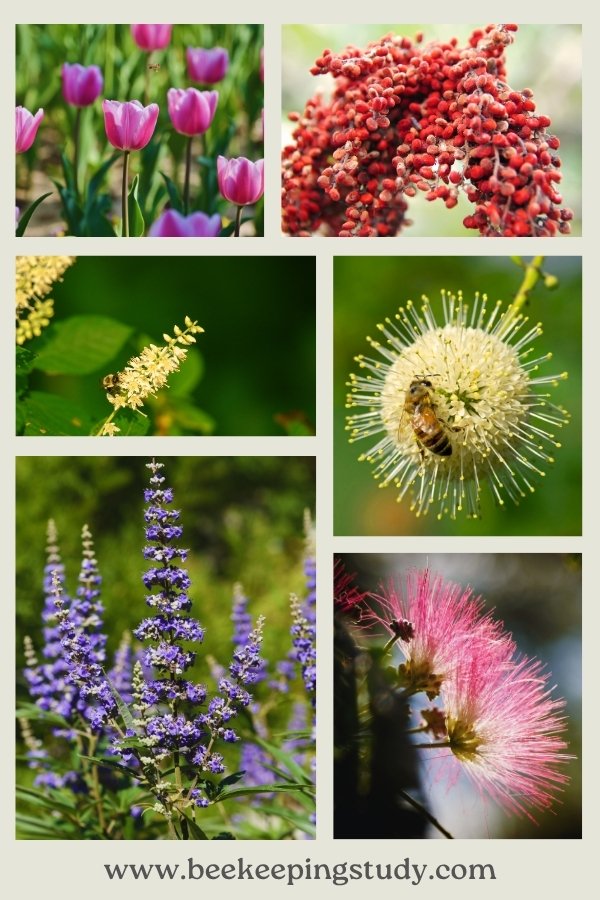
Tulip Poplar (Liriodendron tulipifera)
For beekeepers in the USA, this tree is a serious nectar source. The large cup-shaped flowers produce so much nectar that it literally oozes from the petals. A single 20-foot tree can produce about 8 pounds of nectar. That converts to roughly 4 pounds of honey.
Now imagine a mature 100-foot Tulip Poplar. The honey production potential is enormous.
Tulip Poplar blooms in late spring to early summer. The exact timing depends on your location. In many parts of the southeastern USA, this tree is a major honey producer.
Sumac (Rhus spp.)
Sumac is often overlooked as a bee plant. But it is actually a fantastic summer nectar source.
Sumac honey is a solid amber color. It has a distinctive robust flavor. Some describe it as slightly bitter, but many honey lovers enjoy the strong character.
Summersweet (Clethra alnifolia)
Bees absolutely love Summersweet. Honeybees, bumblebees, native bees, and butterflies all work the flowers intensely. The nectar production is substantial.
Summersweet is hardy in USDA zones 3 to 9. It handles partial shade well, which is unusual for a bee plant. Most nectar-rich flowers need full sun.
Buttonbush (Cephalanthus occidentalis)
Bees adore Buttonbush. The nectar production is high, and the flowers are easy for bees to work. The ball-shaped clusters attract honeybees, native bees, and butterflies in large numbers.
Buttonbush is one of the best bee plants for wet or waterlogged areas. If you have a soggy spot in your yard where nothing else grows well, this shrub is perfect.
Vitex or Chaste Tree (Vitex agnus-castus)
Bees flock to Vitex in huge numbers. The tubular flowers are perfect for both honeybees and native bees. The plant also attracts butterflies and hummingbirds.
Vitex grows 10 to 20 feet tall. It is hardy in USDA zones 6 to 9. It handles heat, drought, and poor soils. Once established, it needs almost no care.
Mimosa or Silk Tree (Albizia julibrissin)
The Silk Tree is another summer bloomer that bees love. The fluffy pink flowers that look like little pom-poms produce plenty of nectar.
The tree is native to Asia but is widely planted across the southern USA. It blooms from June through August. Honeybees work the flowers heavily.
One important caveat: Mimosa is considered invasive in parts of the southeastern USA. It spreads easily by seed. So do your research before planting.